

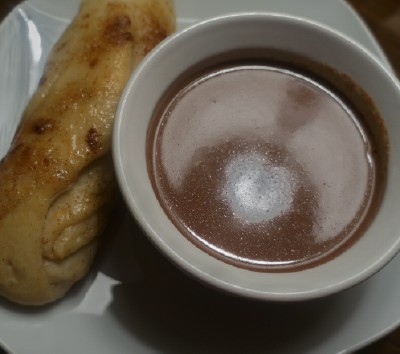
Heat up with chocolate soup. Soup no longer needs to be the first course. Finish your meal with dessert soup. This chocolate soup is thicker than a hot chocolate and thinner than a pudding. Enjoy this treat with homemade cinnamon breadsticks.
Chocolate Soup Recipe
Serves 4
Ingredients:
2 cups milk
2 cups heavy whipping cream
1/2 cup milk chocolate, chopped
1/2 cup dark chocolate, chopped
1/2 cup Kahlua or other coffee flavored liqueur
1 tsp. vanilla
1 tbsp. flour
Directions:
1. Combine all the ingredients except flour in a medium to large sized sauce pan.
2. Simmer on medium heat.
3. Lower the heat once it starts to boil and constantly whisk for a few minutes.
4. In a separate bowl add the flour with 1 tablespoon of the chocolate mixture and mix until flour is dissolved.
5. Add this back to the remaining chocolate and continue whisking until it starts to thicken.
6. Pour into bowls and serve warm.
Cinnamon Breadstick Recipe
Makes 16
Ingredients:
1 packet of yeast
1.5 cups warm water
1.5 tbsp. sugar
1 tsp. salt
2 tbsp. oil
4 cups flour
2 tsp. cinnamon and 2 tbsp. sugar needed to sprinkle on dough
Directions:
1. In a small bowl dissolve the yeast with water and let stand for 10 minutes.
2. Add the remaining ingredients into the bowl of a standing mixer.
3. Add the yeast mixture to the large bowl and mix until combined.
4. Knead until smooth and elastic.
5. Place the dough in an oiled bowl (I used one tsp. of canola oil to coat the bowl).
6. Cover the bowl with a damp towel and allow it to rise for 1-2 hours.
7. Preheat the oven to 350 degrees.
8. Roll out the dough.
9. Sprinkle with 1 tsp. cinnamon and 1 tbsp. sugar.
10. Roll dough into a ball.
11. Roll out again into a rectangle about 16 X 10.
12. Cut into 16 breadsticks.
13. Brush the melted butter onto dough.
14. Sprinkle with the remaining cinnamon and sugar.
15. Bake for 20-22 minutes.
16. Brush with butter right out of the oven.
Sweeten the soul with chocolate!
