

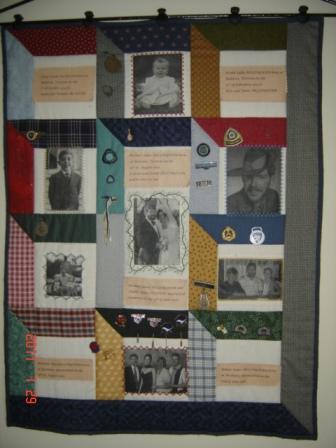
When my husband turned 50, I quietly went through our photo albums and found seven photographs, each about 6 or 7 years apart, and had them copied onto fabric and then made a wall hanging for him. I used the attic window pattern. My husband had a heap of badges and pin mementos that were languishing in his jewellery box, but he was very proud of these and they needed to be on show. By having the space on the quilt, I placed these special bits around the precious photographs. He loved it! Here's a photo.
I’ve been surfing and have found some interesting Memory and Signature quilt ideas, patterns and inspirations for you. Have fun.
a a lovely signature quilt pattern from Yours Truly at Bellaonline
a some great ideas and inspirations from Original Quilts
a Some How To details for memory quilts from How To Do Things
a this is a commercial site, but worth having a look from Upper Canada Quilt Works
a more instructions from EHow
a This is a signature quilt for a baby shower, but really could be used for any occasion from Quilting Works
a this is a free pattern for your photo memories from Kameleon Quilt
a this site is all about a friendship quilt made by class mates and offers a free quilt pattern from Bethany Reyonds
a even the fabric companies have something to offer the memory quilt maker. A great free pattern from Marcus Brothers.
a another good site with some great instructions for making a memento quilts from Canadian Living
a these quilts are gorgeous and come with free instructions from June Taylor
a a very different idea of creating a memory quilt out of ties from CQ Mag on Line
a here’s a great idea to use quilt blocks as a Wedding Guest Book from All Crafts
a some great quilts that have been made by various quilters for inspiration. These quilts come via the gallery from Quilting About.
a some interesting info from Quilting 101
a a good article on memory quilts from Suite101.
