

One source that I have found in the United States is “Crafts Unlimited” also known as “Rugging with Julie”. Located in Mountain Home, Arkansas, Julie Topolinski Perry offers a variety of toothbrush rug supplies, including wooden toothbrush rug needles. The rug needles are hand crafted and guaranteed not to break, crack or splinter. If your needle does break, crack or splinter, just return the needle and she will send you a new one.
As of the date I’m writing this article, the wooden rug needles sell for $5.00 each. Needles can be ordered through Julie’s website: www.ruggingwithjulie.com. From the Home page, click on the “Order” tab located on the left hand side of the screen. Next, click on “Rugmaking Supplies” and the wooden rug needle will be shown along with other supplies that are available.
Orders can also be placed by telephone, by calling the toll free number shown on her website.
Also, as long as you’re on the “Rugging with Julie” website, check out her Bulletin Board for helpful hints and frequently asked questions.
I am not affiliated with Crafts Unlimited or the “Rugging with Julie” website. I have purchased a wooden rug needle from the website. It works well and I haven’t had any problems with it. The “eye” of the needle is large enough to comfortably fit a 4 inch or 10 centimeter wide piece of cotton fabric so it can be used for a variety of patterns.
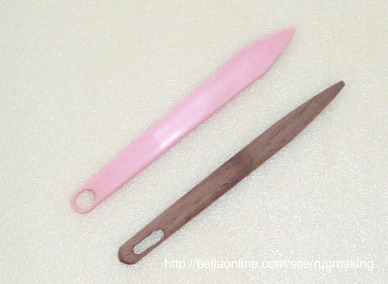
Here's a picture of the wooden toothbrush rug needle I ordered from the "Rugging with Julie" website along side a needle that I made from an old toothbrush:
For more information about toothbrush rugs, check out the related links below and please join us in the BellaOnline Rugmaking Forum. This is a great place to discuss what you’re working on and any tips, tricks and questions you would like to share with others.
