

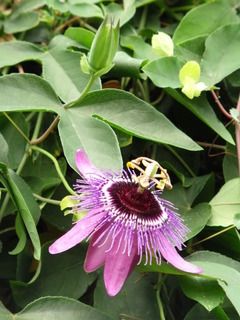
If your plant is receiving plenty of sunlight, it will appreciate plenty of water to match. An actively growing plant, especially one with lots of flowers and maybe even some fruit, may need to be watered as often as once a day. Try to take into account the size of the plant as it changes, the size of the pot it is in and how warm and sunny the growing area is. Passion Flower likes to be watered regularly, but avoid over-watering.
To keep the flowers coming, use a fertilizer that has ample phosphorous and potassium, such as a 10-10-17. Potassium tends to leach from the potting mix so a slow release fertilizer is a good choice. If you are using a water soluble fertilizer, fertilize once a week.
Passion Flower can be propagated several ways. Layering, seed, division and cuttings will all work; this plant is vigorous! When dealing with houseplants, cuttings are really the easiest way to go. If you want to try to collect and plant from seeds, let unblemished fruit ripen. Clean and dry the seeds before planting. The seeds of some varieties, such as P. incarnata, require scarification before sowing. That is, the surface of the seed must be physically nicked or scratched to allow water to penetrate the interior of the seed. Some varieties may need to be soaked in water for a certain period of time before planting in order to germinate, as well.
Not all types of passion fruits are edible, nor is the entire plant considered non-toxic. Unless you are certain the variety you are growing, such as P. edulis, is edible, I do not recommend sampling the fruit.
This vine will take over a large window with no delay if you let it. As mentioned before, the flowers typically last only a day; that means they will be dropping off the plant left and right once it attains significant size. Keep dead flowers cleaned up to help prevent insect infestation.
