

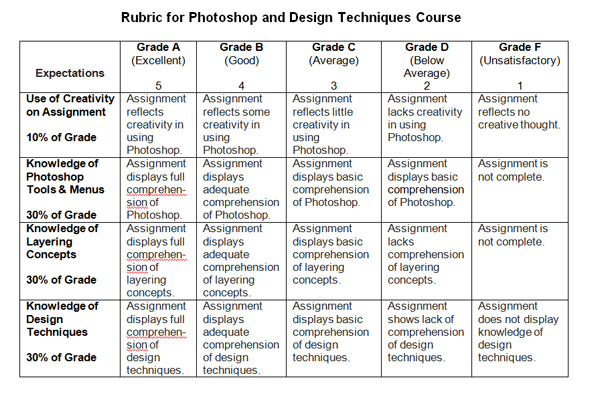
Learning expectations are the essential foundation used to establish a rubric. As an example, let's develop a rubric that will measure the learning objectives of a Photoshop and Design Techniques course. The table below is an example of how a rubric can be used to measure particular learning successes. The first column, labeled Expectations represents the learning objectives to be measured and how much of the percentage of students' final grade is determined by each one. The columns marked Grade A, Grade B, Grade C, and so forth are used to measure the outcome of each learning objective based on the assignment provided. Students can use the rubric to help pinpoint essential course requirements, which will ultimately help them achieve the highest grade possible. If the majority of the class is having the same issue, teachers can use the rubric to help identify areas of improvement in their course material. Below is a sample rubric for a Photoshop and Design Techniques course.
Using a rubric is a great tool to help instructors identify student areas of weakness. If a student is falling behind, take time to meet with them one-on-one. Providing feedback promptly and in a complementary fashion should be standard practice for all instructors. Positive feedback and reinforcement are essential to increase the level of student confidence just by knowing somebody believes in his or her ability to succeed.
Follow Patricia on Twitter or learn more about her books at www.PatriciaPedrazaNafziger.com.
+Patricia Pedraza-Nafziger
