Handy Measurements in the Art of Quilt Making
Bed and Pillow Bed measurements
Standard Beds: (Matress sizes)
Crib 23 x 46 inches
Twin/Day bed 39 x 75 inches
Full/ Double 54 x 75 inches
Queen 60 x 80 inches
Standard King 76 x 80 inches
Pillows:Standard Bed Pillow 20 x 30 inches
Queen Bed Pillow 20 x 34 inches
King bed Pillow 20 x 40 inches
Making a quilt (coverlet) and bedspread
To measure a custom made bed:
First make it up with sheets and blankets, also pillows if the spread is to cover them. Use a flexible tape measure; where it does not reach the full distance being measured, pin at the place where the tape ends, and continue measuring from the pin.
Top Length: Measure from the head to the foot, allowing 35cm for pillow tuck-in
Top width: From edge to edge
Drop for full spread: From the edge of the top to 1cm from the floor
Drop for coverlet: from the top edge to 8cm below the top of the mattress
Drop for the dust cover: from the top edge of the box spring to 1cm from the floor.
Top of the dust cover: length and width of the box spring.
Backing Fabric – measurements
These days there are a number of “sheeting” lengths of 100% cotton that are fantastic for using as backing for quilts. They are often marbled or softly patterned and in a range of very good colours. They are wide and long enough to avoid having to piece.
But often, a “special” fabric is preferred for the backing and this will probably mean that the backing will have to be pieced together. There are two basic ways to piece the fabric for the backing.
The first method is to piece to lengths of fabric together, press seam open, and then centre the seam on the quilt top. Trim the same amount of excess from both sides, leaving an extra 3” – 4” ALL AROUND. The extra amount is insurance in case the layers shift toward one side or corner during quilting.
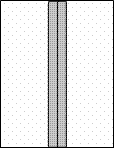
The second method is to piece the quilt backing in three sections, using one full width of fabric and splitting the second width down the centre for the remaining sections.
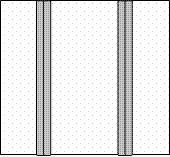
Press the seams open; then centre and trim as described above. Make sure that the quilt top is centred on the pieced backing so each side section of the backing is the same width. Both of these methods distribute pieced fabric evenly on the quilt back.
Amount of fabric for Backing:
Quilt Type: Standard Size: Twin 63" x 87" (160cm x 220cm) 4.80m
Double 78" x 87" ( 200cm x 220cm) 4.80m
Queen 84" x 92" ( 215cm x 225cm) 6.90m
King 100" x 92" (255cm x 235cm) 7.35m
Standard Beds: (Matress sizes)
Crib 23 x 46 inches
Twin/Day bed 39 x 75 inches
Full/ Double 54 x 75 inches
Queen 60 x 80 inches
Standard King 76 x 80 inches
Pillows:Standard Bed Pillow 20 x 30 inches
Queen Bed Pillow 20 x 34 inches
King bed Pillow 20 x 40 inches
Making a quilt (coverlet) and bedspread
To measure a custom made bed:
First make it up with sheets and blankets, also pillows if the spread is to cover them. Use a flexible tape measure; where it does not reach the full distance being measured, pin at the place where the tape ends, and continue measuring from the pin.
Top Length: Measure from the head to the foot, allowing 35cm for pillow tuck-in
Top width: From edge to edge
Drop for full spread: From the edge of the top to 1cm from the floor
Drop for coverlet: from the top edge to 8cm below the top of the mattress
Drop for the dust cover: from the top edge of the box spring to 1cm from the floor.
Top of the dust cover: length and width of the box spring.
Backing Fabric – measurements
These days there are a number of “sheeting” lengths of 100% cotton that are fantastic for using as backing for quilts. They are often marbled or softly patterned and in a range of very good colours. They are wide and long enough to avoid having to piece.
But often, a “special” fabric is preferred for the backing and this will probably mean that the backing will have to be pieced together. There are two basic ways to piece the fabric for the backing.
The first method is to piece to lengths of fabric together, press seam open, and then centre the seam on the quilt top. Trim the same amount of excess from both sides, leaving an extra 3” – 4” ALL AROUND. The extra amount is insurance in case the layers shift toward one side or corner during quilting.
The second method is to piece the quilt backing in three sections, using one full width of fabric and splitting the second width down the centre for the remaining sections.
Press the seams open; then centre and trim as described above. Make sure that the quilt top is centred on the pieced backing so each side section of the backing is the same width. Both of these methods distribute pieced fabric evenly on the quilt back.
Amount of fabric for Backing:
Quilt Type: Standard Size: Twin 63" x 87" (160cm x 220cm) 4.80m
Double 78" x 87" ( 200cm x 220cm) 4.80m
Queen 84" x 92" ( 215cm x 225cm) 6.90m
King 100" x 92" (255cm x 235cm) 7.35m

Related Articles
Editor's Picks Articles
Top Ten Articles
Previous Features
Site Map
Content copyright © 2023 by Judie Bellingham. All rights reserved.
This content was written by Judie Bellingham. If you wish to use this content in any manner, you need written permission. Contact Judie Bellingham for details.