

Cactus Dish Gardens
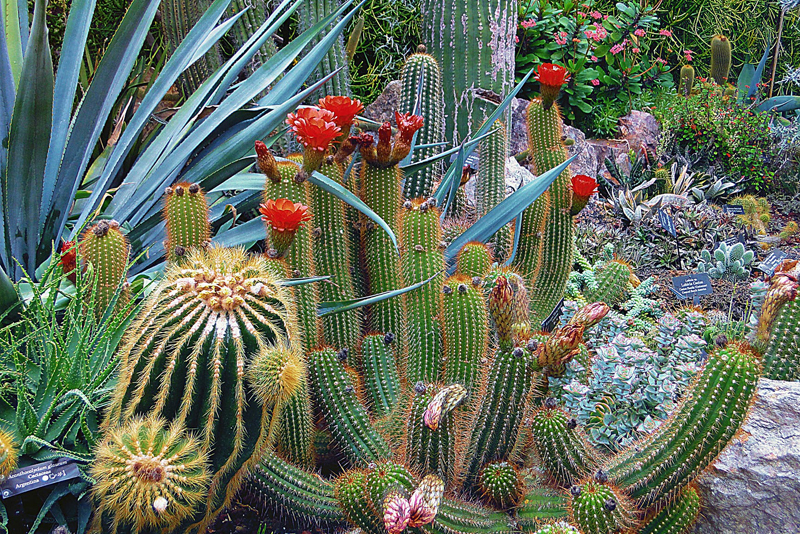
Cactus dish gardens are so gorgeous. They’re fun to create, and are a great way to display some of your favorite cacti.
To create a cactus dish garden, you’ll need the following items: a suitable planting bowl, special cactus potting mix, assorted species of cacti, and driftwood or other decorations.
Start with the pot or bowl. An unpainted terra cotta planting bowl is best. These are rather broad and somewhat more shallow than standard terra cotta pots. Other types of containers can be used, such as garden troughs and painted ceramic pots. Whatever you choose, be sure it has drainage holes. Or add some if they are lacking.
Fill the bowl with moist, cactus potting mix until the bowl is about two/thirds full.
Now you’re ready for the plants. For the most attractive dish garden, choose an assortment of cacti in different colors, shapes, and sizes. Otherwise the finished planter will be unappealing. All of the plants should require the same growing conditions. In other words, don’t mix desert cacti and jungle cacti in the same dish garden. Likewise, tender and winter hardy ones shouldn’t be in the same planter.
Set the selected plants in place one by one. Desert cacti are slow growing, so they can be set fairly close together. Normally, they won’t become overcrowded for a couple years or so.
To plant each cactus, make a depression in the soil for its roots. Cover the roots carefully with potting soil, adding more to the bowl if necessary.
For the final touch, add decorative items between the cacti. Pieces of driftwood and rocks look very nice.
Finally, cover the remaining soil with pebbles.
The dish garden can remain outdoors during the summer months. When it doesn’t rain, water the plants sparingly. During the winter keep it on the dry side.
So far as fertilizer is concerned, this should only be done when the plants are actively growing.
Where should the dish garden be kept in the winter? It depends on your climate and the kind of cacti you used. Tender ones, especially tropical cacti, need to be in warm, sunny rooms. In warm climates, winter hardy species can be left outdoors. Here in USDA zone 5, it is generally too cold to leave container gardens outdoors. Most containers aren’t weatherproof, and could crack. So I put them in a cold, unheated, frost-free, sunny room.
To create a cactus dish garden, you’ll need the following items: a suitable planting bowl, special cactus potting mix, assorted species of cacti, and driftwood or other decorations.
Start with the pot or bowl. An unpainted terra cotta planting bowl is best. These are rather broad and somewhat more shallow than standard terra cotta pots. Other types of containers can be used, such as garden troughs and painted ceramic pots. Whatever you choose, be sure it has drainage holes. Or add some if they are lacking.
Fill the bowl with moist, cactus potting mix until the bowl is about two/thirds full.
Now you’re ready for the plants. For the most attractive dish garden, choose an assortment of cacti in different colors, shapes, and sizes. Otherwise the finished planter will be unappealing. All of the plants should require the same growing conditions. In other words, don’t mix desert cacti and jungle cacti in the same dish garden. Likewise, tender and winter hardy ones shouldn’t be in the same planter.
Set the selected plants in place one by one. Desert cacti are slow growing, so they can be set fairly close together. Normally, they won’t become overcrowded for a couple years or so.
To plant each cactus, make a depression in the soil for its roots. Cover the roots carefully with potting soil, adding more to the bowl if necessary.
For the final touch, add decorative items between the cacti. Pieces of driftwood and rocks look very nice.
Finally, cover the remaining soil with pebbles.
The dish garden can remain outdoors during the summer months. When it doesn’t rain, water the plants sparingly. During the winter keep it on the dry side.
So far as fertilizer is concerned, this should only be done when the plants are actively growing.
Where should the dish garden be kept in the winter? It depends on your climate and the kind of cacti you used. Tender ones, especially tropical cacti, need to be in warm, sunny rooms. In warm climates, winter hardy species can be left outdoors. Here in USDA zone 5, it is generally too cold to leave container gardens outdoors. Most containers aren’t weatherproof, and could crack. So I put them in a cold, unheated, frost-free, sunny room.
This site needs an editor - click to learn more!

Editor's Picks Articles
Top Ten Articles
Previous Features
Site Map
Content copyright © 2023 by Connie Krochmal . All rights reserved.
This content was written by Connie Krochmal . If you wish to use this content in any manner, you need written permission. Contact
BellaOnline Administration
for details.
