

Caribbean Blogger's III
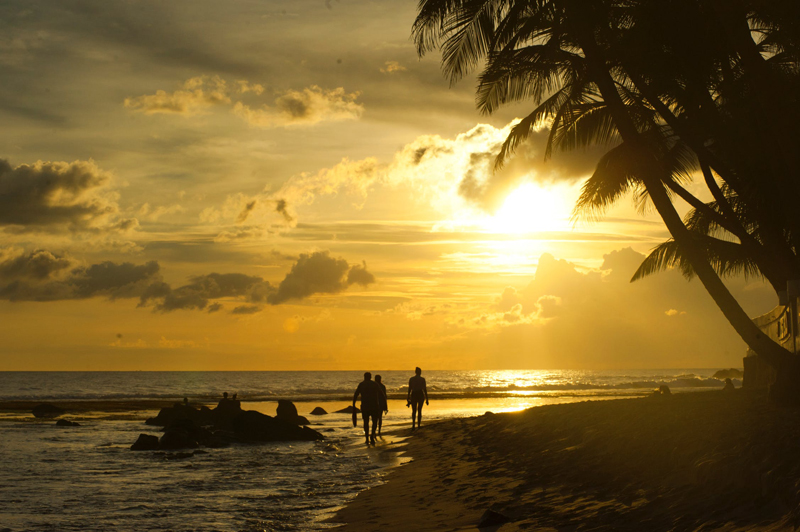
If you’re looking for a rose-tinted, Margaritaville depiction of Caribbean island life, you might be disappointed by Gordon Barlow’s provocative Barlow’s Cayman. The Cayman Islands-based writer’s no-frills blog has little room for happy hour/shore excursion chat; instead, it delivers a steady evisceration of island corruption and injustice, with the occasional lighter-hearted piece. In an age where online critics launch vitriolic and personal attacks from behind the protection of an anonymous login or avatar, one cannot help but admire Barlow’s pugnacious prose. The blog is a must-read for anyone thinking of relocating to the region.
Biography
Raised on a sheep-farm in Queensland, Australia, Gordon Barlow qualified as an accountant before leaving Australia “to see the world.” He never quite made it back. Having travelled extensively in Europe and the Middle East, mostly with a girl companion whom he later married in Canada, he worked as an auditor in England and Canada, as a trust officer in Bahamas, and as a company manager in New Hebrides (now Vanuatu) and Cayman. Barlow opened and managed the first office of the Cayman Islands Chamber of Commerce until he was “driven out by political pressure.” As a newspaper columnist and blogger, he has been outspoken in defense of the conditions of employment of low-paid migrants and of local human-rights abuses in general.
How did the blog start (in October 2010) and what was your reason for blogging? Does it achieve anything that your other writing (Cayman Net News etc.) can’t?
The newspaper that carried my weekly column went off-line and an anonymous fan kindly set up a simple blog as a vehicle for my crusade against the policies and practices of the political establishment. Later, I began posting criticism of human-rights abuses beyond Cayman’s shores; and, later still, I posted personal reminiscences and other self-indulgent twaddle. In July and August 2012, posts on the possibility of Income Tax being imposed in Cayman were picked up by a US news agency and read by some thousands of visitors in just a few hours.
What kind of visitor numbers and global reach do you receive?
Since the blog began, the chief sources of traffic have been USA, Cayman, U.K., Canada and Australia; followed by Germany, Russia, Bahamas, Netherlands and France.
I see that you get the occasional vitriolic email, but do you also receive encouragement and support locally for your writing?
In the wake of the Chamber of Commerce furore in 1988, the local ruling politicians and their cronies tried for two years to deport me. In response, I began writing pretty severe criticisms of them and their policies. Most expats were sympathetic to me, most native Caymanians were not. A minority of expats thought I should just shut up and go away; a minority of Caymanians supported me and the cause of free speech. These 25 years later, the same division exists. I keep a low profile now, but am still considered to be a controversial character.
Who are your own heroes when it comes to writing/taking a stance on issues? Are you a contrarian by nature, as I see that the objects of your disdain aren’t restricted to local CI figures!
I don’t think “contrarian” describes me. I am an independent thinker who strongly believes in free speech and human rights in general. I despise bullying and bullies, and am usually on the side of the underdog in any fight. So my heroes are people who would be on my side. Eleanor Roosevelt chaired the committee that produced the Universal Declaration of Human Rights, which was passed as a resolution of the UN General Assembly in 1948. Current heroes include Manning, Snowden and Assange.
You have plenty of targets but not many objects of affection (at least based on the blog). What do you like about the CI?
Grand Cayman is a wonderfully comfortable place to live; the Caribbean lifestyle suits us down to the ground. There are no racial hang-ups; the ethnic tensions between backwoods Caymanians and expats from a wide variety of countries are infuriating but tolerable. We give and receive respect in equal measure, to and from all but the fanatics.
You point out that expats outnumber Caymanians two to one. The tension between local and expat communities occupies editorial pages up and down the Caribbean. Given that this series is about expats who blog in the Caribbean, do you see us as a force for good or could you argue that expats have done more damage than good?
Here in Cayman, expats – two thirds of the total population, now – have overwhelmed the old subsistence fishing-and-farming style of life. That could be claimed as either good or bad. Are the native-borns happier or sadder for our presence? Is any small, isolated community better or worse off for the intrusion of the modern world and its ways? Air-conditioned cars and houses, dishwashers and microwaves, orthodox schooling and high-paying jobs, supermarkets and wine-bars... all those goodies have their downside. The native-born tend to resent the superior education, skills and competence of expats in the new fields of employment. They cry “foul!” at being left behind in the race to the big money. They also resent the presence of so many unskilled workers from Jamaica, Latin America and the Philippines, while enjoying the convenience of using them as indentured domestic servants.
In Cayman, as in most countries, expats are welcomed by the ruling classes, who benefit more from the foreign skills etc than their less privileged or less sophisticated fellow-citizens do. The latter retreat into a tribal redoubt, and are cynically exploited by the professional politicians in every election campaign. Of course as long as foreigners are allowed to come here, they will come – whether they are welcomed or not.
Biography
Raised on a sheep-farm in Queensland, Australia, Gordon Barlow qualified as an accountant before leaving Australia “to see the world.” He never quite made it back. Having travelled extensively in Europe and the Middle East, mostly with a girl companion whom he later married in Canada, he worked as an auditor in England and Canada, as a trust officer in Bahamas, and as a company manager in New Hebrides (now Vanuatu) and Cayman. Barlow opened and managed the first office of the Cayman Islands Chamber of Commerce until he was “driven out by political pressure.” As a newspaper columnist and blogger, he has been outspoken in defense of the conditions of employment of low-paid migrants and of local human-rights abuses in general.
How did the blog start (in October 2010) and what was your reason for blogging? Does it achieve anything that your other writing (Cayman Net News etc.) can’t?
The newspaper that carried my weekly column went off-line and an anonymous fan kindly set up a simple blog as a vehicle for my crusade against the policies and practices of the political establishment. Later, I began posting criticism of human-rights abuses beyond Cayman’s shores; and, later still, I posted personal reminiscences and other self-indulgent twaddle. In July and August 2012, posts on the possibility of Income Tax being imposed in Cayman were picked up by a US news agency and read by some thousands of visitors in just a few hours.
What kind of visitor numbers and global reach do you receive?
Since the blog began, the chief sources of traffic have been USA, Cayman, U.K., Canada and Australia; followed by Germany, Russia, Bahamas, Netherlands and France.
I see that you get the occasional vitriolic email, but do you also receive encouragement and support locally for your writing?
In the wake of the Chamber of Commerce furore in 1988, the local ruling politicians and their cronies tried for two years to deport me. In response, I began writing pretty severe criticisms of them and their policies. Most expats were sympathetic to me, most native Caymanians were not. A minority of expats thought I should just shut up and go away; a minority of Caymanians supported me and the cause of free speech. These 25 years later, the same division exists. I keep a low profile now, but am still considered to be a controversial character.
Who are your own heroes when it comes to writing/taking a stance on issues? Are you a contrarian by nature, as I see that the objects of your disdain aren’t restricted to local CI figures!
I don’t think “contrarian” describes me. I am an independent thinker who strongly believes in free speech and human rights in general. I despise bullying and bullies, and am usually on the side of the underdog in any fight. So my heroes are people who would be on my side. Eleanor Roosevelt chaired the committee that produced the Universal Declaration of Human Rights, which was passed as a resolution of the UN General Assembly in 1948. Current heroes include Manning, Snowden and Assange.
You have plenty of targets but not many objects of affection (at least based on the blog). What do you like about the CI?
Grand Cayman is a wonderfully comfortable place to live; the Caribbean lifestyle suits us down to the ground. There are no racial hang-ups; the ethnic tensions between backwoods Caymanians and expats from a wide variety of countries are infuriating but tolerable. We give and receive respect in equal measure, to and from all but the fanatics.
You point out that expats outnumber Caymanians two to one. The tension between local and expat communities occupies editorial pages up and down the Caribbean. Given that this series is about expats who blog in the Caribbean, do you see us as a force for good or could you argue that expats have done more damage than good?
Here in Cayman, expats – two thirds of the total population, now – have overwhelmed the old subsistence fishing-and-farming style of life. That could be claimed as either good or bad. Are the native-borns happier or sadder for our presence? Is any small, isolated community better or worse off for the intrusion of the modern world and its ways? Air-conditioned cars and houses, dishwashers and microwaves, orthodox schooling and high-paying jobs, supermarkets and wine-bars... all those goodies have their downside. The native-born tend to resent the superior education, skills and competence of expats in the new fields of employment. They cry “foul!” at being left behind in the race to the big money. They also resent the presence of so many unskilled workers from Jamaica, Latin America and the Philippines, while enjoying the convenience of using them as indentured domestic servants.
In Cayman, as in most countries, expats are welcomed by the ruling classes, who benefit more from the foreign skills etc than their less privileged or less sophisticated fellow-citizens do. The latter retreat into a tribal redoubt, and are cynically exploited by the professional politicians in every election campaign. Of course as long as foreigners are allowed to come here, they will come – whether they are welcomed or not.

Related Articles
Editor's Picks Articles
Top Ten Articles
Previous Features
Site Map
Content copyright © 2023 by Nick Marshall. All rights reserved.
This content was written by Nick Marshall. If you wish to use this content in any manner, you need written permission. Contact Nick Marshall for details.
