

Propagating Cacti
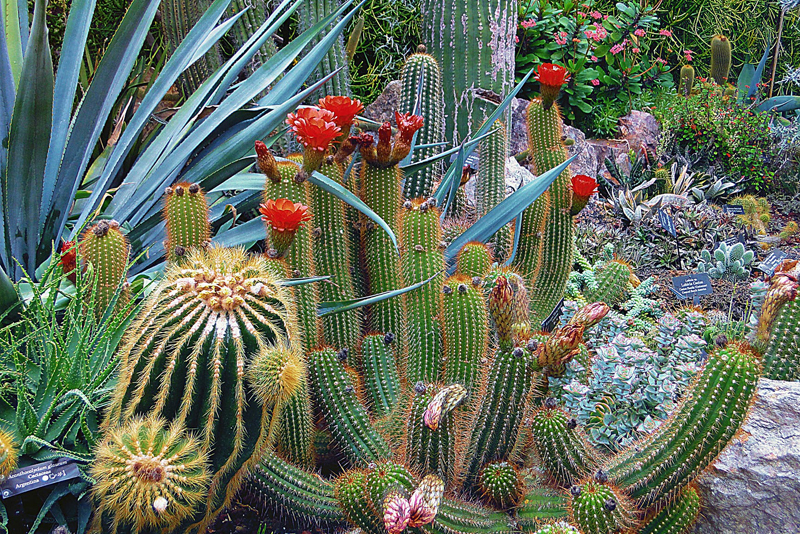
 Once you become adept at growing cacti, the next step is to propagate your own plants. The new cacti can be added to your garden or exchanged with other cacti enthusiasts to broaden your collection.
Sowing cacti seeds may seem simple, but it takes a very long time to grow a plant of significant size. You can collect seeds yourself from plants you have or purchase seeds. If you collect your own, be sure to dry the seeds thoroughly to avoid rot. Open packaged seeds carefully, as many cacti have very tiny seeds.
The best time to sow the seeds is in the spring. They should be sprinkled on top of your regular cacti potting mix in a shallow container and sprinkled with sand. Do not cover the seeds completely because they need light to germinate. Moisten the mix lightly and then place your container in a plastic bag. It should be in light, but not direct sunlight. It can take anywhere from 2 weeks to 4 months for the seeds to sprout. Once they start to grow, you can carefully add more sand to support the plants. They should not be place in direct sun the first year.
Cuttings will not give you as many plants as seeds will, but cuttings will give you larger plants much sooner and are actually quite easy to start. The best time to start cuttings is when the night temperatures are above 60° F (16° C). The cacti that are most easily started from cuttings are those that have pads or segments. These include Optunia, Cereus, Mammillarias, Cylindopuntias, and Echinopsis. Use a sterile knife to take your cuttings and wear gloves if you are dealing with spines.
If you are cuttings columnar cacti, it is important to keep the pieces oriented in the correct direction. If you place a piece in cacti mix upside down, it will not root. A common way to avoid the mix-up is to cut the lower end of the stem at an angle, and cut the top straight across.
Allow your cuttings to dry for up to two weeks to avoid fungus which can lead to rot. When a callous has formed, you can dip the end in garden sulphur or rooting hormone before placing it in cacti mix. Do not overwater the soil. A slight misting is all that is necessary. As with seedlings, do not place your cuttings in direct sunlight. It may take several weeks, but after a while, you cuttings will root. Enjoy your new plants and gradually introduce them to more sunlight.
This site needs an editor - click to learn more!

Related Articles
Editor's Picks Articles
Top Ten Articles
Previous Features
Site Map
Content copyright © 2023 by Linda Genis. All rights reserved.
This content was written by Linda Genis. If you wish to use this content in any manner, you need written permission. Contact
BellaOnline Administration
for details.
