

The Bushy Euphorbias
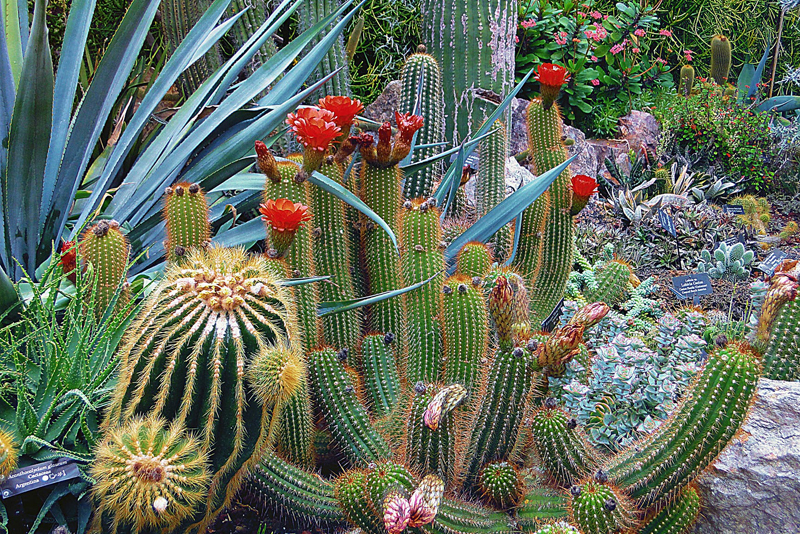
Of the many kinds of Euphorbias, some of the most attractive ones have a bushy growth habit. Some of these are used for houseplants when small. All would be suitable for growing outdoors in warm climates.
As with most Euphorbias, these produce a milky sap that can cause dermatitis. So, avoid contact with this.
African milk tree
Originally native to Gabon and tropical West Africa, this has angled stems that are arranged in the form of a candelabra. Along the edges of the stems are red spines. The lush green stems have highlights of white or pale green. In its native habitat, the leaves are deciduous.
When small, this plant is often grown as an indoor or pot plant.
Candelabra plant
Native to Sri Lanka and India, this species is also known as candelabra cactus, dragon’s bones, and hat rack cactus. Reaching about 20 feet or so in height, this has angled branches that are arranged in the form of a candelabra.
The lush green stems have tinges of white or pale green along the center. Their edges are notched. When young, this species is often grown as a houseplant and container plant.
Candelabra tree
This is native to some areas of Africa, including Zambia, Mozambique, and South Africa.
A tree-like plant, its common name aptly describes this candelabra-like tree. It grows to 30 feet or more. The branched trunk forms a dense head. The angled stems are very spiny. There is an unusual looking variety of this known as Totem Pole with twisted stems.
Fishbone Cactus
Native to Ethiopia and some other areas of Africa, this grows to about five feet in height. The gray-green stems are angled. Black spines appear along the edges.
Pink flowering Euphorbia
Native to Madagascar, this plant eventually grows into a branched shrub that is nearly three feet in height. The club-like stems are angled. Along the edges are hints of red. This is noted for its attractive foliage.
The branching flower stalk has gorgeous soft pink flowers.
This species is often grown from seeds.
Milk Bush
A tree or bush-like plant, this species reaches nearly 30 feet tall in its native lands of tropical eastern Africa.
Also known as pencil cactus, this has thin branches that are about as thick as a pencil. This plant tends to be deciduous in its native habitat.
The milk bush is a good choice for container gardens when it is young.
Silver thicket Euphorbia
Native to Madagascar, this shrub-like plant can reach over six feet in height. A dense bushy plant, it is noted for its silver stems that are particularly spiny. The silver color seems to glisten in the sun. It has a slow growth rate.
Yellow Euphorbia
Native to South Africa, this shrub-like species grows to about tree feet or so in height. The thorny stems occur as a dense clump. These are angled, and have toothed edges. Yellow Euphorbia is named for the small, yellow blossoms.
As with most Euphorbias, these produce a milky sap that can cause dermatitis. So, avoid contact with this.
African milk tree
Originally native to Gabon and tropical West Africa, this has angled stems that are arranged in the form of a candelabra. Along the edges of the stems are red spines. The lush green stems have highlights of white or pale green. In its native habitat, the leaves are deciduous.
When small, this plant is often grown as an indoor or pot plant.
Candelabra plant
Native to Sri Lanka and India, this species is also known as candelabra cactus, dragon’s bones, and hat rack cactus. Reaching about 20 feet or so in height, this has angled branches that are arranged in the form of a candelabra.
The lush green stems have tinges of white or pale green along the center. Their edges are notched. When young, this species is often grown as a houseplant and container plant.
Candelabra tree
This is native to some areas of Africa, including Zambia, Mozambique, and South Africa.
A tree-like plant, its common name aptly describes this candelabra-like tree. It grows to 30 feet or more. The branched trunk forms a dense head. The angled stems are very spiny. There is an unusual looking variety of this known as Totem Pole with twisted stems.
Fishbone Cactus
Native to Ethiopia and some other areas of Africa, this grows to about five feet in height. The gray-green stems are angled. Black spines appear along the edges.
Pink flowering Euphorbia
Native to Madagascar, this plant eventually grows into a branched shrub that is nearly three feet in height. The club-like stems are angled. Along the edges are hints of red. This is noted for its attractive foliage.
The branching flower stalk has gorgeous soft pink flowers.
This species is often grown from seeds.
Milk Bush
A tree or bush-like plant, this species reaches nearly 30 feet tall in its native lands of tropical eastern Africa.
Also known as pencil cactus, this has thin branches that are about as thick as a pencil. This plant tends to be deciduous in its native habitat.
The milk bush is a good choice for container gardens when it is young.
Silver thicket Euphorbia
Native to Madagascar, this shrub-like plant can reach over six feet in height. A dense bushy plant, it is noted for its silver stems that are particularly spiny. The silver color seems to glisten in the sun. It has a slow growth rate.
Yellow Euphorbia
Native to South Africa, this shrub-like species grows to about tree feet or so in height. The thorny stems occur as a dense clump. These are angled, and have toothed edges. Yellow Euphorbia is named for the small, yellow blossoms.
This site needs an editor - click to learn more!

Related Articles
Editor's Picks Articles
Top Ten Articles
Previous Features
Site Map
Content copyright © 2023 by Connie Krochmal . All rights reserved.
This content was written by Connie Krochmal . If you wish to use this content in any manner, you need written permission. Contact
BellaOnline Administration
for details.
