

Succulents with Scale-Like Leaves
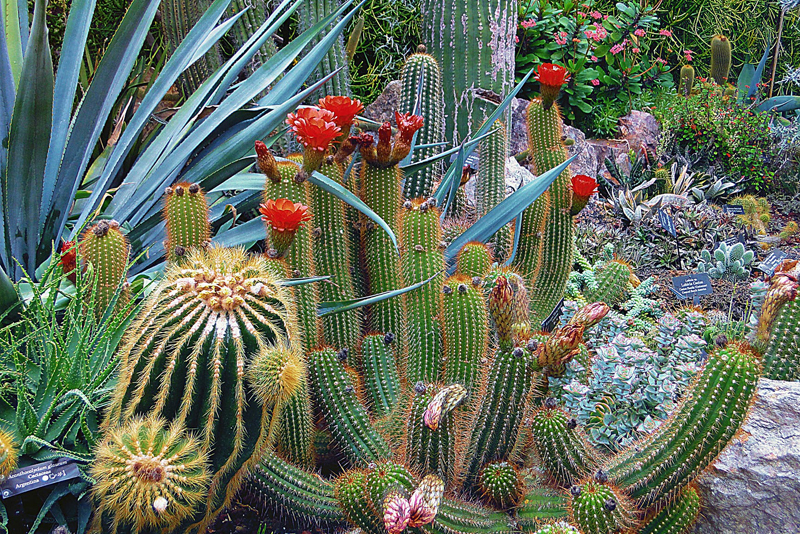
In some succulents, the foliage is so reduced in size that it is scale or needle-like. For certain succulents, the growth can be described in t his way. Let’s look at some of these succulent species.
Mexican stonecrop
It turns out that this lovely plant may in fact be misnamed, since it isn’t really native to Mexico after all. Nonetheless, it is a gorgeous plant for hanging baskets.
With its long creeping stems, this is less than ten inches tall. The succulent stems tend to root wherever they touch the potting soil.
So small and slender that they resemble needles, the cylindrical-shaped foliage is rather flat. Bright green to more greenish-yellow, this is less than an inch long. Vivid yellow blooms open in clusters.
Pygmy Joshua tree
With very slender stems, this reaches about four inches in height. It has very tiny, needle-like foliage arising at the end of the shoots. The greenish-gray leaves are evergreen. Pygmy Joshua tree has typical star-shaped blooms similar to that seen in other Sedums. These are yellow. This plant needs a rest period during the summer months.
Giant’s watch chain
A hybrid of Crassula lycopioides and Crassula pyramidalis, this resembles skinny fingers, one of the parents. However, the giant’s watch chain has stems or branches that tend to be somewhat larger and more vigorous. These are less than one-half inch in diameter. The branches have lush green foliage arranged in overlapping rows.
Princess pine
This plant is named for the tiny scale-like leaves that resemble those of the true club mosses or Lycopodiums.
In its native African habit, this occurs as a low, shrub-like plant. With spreading and sprawling stems, these are much branched. The gray or green leaves are arranged very closely together on rows along the stems.
Skinny fingers
This plant is known by various other common names, including moss crassula, toy cypress, and rattail crassula.
This is native to Africa. The rather slender, weak stems or branches are mostly cascading or climbing. The greenish-yellow leaves are so tiny that they resemble scales. Covering the stem, these are arranged in rows. The very small white or cream blossoms emerge from the axils of the leaves.
Mexican stonecrop
It turns out that this lovely plant may in fact be misnamed, since it isn’t really native to Mexico after all. Nonetheless, it is a gorgeous plant for hanging baskets.
With its long creeping stems, this is less than ten inches tall. The succulent stems tend to root wherever they touch the potting soil.
So small and slender that they resemble needles, the cylindrical-shaped foliage is rather flat. Bright green to more greenish-yellow, this is less than an inch long. Vivid yellow blooms open in clusters.
Pygmy Joshua tree
With very slender stems, this reaches about four inches in height. It has very tiny, needle-like foliage arising at the end of the shoots. The greenish-gray leaves are evergreen. Pygmy Joshua tree has typical star-shaped blooms similar to that seen in other Sedums. These are yellow. This plant needs a rest period during the summer months.
Giant’s watch chain
A hybrid of Crassula lycopioides and Crassula pyramidalis, this resembles skinny fingers, one of the parents. However, the giant’s watch chain has stems or branches that tend to be somewhat larger and more vigorous. These are less than one-half inch in diameter. The branches have lush green foliage arranged in overlapping rows.
Princess pine
This plant is named for the tiny scale-like leaves that resemble those of the true club mosses or Lycopodiums.
In its native African habit, this occurs as a low, shrub-like plant. With spreading and sprawling stems, these are much branched. The gray or green leaves are arranged very closely together on rows along the stems.
Skinny fingers
This plant is known by various other common names, including moss crassula, toy cypress, and rattail crassula.
This is native to Africa. The rather slender, weak stems or branches are mostly cascading or climbing. The greenish-yellow leaves are so tiny that they resemble scales. Covering the stem, these are arranged in rows. The very small white or cream blossoms emerge from the axils of the leaves.
This site needs an editor - click to learn more!

Related Articles
Editor's Picks Articles
Top Ten Articles
Previous Features
Site Map
Content copyright © 2023 by Connie Krochmal . All rights reserved.
This content was written by Connie Krochmal . If you wish to use this content in any manner, you need written permission. Contact
BellaOnline Administration
for details.
