

Madder Root Dyeing

Dyeing with Madder Root
Now that I have some years of experience under my belt with acid dyes, I am spreading my wings and trying what I was always told are the difficult natural dyes. The latest one being madder root. I purchased my roots from Dharma Trading Company. Madder grows in a number of climates around the world and can be a bit invasive. The best roots, I am told, come from hotter regions. Also, the thicker roots are said to be more potent, but I have yet to find thicker roots.
The roots arrived in a plastic bag in smallish chunks about an inch long or so. I was really surprised at how good they smell. The scent reminds me of dry tea leaves. A word to the wise, some sites say to grind the roots before using. Well, they are much tougher than you might think! If you are going to grind them, soak them for a long time first to soften them. Then, be sure to use an appliance that you won’t use for food afterward. I tried grinding the roots and only succeeded in ruining a small food processor.
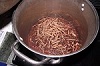
To prepare the dyebath, I first placed the roots into my dyepot with about 3 inches of water and allowed them to steep to release their pigment. I did this on low heat and was careful not to allow the roots to boil. The lower temperature keeps the red from becoming brown. I allowed the roots to steep for about nine hours. I only had the heat on for the first 3 hours. With the lid on the pot, the liquid was still warm when I was ready to strain it.
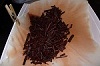
I strained the madder roots by pinning a piece of unbleached muslin over a dishpan and pouring the liquid over it. This removed even the fine grit that could have contaminated the fiber. I did save the roots to steep again another day to make some orange dye.
To prepare the fiber to dye, I first selected a roving that is a blend of alpaca, Shetland wool and mohair. I wanted to see how the different fibers would behave in the dyepot. That way if I really like one fiber, I can dye a batch of it separately. I tied the hank loosely to keep the fiber organized, but to prevent the tie from acting as a resist. The fiber was wet out in a solution of Synthrapol and warm water. I wanted to achieve an even color throughout the fiber, so I did place a spare ceramic floor tile over it to be sure to soak all of the fiber.
To prepare the dyepot, I poured the steeping liquid into the dyepot and added enough water to fill the pot to within a few inches of the top. Madder dye is absorbed better in hard water. I did add 3 tablespoons of washing soda to the dyebath to achieve this.
Instead of boiling as you would with acid dye, I heated the pot slowly to 180 degrees F. I held this temperature for about an hour then let the pot cool overnight with the lid in place.
Now that I have some years of experience under my belt with acid dyes, I am spreading my wings and trying what I was always told are the difficult natural dyes. The latest one being madder root. I purchased my roots from Dharma Trading Company. Madder grows in a number of climates around the world and can be a bit invasive. The best roots, I am told, come from hotter regions. Also, the thicker roots are said to be more potent, but I have yet to find thicker roots.
The roots arrived in a plastic bag in smallish chunks about an inch long or so. I was really surprised at how good they smell. The scent reminds me of dry tea leaves. A word to the wise, some sites say to grind the roots before using. Well, they are much tougher than you might think! If you are going to grind them, soak them for a long time first to soften them. Then, be sure to use an appliance that you won’t use for food afterward. I tried grinding the roots and only succeeded in ruining a small food processor.
To prepare the dyebath, I first placed the roots into my dyepot with about 3 inches of water and allowed them to steep to release their pigment. I did this on low heat and was careful not to allow the roots to boil. The lower temperature keeps the red from becoming brown. I allowed the roots to steep for about nine hours. I only had the heat on for the first 3 hours. With the lid on the pot, the liquid was still warm when I was ready to strain it.
I strained the madder roots by pinning a piece of unbleached muslin over a dishpan and pouring the liquid over it. This removed even the fine grit that could have contaminated the fiber. I did save the roots to steep again another day to make some orange dye.
To prepare the fiber to dye, I first selected a roving that is a blend of alpaca, Shetland wool and mohair. I wanted to see how the different fibers would behave in the dyepot. That way if I really like one fiber, I can dye a batch of it separately. I tied the hank loosely to keep the fiber organized, but to prevent the tie from acting as a resist. The fiber was wet out in a solution of Synthrapol and warm water. I wanted to achieve an even color throughout the fiber, so I did place a spare ceramic floor tile over it to be sure to soak all of the fiber.
To prepare the dyepot, I poured the steeping liquid into the dyepot and added enough water to fill the pot to within a few inches of the top. Madder dye is absorbed better in hard water. I did add 3 tablespoons of washing soda to the dyebath to achieve this.
Instead of boiling as you would with acid dye, I heated the pot slowly to 180 degrees F. I held this temperature for about an hour then let the pot cool overnight with the lid in place.
This site needs an editor - click to learn more!

Related Articles
Editor's Picks Articles
Top Ten Articles
Previous Features
Site Map
Content copyright © 2023 by Laun Dunn. All rights reserved.
This content was written by Laun Dunn. If you wish to use this content in any manner, you need written permission. Contact
BellaOnline Administration
for details.
