Pot de Crème Recipe

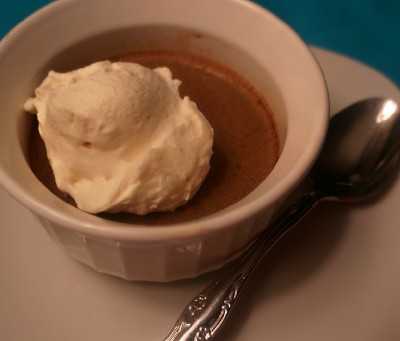
Pot de Crème is a French custard dessert. It translates to pot of cream. These individual desserts are topped with coffee flavored whipped cream. Pot de Crème are one of those great desserts you can make ahead of time if entertaining. You can make them the day before a party.
Pot de Crème Recipe
Makes 6
Ingredients:
5 egg yolks
1/3 cup sugar
2 cups heavy whipping cream
3 oz. good quality milk chocolate
3 oz. good quality dark chocolate
1 tbsp. vanilla
6 ramekins or other oven safe individual dishes
Directions:
1. Preheat the oven to 320 degrees.
2. Combine the vanilla and the cream in a medium sized sauce pan and heat to a simmer.
3. Once it starts to simmer lower the heat.
4. While the cream is heating, chop the chocolate.
5. Add the chocolate to the cream until just melted, whisk continuously.
6. Remove it from the heat and continue whisking until smooth.
7. In a separate bowl whisk eggs and sugar together.
8. Slowly add the chocolate into the yolks, whisking in. Add a little at a time to avoid scrambling the yolks.
9. Place the ramekins in a large baking pan.
10. Evenly fill the ramekins.
11. Pour hot water into the baking pan, coming up about 1/3 of the sides of the ramekins.
12. Bake for 30 minutes. The center will still jiggle slightly.
13. Allow them to cool, then refrigerate for at least 2 hours.
Coffee Whipped Cream Recipe
Ingredients:
1 tbsp. vanilla instant pudding or other stabilizer
1/4 cup strongly brewed coffee, cooled
1 1/2 cups heavy whipping cream
1 cup cream
Directions:
1. Combine the coffee, 1/2 cup cream, and pudding. Whisk together and set aside in the refrigerator.
2. Combine the remaining whipping cream and the sugar in a large bowl.
3. Beat with an electric mixer until stiff peaks form.
4. Beat in the pudding mixture (If still lumpy from the pudding use a sieve to strain).
5. Store in the refrigerator until ready to use.
6. Add a generous heap to each dessert.
Sweeten the soul with chocolate!

Related Articles
Editor's Picks Articles
Top Ten Articles
Previous Features
Site Map
Content copyright © 2023 by Michelle Matile. All rights reserved.
This content was written by Michelle Matile. If you wish to use this content in any manner, you need written permission. Contact Brandii Lacey for details.