Modernize Vintage Tatting Patterns
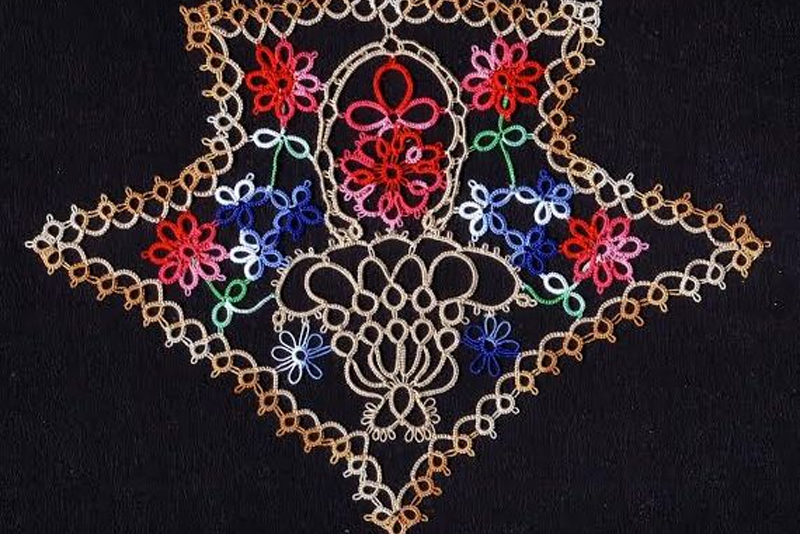
Steps to Modernize Vintage Tatting Patterns.
Let's examine this vintage tatting pattern, "Diagram for An Exercise Using the Split Ring, Mock Picot and Split Chain Techniques in a pattern by Miss Jennie R. Welch" from Barbour's Prize Needle-work Series #2 "Tatted Star" Pgs. 85-86, 1891, and determine which modern tatting techniques could be used to modernize the patterns. Modernizing a pattern is easily defined as finding a path to tat the lace from center to outer row, or from row to row without cutting the thread. The fewer cuts of the thread, the fewer ends there would be to hide.
Barbours Bros. is a name found often in early needlework booklets. The three Barbour brothers (Thomas, Robert and Samuel) established a mill in the late 1800's for spinning flax threads. By 1898 after mergers, the company became the largest manufacturer of flax thread in the U. S. In order to help market their product, they devised the Prize series of pattern booklets.
 Page 85 Tatted Star instructions |  Page 86 Tatted Star instructions continued |  Original model |
 1. The center of this motif is a traditional round center ring. Originally, the ring would be tatted, closed and the thread cut. Thus creating two tails to hide in the work. Instead we can eliminate that set of tail by tatting one less picot on the ring starting and ending with a full set of double stitches, closing the ring and using both threads create a mock picot to climb out into the next round. |  2. Round 2 is tatted with chains showing picots and which join to every other picot on the center ring, up to the last picot. Here the chain is stopped where the last picot would be placed and the shuttle thread taken over to the mock picot and attached. Faux double stitches are wrapped upon this bare thread back to the picot on the chain, aka a split chain. This picot then becomes another mock picot to climb out of the round. |  2. Round 3 is tatted all in chains with decorative picots. The chain joins to each picot of round 2. Continue work up to the middle picot of the last chain. Again take the bare thread over to the previous mock picot and attach; work back with wrapped double stitches creating a second split chain. |
 3. Double Stitch count for the first three rounds. |  4. Round 4 exits with a mock picot into round 5. |  5. Round 5 begins with a split ring. The mock picot of round 4 functions as the center picot for the split ring. The remainder of the round is a chain alternating with trefoils and single rings. Tat the last chain up to the third to last picot. Create again the split chain and exit into round 6 with a mock picot. |

|  6. Round 6 begins with the mock picot which climbed into the round and continues a chain around. Rings are thrown off both above and below the line of progression. (This means that although the pattern can be worked with a ball and a shuttle, it would be more efficient to use two shuttles.) |  6. Double Stitch count for round 6 |
 Study the red lines in the diagram to follow the path which allows the tatter to tat this entire piece of lace without cutting the thread. This method leaves only 2 tails to hide instead of 10. | Here are the techniques you need to know: mock picot - https://www.bellaonline.com/articles/art25302.asp hide ends - https://www.bellaonline.com/articles/art1765.asp split rings - https://www.bellaonline.com/subjects/6780.asp split chain - https://www.bellaonline.com/articles/art26819.asp tatting vs wrapping - https://www.bellaonline.com/articles/art28248.asp using a picot gauge - https://www.bellaonline.com/articles/art1890.asp |
The full document is available for free download at: https://www.handweaving.net/DAItemDetail.aspx?ItemID=1573
You Should Also Read:
Barbours Brothers & Tatting

Related Articles
Editor's Picks Articles
Top Ten Articles
Previous Features
Site Map
Content copyright © 2023 by Georgia Seitz. All rights reserved.
This content was written by Georgia Seitz. If you wish to use this content in any manner, you need written permission. Contact Georgia Seitz for details.