Aphids and Orchids
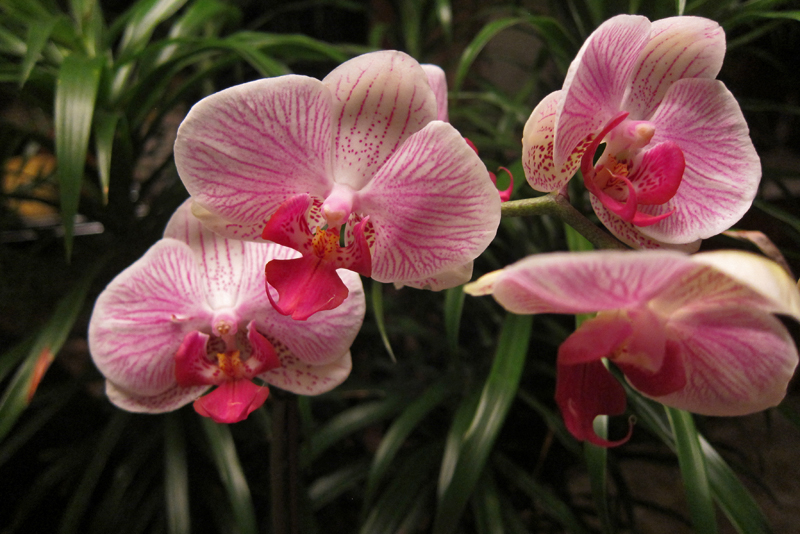
Orchids thrive in an environment which unfortunately is also conducive to harmful pests such as aphids. Let us discuss various aspects of aphids, their infestation and control.
1. How to find out whether your orchids are infected with aphids or not?
o How do they look like? Well, aphids are tiny insects having triangular or pear shaped body.
o You can spot aphids on the lower surface of the leaves, on soft new parts like the buds.
o Aphids may not be detected early on, but if you spot sticky dewdrops on your orchids then be warned. As aphids produce a sugary sticky liquid after eating soft plant tissues which look like dew drops.
o In case of severe infestation you will also observe tiny white skins shed by the hatching aphid larvae.
2. Damage caused by aphids
o Aphids transmit virus, like the yellow mosaic virus, in orchids.
o Many times aphids and ants occur together, helping each other out. Aphids feed on the sugary dew produced by the aphids, while the ants protect them from predator insects.
3. How to prevent/control aphids in orchids
o If you are able to detect early infestations, aphids can be contained more successfully. So, growers should always keep checking their orchids especially when the temperatures are on the high.
o Early infestations can be checked by simply rubbing alcohol on the leaves or areas where aphids are observed. You can also use insecticidal soap and wash the infected areas.
o But if you find that aphids are taking over your orchids then you can get rid of them by using chemical sprays (like malathion).
o But, I am never in favour of these chemicals. I would first try out organic or natural solutions. Severe infestation of aphids can be tackled by herbal oils like the neem oil. Or you can introduce aphid eating insects like grasshoppers, ladybugs etc. For this, you can place other plants which attract such insects near aphid infected orchid.
o In case, you are using chemical sprays then you need to continue with your treatment of aphids for at least two to three weeks. This will help you get rid of successive generations (i.e those hatching from eggs).
o More importantly, if you detect ants along with aphids. You need to rid of them (ants) too. In fact, ants should go first.
Interesting fact:
1. Phalaenopsis are more prone to aphid attacks. Be more vigilant if you have these orchids in your care.
2. Some orchids have adapted to the presence of aphids by producing a smell particular to aphids which attracts pollinating insects to the orchid flower!
1. How to find out whether your orchids are infected with aphids or not?
o How do they look like? Well, aphids are tiny insects having triangular or pear shaped body.
o You can spot aphids on the lower surface of the leaves, on soft new parts like the buds.
o Aphids may not be detected early on, but if you spot sticky dewdrops on your orchids then be warned. As aphids produce a sugary sticky liquid after eating soft plant tissues which look like dew drops.
o In case of severe infestation you will also observe tiny white skins shed by the hatching aphid larvae.
2. Damage caused by aphids
o Aphids transmit virus, like the yellow mosaic virus, in orchids.
o Many times aphids and ants occur together, helping each other out. Aphids feed on the sugary dew produced by the aphids, while the ants protect them from predator insects.
3. How to prevent/control aphids in orchids
o If you are able to detect early infestations, aphids can be contained more successfully. So, growers should always keep checking their orchids especially when the temperatures are on the high.
o Early infestations can be checked by simply rubbing alcohol on the leaves or areas where aphids are observed. You can also use insecticidal soap and wash the infected areas.
o But if you find that aphids are taking over your orchids then you can get rid of them by using chemical sprays (like malathion).
o But, I am never in favour of these chemicals. I would first try out organic or natural solutions. Severe infestation of aphids can be tackled by herbal oils like the neem oil. Or you can introduce aphid eating insects like grasshoppers, ladybugs etc. For this, you can place other plants which attract such insects near aphid infected orchid.
o In case, you are using chemical sprays then you need to continue with your treatment of aphids for at least two to three weeks. This will help you get rid of successive generations (i.e those hatching from eggs).
o More importantly, if you detect ants along with aphids. You need to rid of them (ants) too. In fact, ants should go first.
Interesting fact:
1. Phalaenopsis are more prone to aphid attacks. Be more vigilant if you have these orchids in your care.
2. Some orchids have adapted to the presence of aphids by producing a smell particular to aphids which attracts pollinating insects to the orchid flower!
You Should Also Read:
Symptoms of Pests and Diseases in Orchids
Scale Insects-Infestation and Control
Re-Potting Your Orchids

Related Articles
Editor's Picks Articles
Top Ten Articles
Previous Features
Site Map
Content copyright © 2023 by Anu Dharmani. All rights reserved.
This content was written by Anu Dharmani. If you wish to use this content in any manner, you need written permission. Contact Anu Dharmani for details.