

Valentine Jewelry Gift Ideas

There’s nothing like jewelry as a gift for showing your affection to your valentine. Heart jewelry is a classic, but any type of jewelry is usually well received.
 Looking for a deal? Check out Amazon.com. All of their heart shaped and Valentine’s Day jewelry is 30% off. You can see the entire collection by clicking here - Amazon.com Heart Jewelry Collection
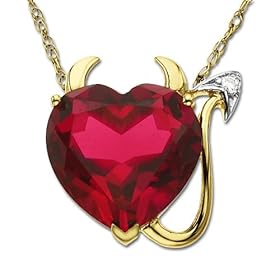
I’m especially fond of this whimsically devilish heart made of 14k yellow gold and a stunning heart-shaped lab-created ruby. Held in a three-prong setting, it has a faceted cut and a vibrant red hue. Curved devil's horns and a diamond-tipped devil's tail add a provocative touch. The pendant is featured on a 14 karat yellow gold rope chain that fastens with a spring ring clasp. It’s specially priced at $139 with an extra 30% off.
14k Yellow Gold Lab-Created Ruby Heart Devil Pendant w/ Diamond Accent, 18
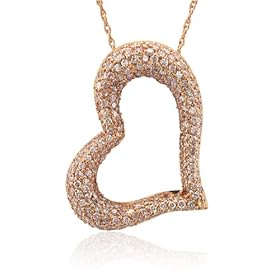 There are classic designs as well, like this gorgeous, voluptuous 10k Rose Gold Heart pendant set with .85 carats (that’s 206 stones!) of pave set Light Pink Diamonds. This romantic heart-shaped diamond pendant is gorgeously rendered in lustrous 10k gold with 100% Natural Fancy Pink Diamonds. Untreated fancy colored diamonds are one of the Rarest Precious Gemstones on the earth. This pendant dangles beautifully from a gold chain. The heart is a symbol of love and joy. A classical and charming Heart Diamond Pendant wears well for all occasions and with all outfits. The original price on this was over $1,400 but is marked down to $549. You get an additional 30% off for a limited time.
10k Rose Gold Heart Light Pink Diamond Pendant Necklace-0.85 carat
 How about something a little different this year? Heart’s Desire Jewelry (the jewelry line created by Fashion Jewelry editor, Ann Marie Hodrick) is featuring these calorie-free gems that look just like the well-loved chocolate treats. These Chocolate Kiss Necklaces are available in your choice of a sterling silver chain with faceted smoky quartz (in large or small) and a 14K gold-fill chain with whiskey quartz. The small necklaces come in 18" or 24" lengths and are finished off with a lobster clasp and a signature heart charm.
Smoky Quartz and Silver Chocolate Kiss Necklace
 Every relationship has a special story of how each partner separately is made complete by the other. At Red Envelope, they have an exclusive Lover’s Unity Necklace that when perfectly joined, this modern interpretation of the classic “broken hearts” necklace makes for a loving tribute to a couple who so perfectly complements each other. On its own, hers is a modern polished sterling silver crescent while his is a circular brushed sterling silver pendant. Each piece features the Henry David Thoreau quote, “There is no remedy for love but to love more.” When the two pieces are joined together, the heartfelt quote can be read in its entirety.
Red Envelope Jewelry and Accessories

While all of these suggestions make great Valentines Day gifts, they are also appropriate to show how much you care for weddings, birthdays and anniversaries.
Looking for a deal? Check out Amazon.com. All of their heart shaped and Valentine’s Day jewelry is 30% off. You can see the entire collection by clicking here - Amazon.com Heart Jewelry CollectionI’m especially fond of this whimsically devilish heart made of 14k yellow gold and a stunning heart-shaped lab-created ruby. Held in a three-prong setting, it has a faceted cut and a vibrant red hue. Curved devil's horns and a diamond-tipped devil's tail add a provocative touch. The pendant is featured on a 14 karat yellow gold rope chain that fastens with a spring ring clasp. It’s specially priced at $139 with an extra 30% off.
14k Yellow Gold Lab-Created Ruby Heart Devil Pendant w/ Diamond Accent, 18
There are classic designs as well, like this gorgeous, voluptuous 10k Rose Gold Heart pendant set with .85 carats (that’s 206 stones!) of pave set Light Pink Diamonds. This romantic heart-shaped diamond pendant is gorgeously rendered in lustrous 10k gold with 100% Natural Fancy Pink Diamonds. Untreated fancy colored diamonds are one of the Rarest Precious Gemstones on the earth. This pendant dangles beautifully from a gold chain. The heart is a symbol of love and joy. A classical and charming Heart Diamond Pendant wears well for all occasions and with all outfits. The original price on this was over $1,400 but is marked down to $549. You get an additional 30% off for a limited time. 10k Rose Gold Heart Light Pink Diamond Pendant Necklace-0.85 carat
How about something a little different this year? Heart’s Desire Jewelry (the jewelry line created by Fashion Jewelry editor, Ann Marie Hodrick) is featuring these calorie-free gems that look just like the well-loved chocolate treats. These Chocolate Kiss Necklaces are available in your choice of a sterling silver chain with faceted smoky quartz (in large or small) and a 14K gold-fill chain with whiskey quartz. The small necklaces come in 18" or 24" lengths and are finished off with a lobster clasp and a signature heart charm.Smoky Quartz and Silver Chocolate Kiss Necklace
Every relationship has a special story of how each partner separately is made complete by the other. At Red Envelope, they have an exclusive Lover’s Unity Necklace that when perfectly joined, this modern interpretation of the classic “broken hearts” necklace makes for a loving tribute to a couple who so perfectly complements each other. On its own, hers is a modern polished sterling silver crescent while his is a circular brushed sterling silver pendant. Each piece features the Henry David Thoreau quote, “There is no remedy for love but to love more.” When the two pieces are joined together, the heartfelt quote can be read in its entirety.Red Envelope Jewelry and Accessories
While all of these suggestions make great Valentines Day gifts, they are also appropriate to show how much you care for weddings, birthdays and anniversaries.
This site needs an editor - click to learn more!
You Should Also Read:
World of Good shopping site article
Related Articles
Editor's Picks Articles
Top Ten Articles
Previous Features
Site Map
Content copyright © 2023 by Ann Marie Hodrick. All rights reserved.
This content was written by Ann Marie Hodrick. If you wish to use this content in any manner, you need written permission. Contact
BellaOnline Administration
for details.
