

Android Karenina Review

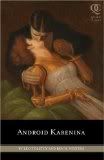 As someone whose career involves adding to the technology that surrounds us (hopefully in a positive way), I am deeply interested in how technology changes our lives for better or worse. As someone who reads a lot of technical material just to keep up, I need the change of pace that novels provide. Being able to explore such topics while reading an enjoyable, gripping novel is always a bonus. Android Karenina by Leo Tolstoy and Ben H. Winters is such a novel.
 Android Karenina is one of the currently popular classic mash-up novels and is based on Tolstoy's Anna Karenina. I read Anna Karenina in high school and mostly remember it as boring and hard to follow because I didn't care about any of the characters enough to really keep track of them. I'm not sure I actually finished it. (Of course, social commentary and romance are often wasted on the young who don't really have the life experience to fully comprehend them, which is why reading the classics in school can be so painful.) Android Karenina on the other hand had me hooked from page one. It was one of those books that made me wish I could read faster so that I could find out what happened next. In Android Karenina's world, a fabulous new mineral, groznium, has been found (or miraculously appeared depending on who you ask), in the mines of Russia and allowed for amazing technological advances. Among those advances are a multitude of robots from simple robots that perform everyday tasks like ironing and making tea to more complex "Class III" robots, androids with the ability to think and function independently. Every person of the upper class gets a personal robot companion as a sort of coming of age ceremony which then accompanies them everywhere except perhaps when some task requires the android to be elsewhere. Thus, Android Karenina features Anna Karenina and her android, Android Karenina.
Although the publisher, calls Android Karenina's world "Steampunk inspired", the only Steampunk-like feature is that it features a world with advanced technology in a time before such technology was possible with a reasonable explanation for that technology – in this case, groznium. In my opinion, true Steampunk requires that the technology be steam-engine based and mechanical. The groznium explaination allows for a lot more leeway in what technology is available and allows Winters to explore the effect of technology on the characters without being restrained by the limits of steam technology. Of course, the seamless integration of groznium into the world I necessary for this to be successful, and Winters did this well. I think Android Karenina is more akin to historical urban fantasy, reimagining the world in light of a few fantastic changes.
I was particularly interested in the cyborg subplot involving Anna's husband, Alexei Alexandrovich Karenin and how becoming a cyborg changed his personalities and influenced his actions. I think this is a critically important topic for us to think about today, because I think in many ways he is only an extreme version of the other characters who are significantly hampered without the constant attendance of their android companions and many of us who are likewise significantly hampered without access to our computers and PDA's and the tools and information they hold for us.
Most of the mashups I have read are interesting and enjoyable fiction. The attention to detail, recurring themes and allusions added by Winters makes Android Karenia more than worthy of holding the title of literature. Like most great literary works, it left me with a number of new ideas to think about and the plan to reread it to pay more attention to some of those things. Additionally, Android Karenina has inspired me to go back to the original Tolstoy classic Anna Karenina with new eyes and new interest. I highly recommend Android Karenina not only to fans of literary mash-ups and science fiction / fantasy, but also to those who tend to prefer more literary works.
Explore Android Karenina Further:
- Buy Android Karenina at Amazon.com
- Buy or Sample the Kindle Edition
- Check out Quirk Classic's Android Karenina Book Page
- Check out the Quirk Classics Android Karenina Message Board
- Discuss Android Karenina in our forum
- Buy the original Tolstoy novel, Anna Karenina at Amazon.com or download the free Kindle version
By the way, posting on Quirk's message board automatically enters you to win one of 25 fabulous Quirk Prize Packs featuring more classic mash-up novels and such useful titles as How To Tell If Your Boyfriend Is The Antichrist and How To Survive A Horror Movie!


Special thanks to Quirk Classics for sending me a pre-publication copy of Android Karenina so I could do this review.
This site needs an editor - click to learn more!
You Should Also Read:
Zombies And Dawn Of The Dreadfuls
Full List Of My Reviews
Our Fiction Writing Editor's Review
Related Articles
Editor's Picks Articles
Top Ten Articles
Previous Features
Site Map
Content copyright © 2023 by Julie L Baumler. All rights reserved.
This content was written by Julie L Baumler. If you wish to use this content in any manner, you need written permission. Contact
BellaOnline Administration
for details.
