

Buddhist Mantras
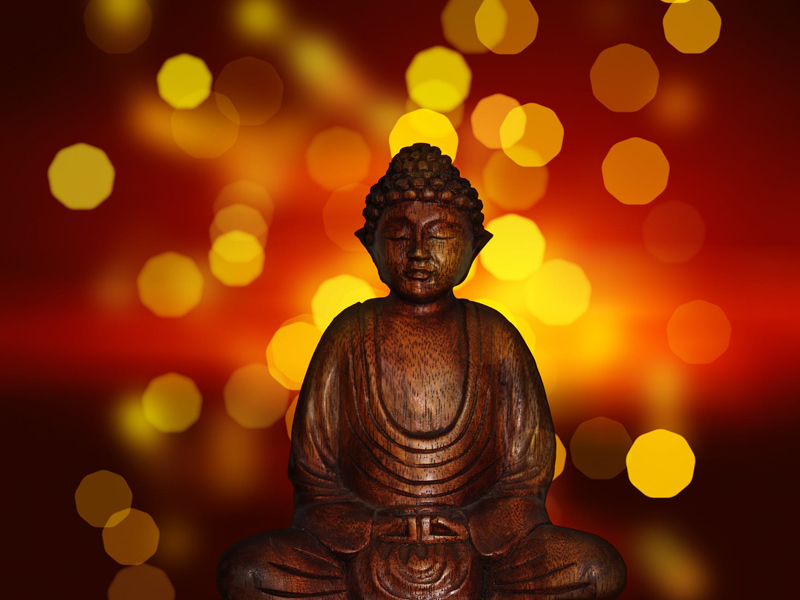
Mantras are a sound, word, or phrase that is repeated either aloud or silently, as part of meditation or mindfulness practice to focus and shift the mind. Mantra practice is present in some form in most of the world's religions, but is especially prominent in the yogic branches of Hinduism, and in Vajrayana and Nichirin Buddhism.

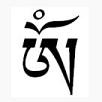 Mantras function on many levels. On the level of vibration, the sound itself is believed to focus and shift the mind. The most common mantra, Om or Aum, represents the primordial sound of the universe, the foundation vibration from which all other existence springs. The image on the left is the Sanskrit symbol for Om, while the image on the right is the Tibetan symbol. Both are prevalent in Buddhist art.
The following audio offers an example of Tibetan monks chanting an Om mantra series:
Tibetan Monks Chanting Om
In the case of mantras that are words or phrases, the meaning itself becomes part of the practice. Focusing on a phrase related to compassion, wisdom, truth, or peace, for example, will help awaken us to the qualities within our own awareness. In Vajrayana Buddhism mantras are often associated with deities, and chanting the mantra becomes a doorway for awakening ourselves to the Buddha-qualities represented by that deity.
One of the most common mantras of this type is ‘Om Mani Padme Hum’, the mantra of the boddhisattva of compassion, Avalokiteshvara. There is no direct translation of this mantra, although it is sometimes roughly translated as 'the jewel in the lotus', a translation some object to, but which its proponents say refers to the 'jewel of enlightenment' residing within each of us. On another level this mantra, and all mantras, are beyond words, and offer a direct doorway into enlightened states of mind.
Within Nichiren Buddhism, the meditative practice revolves around the mantra 'Nam Myoho Renge Kyo' which expresses devotion to the teachings, especially those found in the Lotus Sutra, which are held to be the highest teachings within Nichiren.
Some other mantras associated with Tibetan Buddhist deities are listed below. Note that some of these deities have more than one mantra associated with them, and that they can differ between schools. In addition, the English translations of these sounds differ amongst various traditions, for example 'hum' is sometimes written as 'hung', 'Om' as 'Aum', etc.
Om Muni Muni Maha Muniye Sakyamuni Swaha - the historical Buddha, Shakyamuni
Om Vajrapani Hum Svaha - Vajrapani, ‘Protector of the Secret Teachings’
Om Vajrasattva Hum - Vajrasattva, Buddha of the ‘diamond mind’ (this is the short version of the mantra)
Om Ah Hum Vajra Guru Padma Siddhi Hum - Guru Padma Sambhava, founder of Tibetan Buddhism
Om Tare Tuttare Ture Svaha - Green Tara, female Buddha of compassion
Om Ami Dhewa Hri - Amitabha, Western Pureland Buddha
Om Wagishwari Hum - Manjusri, representing Buddha’s wisdom aspect
Note that this article is included in my e-book Introduction to Buddhism and Buddhist Meditation.
Mantras function on many levels. On the level of vibration, the sound itself is believed to focus and shift the mind. The most common mantra, Om or Aum, represents the primordial sound of the universe, the foundation vibration from which all other existence springs. The image on the left is the Sanskrit symbol for Om, while the image on the right is the Tibetan symbol. Both are prevalent in Buddhist art.The following audio offers an example of Tibetan monks chanting an Om mantra series:
Tibetan Monks Chanting Om
In the case of mantras that are words or phrases, the meaning itself becomes part of the practice. Focusing on a phrase related to compassion, wisdom, truth, or peace, for example, will help awaken us to the qualities within our own awareness. In Vajrayana Buddhism mantras are often associated with deities, and chanting the mantra becomes a doorway for awakening ourselves to the Buddha-qualities represented by that deity.
One of the most common mantras of this type is ‘Om Mani Padme Hum’, the mantra of the boddhisattva of compassion, Avalokiteshvara. There is no direct translation of this mantra, although it is sometimes roughly translated as 'the jewel in the lotus', a translation some object to, but which its proponents say refers to the 'jewel of enlightenment' residing within each of us. On another level this mantra, and all mantras, are beyond words, and offer a direct doorway into enlightened states of mind.
Within Nichiren Buddhism, the meditative practice revolves around the mantra 'Nam Myoho Renge Kyo' which expresses devotion to the teachings, especially those found in the Lotus Sutra, which are held to be the highest teachings within Nichiren.
Some other mantras associated with Tibetan Buddhist deities are listed below. Note that some of these deities have more than one mantra associated with them, and that they can differ between schools. In addition, the English translations of these sounds differ amongst various traditions, for example 'hum' is sometimes written as 'hung', 'Om' as 'Aum', etc.
Om Muni Muni Maha Muniye Sakyamuni Swaha - the historical Buddha, Shakyamuni
Om Vajrapani Hum Svaha - Vajrapani, ‘Protector of the Secret Teachings’
Om Vajrasattva Hum - Vajrasattva, Buddha of the ‘diamond mind’ (this is the short version of the mantra)
Om Ah Hum Vajra Guru Padma Siddhi Hum - Guru Padma Sambhava, founder of Tibetan Buddhism
Om Tare Tuttare Ture Svaha - Green Tara, female Buddha of compassion
Om Ami Dhewa Hri - Amitabha, Western Pureland Buddha
Om Wagishwari Hum - Manjusri, representing Buddha’s wisdom aspect
Note that this article is included in my e-book Introduction to Buddhism and Buddhist Meditation.
You Should Also Read:
Chakras in Tibetan Buddhism

Related Articles
Editor's Picks Articles
Top Ten Articles
Previous Features
Site Map
Follow @mommymystic
Tweet
Content copyright © 2023 by Lisa Erickson. All rights reserved.
This content was written by Lisa Erickson. If you wish to use this content in any manner, you need written permission. Contact Lisa Erickson for details.
