

Steamboat Pilot Captain Minnie Hill

This article is the first in occasional series about women pioneers in science and technology careers. Computing is a new profession and as such, we don't have a long history. In fact, it is likely that in the future, we, the female professionals of today, will be considered among the female pioneers in the field. I think it might be instructive to look back at pioneers in other fields and remember that there have always been technical women.
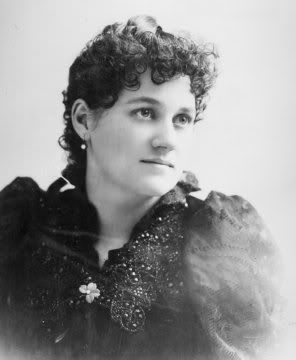 We may or may not think of being a ship's captain as a technical career today, but it was definitely considered one in the 1800's. Captain Minnie (Mossman) Hill was the first licensed female steamboat pilot on the Columbia River, achieving a Master's license in 1886. The Columbia River runs from Western Canada, through Washington State and becomes the dividing line between Oregon and Washington. Because of the river's inherent navigational difficulties, being a Columbia River pilot today is a mark of expert seamanship. This was even more true prior to the installation of hydroelectric damns in the mid-twentieth century that flooded the most difficult areas of rocks, falls and rapids. Captain Minnie Hill's skill was so impressive that when she took the pilots exam she was awarded a lifetime license, a rare feat. [sign] This is despite the fact that her husband, also a steamboat captain, claimed the exam she was given was more difficult than usual due to a desire to fail her for cause. [Davidson-Peters]
After she got her license, he and her husband purchased a steamboat which she piloted while he worked as the ship's engineer. She was a working mother and had two children during her 16 years as a steamboat captain. Captain Hill was quoted in Time magazine in 1941 as saying "I never wore overalls, I wore skirts." She wasn't interested in the acclaim that came with having an untradtional career. She managed to do what so many women struggle with even today – excelling at a career and having a husband,and family while still being true to who they are and not feeling like they have to act like a man.
Image courtesy of the Oregon State Library.
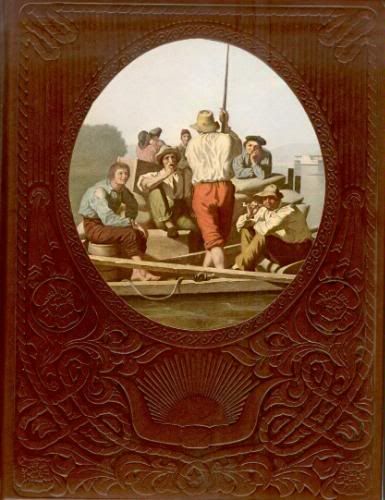
 The Old West: The Rivermen contains a sidebar about Captain Minnie Hill. Buy from Amazon.com
We may or may not think of being a ship's captain as a technical career today, but it was definitely considered one in the 1800's. Captain Minnie (Mossman) Hill was the first licensed female steamboat pilot on the Columbia River, achieving a Master's license in 1886. The Columbia River runs from Western Canada, through Washington State and becomes the dividing line between Oregon and Washington. Because of the river's inherent navigational difficulties, being a Columbia River pilot today is a mark of expert seamanship. This was even more true prior to the installation of hydroelectric damns in the mid-twentieth century that flooded the most difficult areas of rocks, falls and rapids. Captain Minnie Hill's skill was so impressive that when she took the pilots exam she was awarded a lifetime license, a rare feat. [sign] This is despite the fact that her husband, also a steamboat captain, claimed the exam she was given was more difficult than usual due to a desire to fail her for cause. [Davidson-Peters]After she got her license, he and her husband purchased a steamboat which she piloted while he worked as the ship's engineer. She was a working mother and had two children during her 16 years as a steamboat captain. Captain Hill was quoted in Time magazine in 1941 as saying "I never wore overalls, I wore skirts." She wasn't interested in the acclaim that came with having an untradtional career. She managed to do what so many women struggle with even today – excelling at a career and having a husband,and family while still being true to who they are and not feeling like they have to act like a man.
Image courtesy of the Oregon State Library.
The Old West: The Rivermen contains a sidebar about Captain Minnie Hill. Buy from Amazon.comThis site needs an editor - click to learn more!
You Should Also Read:
Annotated Bibliography
Admiral Grace Hopper
Pioneering Technical Women
Related Articles
Editor's Picks Articles
Top Ten Articles
Previous Features
Site Map
Content copyright © 2023 by Julie L Baumler. All rights reserved.
This content was written by Julie L Baumler. If you wish to use this content in any manner, you need written permission. Contact
BellaOnline Administration
for details.
