

Estate Jewelry 1760-1960 Book Review

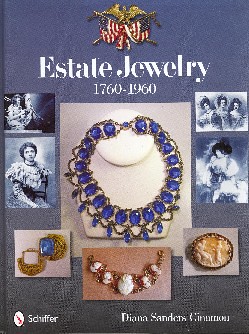
Antique period and vintage jewelry is brought to life in the pages of “Estate Jewelry 1760-1960” by Diana Sanders Cinamon.
Section One
This section is rich with historical fact, wonderful pictures and photos imparting the fashion and design of the times throughout the periods of Georgian, Victorian, Edwardian and the Modern Era. Topics include:
Fashion Influences
Popular jewelry styles and forms
Popular gems and gem materials
Decorating, finishing and other techniques
The photos, catalog reproductions, and advertisement reprints are all wonderfully captured. The timeline on page 62 is extremely helpful in visualizing the periods in relationship to one another. This is something I will refer back to time and again. Also in this section is a brief chapter on Gemstone Identification and value points that discuss general testing tips using a black light, hot point, carving and tooth tests. These are great tips when assessing new finds! Additional chapters on “Metal Fittings and Findings in Jewelry” and “Marks on Jewelry” give dating clues and makers-marks to use as reference for both international and US made jewelry.
Section Two
Section two is the bulk of the book. This is where the exquisite “eye candy” resides. These are some of the most wonderful photos of estate jewelry I have had the pleasure to view and alongside, dollar values are listed. I believe this book is a truly magnificent addition to any jewelry collector’s library. Easy to use, broken down by jewelry type (parurers, suites, sets- bracelets, hat pins etc) makes finding what you seek a breeze.
I thoroughly enjoyed all of the historical information included in this reference. If you wish to learn about time period jewelry this is the book for you!
I continue to learn from the best.
About the author Diana Sanders Cinamon
In addition to being a certified gemologist (C.G., SCC) she is a graduate of the College for Appraisers and carries the designation of Graduate Certified Appraiser (G.C.A)
Diana teaches Antique and Period Jewelry and Pearls for the gemology department at Santiago Canyon.
Besides this book, Diana has also authored “All about Antique Silver with International Hallmarks”.
Don’t forget to sign up below for Bella Gems! delivered each week to your in box.
Get your copy of Diana's book at B&N.com- click the book below!
Section One
This section is rich with historical fact, wonderful pictures and photos imparting the fashion and design of the times throughout the periods of Georgian, Victorian, Edwardian and the Modern Era. Topics include:
Fashion Influences
Popular jewelry styles and forms
Popular gems and gem materials
Decorating, finishing and other techniques
The photos, catalog reproductions, and advertisement reprints are all wonderfully captured. The timeline on page 62 is extremely helpful in visualizing the periods in relationship to one another. This is something I will refer back to time and again. Also in this section is a brief chapter on Gemstone Identification and value points that discuss general testing tips using a black light, hot point, carving and tooth tests. These are great tips when assessing new finds! Additional chapters on “Metal Fittings and Findings in Jewelry” and “Marks on Jewelry” give dating clues and makers-marks to use as reference for both international and US made jewelry.
Section Two
Section two is the bulk of the book. This is where the exquisite “eye candy” resides. These are some of the most wonderful photos of estate jewelry I have had the pleasure to view and alongside, dollar values are listed. I believe this book is a truly magnificent addition to any jewelry collector’s library. Easy to use, broken down by jewelry type (parurers, suites, sets- bracelets, hat pins etc) makes finding what you seek a breeze.
I thoroughly enjoyed all of the historical information included in this reference. If you wish to learn about time period jewelry this is the book for you!
I continue to learn from the best.
About the author Diana Sanders Cinamon
In addition to being a certified gemologist (C.G., SCC) she is a graduate of the College for Appraisers and carries the designation of Graduate Certified Appraiser (G.C.A)
Diana teaches Antique and Period Jewelry and Pearls for the gemology department at Santiago Canyon.
Besides this book, Diana has also authored “All about Antique Silver with International Hallmarks”.
Don’t forget to sign up below for Bella Gems! delivered each week to your in box.
Get your copy of Diana's book at B&N.com- click the book below!
This site needs an editor - click to learn more!
You Should Also Read:
Caring For Your Vintage Costume Jewelry
How to Clean Vintage Rhinestones
Antique or Vintage? 
Related Articles
Editor's Picks Articles
Top Ten Articles
Previous Features
Site Map
Content copyright © 2023 by Diane Geisel. All rights reserved.
This content was written by Diane Geisel. If you wish to use this content in any manner, you need written permission. Contact
BellaOnline Administration
for details.
