

Steampunk Style Jewelry Review

Jean Campbell does an outstanding job of presenting and describing what the steampunk style is all about. Quoting her definition- “Generally, Steampunk is a fashion, design and popular-culture phenomenon that combines romance and technology. Among its many influences are futurism, time travel, and the Victorian Age.”
Although Steampunk has been around for over 20 years many people have never heard this term. Jean does an incredible job of presenting jewelry designs and step by step instructions including the materials list for each project. Not only do we get the instructions on how to make these fascinating pieces, we also are introduced to the whole genre of Steampunk. Included throughout the book are sidebars on Steampunk in general- such as books, movies, fashion, animations, bands, and sculpture all depicting the Steampunk style.
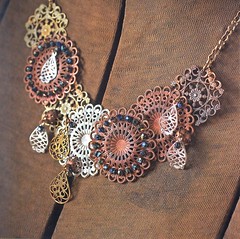
by Designer: Cynthia Deis found on page 22
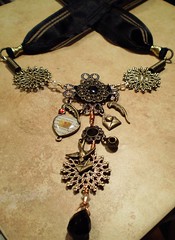
Here is my take on Filigree Gears Necklace:
Steampunk Elegance
A sampling of the Table of Contents includes:
Basic jewelry-making techniques
The Anachronist Necklace
Captured Time Ring
Gearrings
Time Travelers Necklace
Machinery in Motion Necklace
Dirigible Aviatrix Necklace
Tick Tock Drop Earrings
Tempus Fugit Pendant
Gallery of Steampunk Designs
The jewelry projects listed in this book are beginner to intermediate level and represent a good cross-section including necklaces, rings, bracelets and earrings. I’ve always been a fan of sci-fi and the Victorian Age so I found this to be a perfect fit. Well written, fabulous pictures and detailed instructions make the book a real winner. Let your imagination run wild using this book as a guide to the world of Steampunk. Your collection of jewelry has never looked like this before!
A bit about the author:
Jean Campbell is a freelance craft editor and author. She is the founding editor of Interweave’s Beadwork magazine and has written and edited more than forty books.
Disclosure: This book was provided to me by the author / publisher for review.
Check out Barnes and Noble for this great book.... just click on it to visit B&N

Although Steampunk has been around for over 20 years many people have never heard this term. Jean does an incredible job of presenting jewelry designs and step by step instructions including the materials list for each project. Not only do we get the instructions on how to make these fascinating pieces, we also are introduced to the whole genre of Steampunk. Included throughout the book are sidebars on Steampunk in general- such as books, movies, fashion, animations, bands, and sculpture all depicting the Steampunk style.
by Designer: Cynthia Deis found on page 22
Here is my take on Filigree Gears Necklace:
Steampunk Elegance
A sampling of the Table of Contents includes:
Basic jewelry-making techniques
The Anachronist Necklace
Captured Time Ring
Gearrings
Time Travelers Necklace
Machinery in Motion Necklace
Dirigible Aviatrix Necklace
Tick Tock Drop Earrings
Tempus Fugit Pendant
Gallery of Steampunk Designs
The jewelry projects listed in this book are beginner to intermediate level and represent a good cross-section including necklaces, rings, bracelets and earrings. I’ve always been a fan of sci-fi and the Victorian Age so I found this to be a perfect fit. Well written, fabulous pictures and detailed instructions make the book a real winner. Let your imagination run wild using this book as a guide to the world of Steampunk. Your collection of jewelry has never looked like this before!
A bit about the author:
Jean Campbell is a freelance craft editor and author. She is the founding editor of Interweave’s Beadwork magazine and has written and edited more than forty books.
Disclosure: This book was provided to me by the author / publisher for review.
Check out Barnes and Noble for this great book.... just click on it to visit B&N
Enjoy!!
This site needs an editor - click to learn more!
You Should Also Read:
Jewels of Passion Book Review
Classic American Costume Jewelry
Book Review: Contemporary Copper Jewelry
Related Articles
Editor's Picks Articles
Top Ten Articles
Previous Features
Site Map
Content copyright © 2023 by Diane Geisel. All rights reserved.
This content was written by Diane Geisel. If you wish to use this content in any manner, you need written permission. Contact
BellaOnline Administration
for details.
