Museum Career Skills – Developing an Exhibition
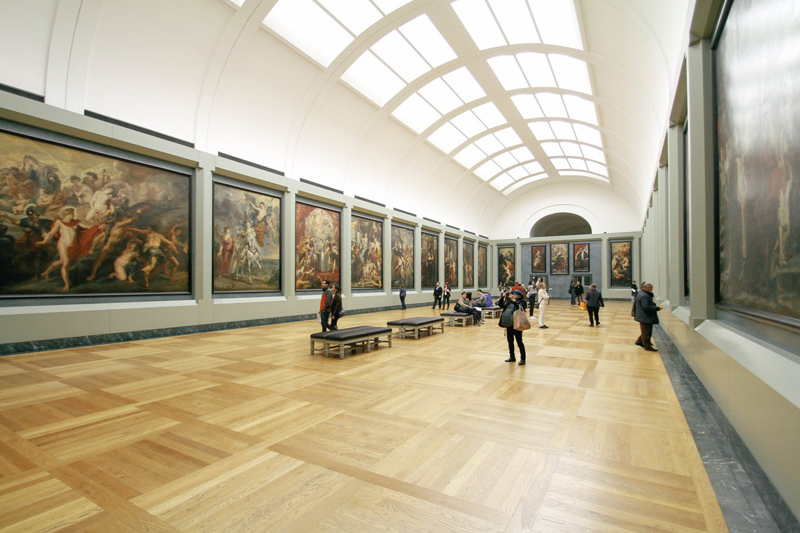
Museum exhibits allow us to teach about history in a way that no other medium can. With the “real stuff” of history at our disposal, an exhibition is NOT a book on the wall.
Here are some things to keep in mind when developing a successful exhibition.
Exhibit writing is completely different from any other form of writing. You must always remember that you are writing for a standing audience, whose attention span is limited. You are speaking to a wide range of people, with varying interests and learning styles.
Less than 10% of visitors read everything in a museum exhibition. The majority of visitors read in a “grazing” kind of way, picking and choosing what they read and only sticking with labels that truly interest them. If you go on too long, or use too many words the average reader is unfamiliar with, you will lose them.
Keep in mind the natural flow of your gallery’s traffic pattern. If necessary, spend some time watching people. Do they tend to go to the right or left after they walk into your space? Remember, we read left to right, so your exhibit should be set up in a way that doesn’t challenge that natural rhythm.
Fancy fonts may be “fun,” but they can detract from your exhibit if they are too hard to read. I usually choose a font for the exhibit titles that coveys the character of the subject matter, but I am careful that it isn’t too difficult to see. I usually use Arial as a standard font for the text of the labels. The minimum font size is 20 point, although that size can vary by font. Use Times New Roman in 20 point as a gauge.
I am a firm believer that exhibit design should compliment, not detract from, the artifacts. I prefer to mount the artifacts on white or Plexiglas boxes. I do not like to clutter the case up with colored fabrics or jumble too many things together in a small space.
My ideas are usually driven by the collection. I spend time walking around storage, looking at what we have. Sometimes I find a single artifact that speaks to me, and I build a show around that.
I have found that visitors respond well to exhibits that are nostalgic. I have done the history of toys, fashion, the 1950s, and many other “pop culture” topics that have been very successful.
Remember, your exhibit may be fantastic, but it won’t matter much unless people know about it. Identify members of the media who are interested in history and target your public relations efforts to them. Many radio stations will run public service announcements for free, as will many cable companies.
Breathe new life into an exhibit by planning some interesting public programs half way through its showing and toward the end. Related programming will remind people who heard about the exhibition’s opening, but haven’t gotten around to coming in to see it yet. It also gives the media a new twist to talk about the same thing.
For more information about developing an exhibition, check out my ebook “How to Create an Exhibition on a Shoestring Budget.”
Here are some things to keep in mind when developing a successful exhibition.
Exhibit writing is completely different from any other form of writing. You must always remember that you are writing for a standing audience, whose attention span is limited. You are speaking to a wide range of people, with varying interests and learning styles.
Less than 10% of visitors read everything in a museum exhibition. The majority of visitors read in a “grazing” kind of way, picking and choosing what they read and only sticking with labels that truly interest them. If you go on too long, or use too many words the average reader is unfamiliar with, you will lose them.
Keep in mind the natural flow of your gallery’s traffic pattern. If necessary, spend some time watching people. Do they tend to go to the right or left after they walk into your space? Remember, we read left to right, so your exhibit should be set up in a way that doesn’t challenge that natural rhythm.
Fancy fonts may be “fun,” but they can detract from your exhibit if they are too hard to read. I usually choose a font for the exhibit titles that coveys the character of the subject matter, but I am careful that it isn’t too difficult to see. I usually use Arial as a standard font for the text of the labels. The minimum font size is 20 point, although that size can vary by font. Use Times New Roman in 20 point as a gauge.
I am a firm believer that exhibit design should compliment, not detract from, the artifacts. I prefer to mount the artifacts on white or Plexiglas boxes. I do not like to clutter the case up with colored fabrics or jumble too many things together in a small space.
My ideas are usually driven by the collection. I spend time walking around storage, looking at what we have. Sometimes I find a single artifact that speaks to me, and I build a show around that.
I have found that visitors respond well to exhibits that are nostalgic. I have done the history of toys, fashion, the 1950s, and many other “pop culture” topics that have been very successful.
Remember, your exhibit may be fantastic, but it won’t matter much unless people know about it. Identify members of the media who are interested in history and target your public relations efforts to them. Many radio stations will run public service announcements for free, as will many cable companies.
Breathe new life into an exhibit by planning some interesting public programs half way through its showing and toward the end. Related programming will remind people who heard about the exhibition’s opening, but haven’t gotten around to coming in to see it yet. It also gives the media a new twist to talk about the same thing.
For more information about developing an exhibition, check out my ebook “How to Create an Exhibition on a Shoestring Budget.”
You Should Also Read:
Museum Career Skills -- Public Speaking
Museum Career Skills -- Research and Writing
Ebook - How To Create an Exhibit on a Shoestring Budget

Related Articles
Editor's Picks Articles
Top Ten Articles
Previous Features
Site Map
Content copyright © 2023 by Kim Kenney. All rights reserved.
This content was written by Kim Kenney. If you wish to use this content in any manner, you need written permission. Contact Kim Kenney for details.