

Where Paris meets Marrakech - At the Hammam
 She passed me a packet of savon noir, black soap, and three soggy tickets. I felt disoriented. “Where do I begin?” I asked. She quickly outlined the ritual.
 Change into a bathing suit, shower, sauna, then coat myself with the contents of that mysterious packet so much like a fast food condiment. After the steam, shower and queue for gommage, then finish with a massage.
I had stepped into foreign territory where the native tongue required a lot of throat clearing. After changing I tiptoed around the warm puddles cringing at the thought of rampant bacteria.
Inside women lounged supine grooming themselves like cats, their nude flesh beaded with sweat. I followed billows of steam to the innermost chamber where I lay on the lip of a pool and smoothed on the black soap. It had a pleasant aroma like sweet earth and coated me in a layer of waxy emollience.
Taking the intoxicating heat in sips I spent the afternoon in a stained glass and fractal tiled trance, then rinsed off the hours’ perspiration.
In line for the exfoliating gommage I noticed that the same mitten was being used on everyone with a simple dunk in the bucket between customers. I grit my teeth and stepped forward on my turn. Lying on the table she was the butcher manhandling me like a piece of meat but I liked the way the old skin scrubbed off in brown sheets and I was left pink from the friction.
On the massage table towels that began the day clean but had since seen dozens of women intimately. I mentally listed all the things I’d bring the next time: in addition to the required bathing suit, flip flops and a sarong to use as separating membrane. The time ticked by quickly but the massage was otherwise perfect.
Back in my clothes, glowing, I sipped a thimbleful of mint tea under an orange tree and thought there no finer way to spend the afternoon.
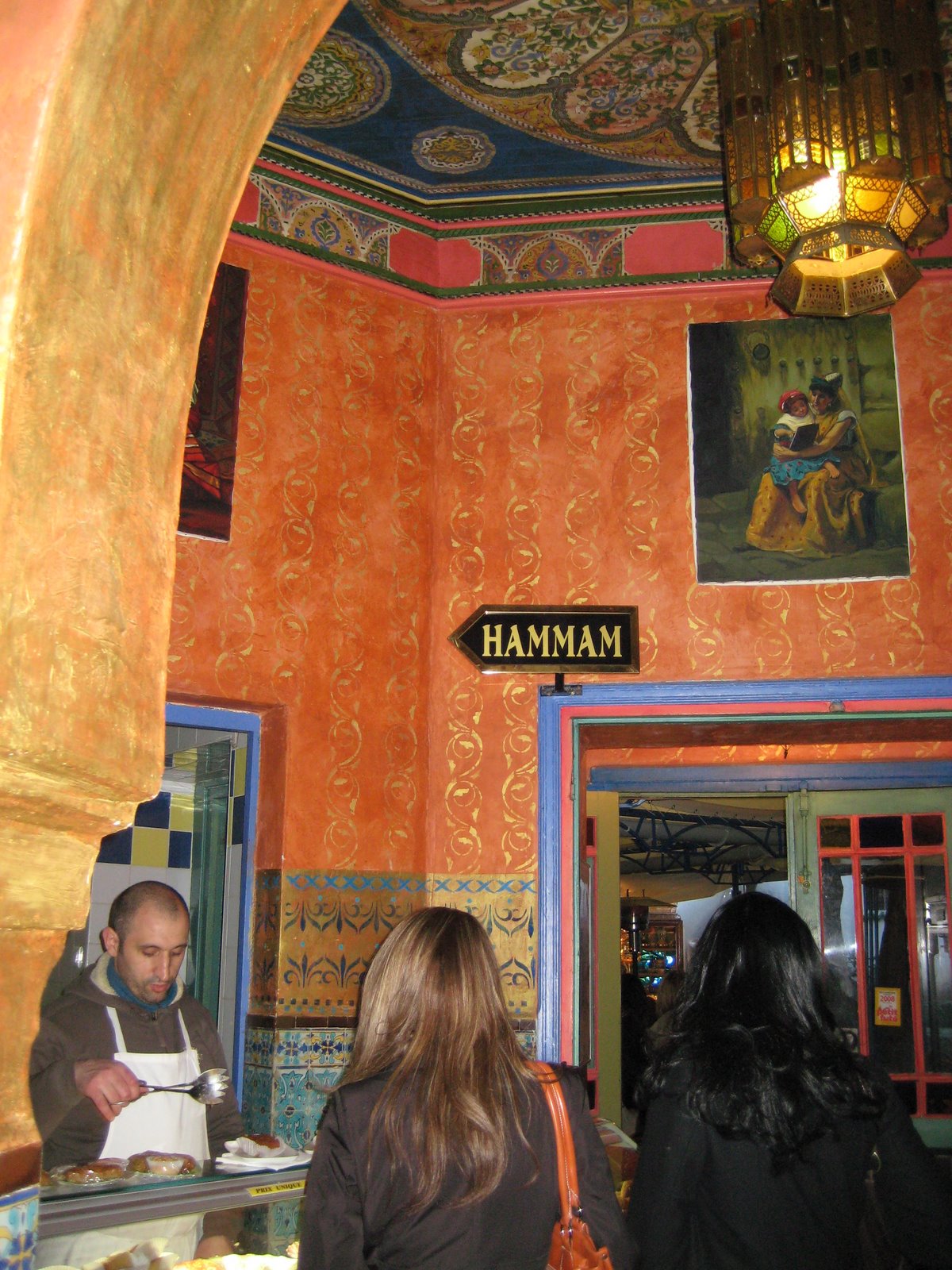
 The Mosquee de Paris is just outside the Jardin des Plantes’ walls. The less adventurous can have a look through the kaleidoscope without fully immersing themselves by ingesting a sugary Moroccan pastry on the terrace.
 The hammam package is 40 euros at the Mosque and I recommend it for its authenticity. A friend introduced me to another hammam called Medina with a much higher standard of cleanliness (your own gommage mitt and borrowed sandals, bathrobe and sarong) but there you are less depayse, less taken out of your world and submerged in Marrakech.
Mosquee de Paris Hammam
Medina Center Hammam

Related Articles
Editor's Picks Articles
Top Ten Articles
Previous Features
Site Map
Content copyright © 2023 by Melissa Demiguel. All rights reserved.
This content was written by Melissa Demiguel. If you wish to use this content in any manner, you need written permission. Contact Melissa Demiguel for details.
