Mother Goose Math

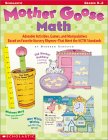
Mother Goose Math: Adorable Activities, Games and Manipulatives Based on Favorite Nursery Rhymes - That Meet the NCTM Standards
Author: Deborah Schecter
Publisher: Scholastic Professional Books 2003
Grades: K-2
The thought of nursery rhymes probably puts a smile on your face regardless of your age. Likewise, children enjoy learning and reciting nursery rhymes, and author, Deborah Schecter, had the ingenious idea to connect the rhythmic tunes to teaching math. Young students learn math concepts in a fun way at an early age. That’s always a good thing. Teachers don’t have to wonder how to tie the rhymes into their lessons. Schecter has already given it thought and shares detailed lesson plans and more. Here’s some of what you will find.
*Reproducible nursery rhymes and activity pages (I always look for reproducible pages.)
The nursery rhyme page is a full page and can be used as a coloring page.
*A side bar - tells what math skills the rhyme teaches and the materials needed
Also, there is a chart that show how each lesson correlates with NCTM Standards (National Council of Teachers of Mathematics)
*Step by step instructions - tells how to prepare for the lesson and suggestions for interaction while reading the rhyme and strategies for teaching the math concept. This is the most valuable part of the book to me because the reader is a benefactor of her classroom experience. A new teacher would definitely appreciate this feature.
* A reference to other book suggestions to extend the math concepts
Nursery rhymes included:
One, Two, Buckle My Shoe ……….recognizing, writing, and understanding numbers, counting to 10
Three Little Kittens …………….1 to 1 correspondence, skip counting, sorting, patterning
Old Mother Hubbard ……………addition, subtraction, fact families, making sets
The Queen of Hearts ………..addition and subtraction story problems, identifying attributes of shapes
Little Bo-Beep ………………coordinate geometry
Mistress Mary ………………measuring length, patterning
Wee Willie Winkie ……………telling time
Simple Simon ……………… using money, exploring fractions, identify attributes of shapes
To Banbury Cross …………… collecting, organizing, graphs
Mrs. Hen …………………….sorting and classifying by attributes, decision trees, venn diagrams
My favorite nursery rhyme activity is One, Two, Buckle My Shoe. I like the actions the children can pantomime, and the shoe book they take home is adorable.
The only suggestion I would make to author would be to include an approximate time of how long each lesson and activity would require. Otherwise, I think parents and teachers would find that this is one book that wouldn’t gather a lot of dust on the bookshelf. I have purchased it and plan to use it in my summer math workshops. If you have used or plan to use it, please share your experience in the math forum or via email. I would love to hear from you.
You Should Also Read:
Math Ridddles and Rhymes by Tang
Math Storybooks with Animals
Measuring Penny - Measurement Book Review

Related Articles
Editor's Picks Articles
Top Ten Articles
Previous Features
Site Map
Content copyright © 2023 by Beverly Mackie. All rights reserved.
This content was written by Beverly Mackie. If you wish to use this content in any manner, you need written permission. Contact Beverly Mackie for details.