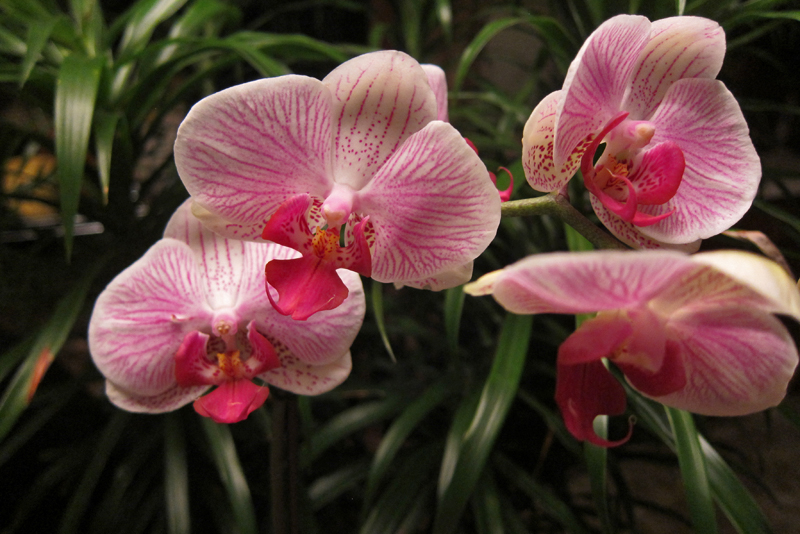
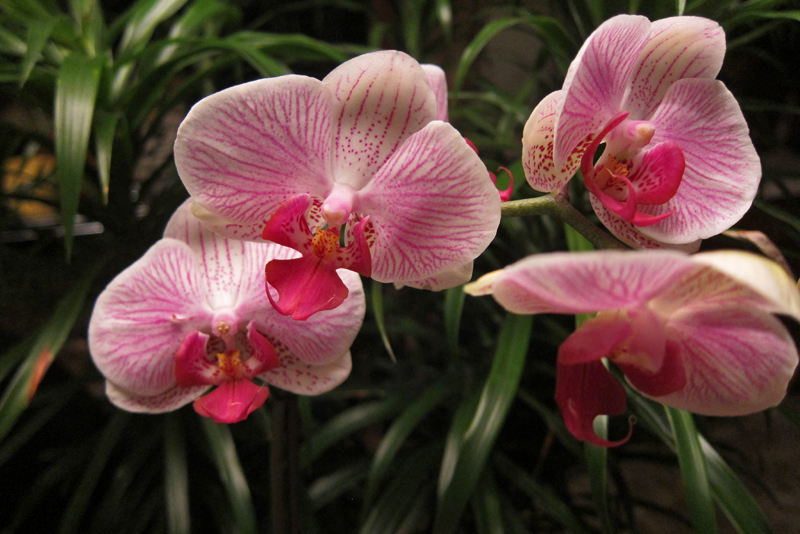
Winter Flowering Orchids
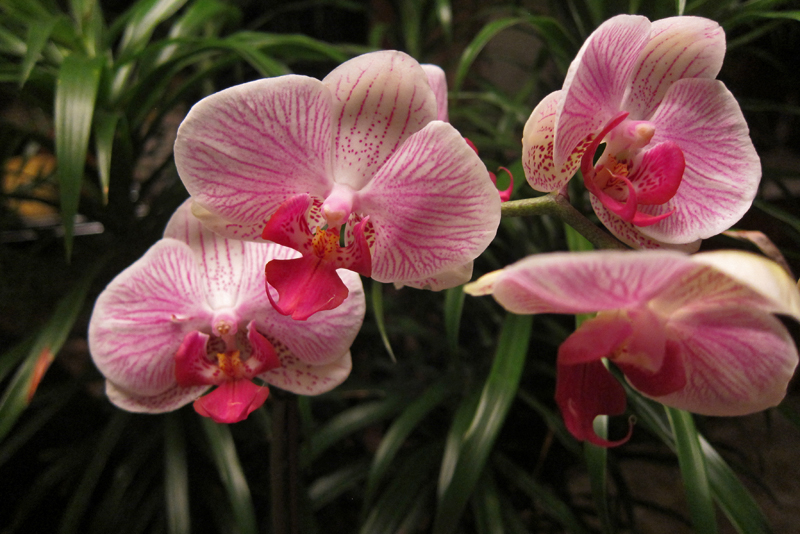
Orchids form a very unique group with different species of orchids flowering during different times of the year. There are orchids which flower in summers and autumn, these orchids have active growing season when temperatures are high. There are also orchids which flower in winters and spring; these orchids can tolerate low temperatures very well. These winter/spring flowering orchids have active growing season during winters. Many terrestrial orchid species inhabiting the temperate zones, easily tolerate and produce flowers in low temperatures conditions.
However, a large number of orchids inhabit tropical and sub-tropical zones and flower when temperatures are high. Out of these orchids, I have put together a list of winter and spring flowering orchids. You can use this list while searching for orchids flowering when temperatures are running low. These are as follows:
• Acampe ochracea a winter flowering, tropical orchid
• Acanthephippium sylhetense, a winter flowering
• Acrochaene punctate a winter flowering sub-tropical orchid
• Aerides fieldingii, a spring flowering orchid growing in tropical to sub-tropical regions
• Anoectochilus tortus, a winter flowering sub-tropical orchid
• Arundina graminifolia, a tropical orchid. It flowers all through the year and when temperatures are kept between 15°C – 20°C and good amount of sunlight.
• Brachycorythis iantha, winter flowering sub-tropical orchid.
• Bulbophyllum amplifolium, B. hirtum, B. khasianum, B. loepardium, B. viridifolium, B. wallichii are sub-tropical orchids which flower in early winters. While Bulbophyllum gymnopus is a sub-tropical winter flowering orchid.
• Calanthe densiflora, terrestrial orchid which flowers from early winter till spring.
• Coeloygnes are hardy orchids and can tolerate low temperatures.
Coeloygne arunachalensis, C. fuscescens, C. ovalis are tropical orchids flowering in winter. C. corymbosa, C. fuliginosa, C. punctulata are sub-tropical orchids flowering in winters. Sub-tropical orchids like C. cristata, C. viscosa flower till late spring.
• Cymbidiums can tolerate low temperatures. While many Cymbidium orchids flower in summers, they retain their leaves in winters. Cymbidium lowianum is a tropical orchid fowering in late spring. Cymbidium cochleare, C. elegans, C. iridioides, C. mastersii are winter flowering sub-tropical orchids. There are also terrestrial sub-tropical Cymbidiums which flowers till spring like C. cyperifolium and C. goeringii, while C. hookerianum is a sub-tropical epiphyte flowering till spring.
• Dendrobiums are generally less tolerant of low temperatures. However, some dendrobes flower in winter, like the tropical epiphytes D. eriaeflorum and D, falconeri. While D. heterocarpum, D. lituiflorum, D. longicornu flower in early winters. Tropical D. mannii flowers in early winters.
• Epigeneium fuscescens (a.k.a Dendrobium fuscescens) flowers in early winters.
• Eria coronaria and E. vittata flowers in winters in the subtropical regions of South Asia, while the sub-tropical E. spicata flowers in early winter.
• Some saprophytic orchids, like Galeola falconeri and G. lindleyana are seen flowering in early winters in the sub-tropical regions.
Most of the orchids listed above have beautiful flowers.
Sources
• Chowdhery, H.J. 1998. Orchids of Arunachal Pradesh.
• Dubey Anu. 2006. Morpho-physiological studies in some orchids of West Bengal. Ph. D dissertation.
However, a large number of orchids inhabit tropical and sub-tropical zones and flower when temperatures are high. Out of these orchids, I have put together a list of winter and spring flowering orchids. You can use this list while searching for orchids flowering when temperatures are running low. These are as follows:
• Acampe ochracea a winter flowering, tropical orchid
• Acanthephippium sylhetense, a winter flowering
• Acrochaene punctate a winter flowering sub-tropical orchid
• Aerides fieldingii, a spring flowering orchid growing in tropical to sub-tropical regions
• Anoectochilus tortus, a winter flowering sub-tropical orchid
• Arundina graminifolia, a tropical orchid. It flowers all through the year and when temperatures are kept between 15°C – 20°C and good amount of sunlight.
• Brachycorythis iantha, winter flowering sub-tropical orchid.
• Bulbophyllum amplifolium, B. hirtum, B. khasianum, B. loepardium, B. viridifolium, B. wallichii are sub-tropical orchids which flower in early winters. While Bulbophyllum gymnopus is a sub-tropical winter flowering orchid.
• Calanthe densiflora, terrestrial orchid which flowers from early winter till spring.
• Coeloygnes are hardy orchids and can tolerate low temperatures.
Coeloygne arunachalensis, C. fuscescens, C. ovalis are tropical orchids flowering in winter. C. corymbosa, C. fuliginosa, C. punctulata are sub-tropical orchids flowering in winters. Sub-tropical orchids like C. cristata, C. viscosa flower till late spring.
• Cymbidiums can tolerate low temperatures. While many Cymbidium orchids flower in summers, they retain their leaves in winters. Cymbidium lowianum is a tropical orchid fowering in late spring. Cymbidium cochleare, C. elegans, C. iridioides, C. mastersii are winter flowering sub-tropical orchids. There are also terrestrial sub-tropical Cymbidiums which flowers till spring like C. cyperifolium and C. goeringii, while C. hookerianum is a sub-tropical epiphyte flowering till spring.
• Dendrobiums are generally less tolerant of low temperatures. However, some dendrobes flower in winter, like the tropical epiphytes D. eriaeflorum and D, falconeri. While D. heterocarpum, D. lituiflorum, D. longicornu flower in early winters. Tropical D. mannii flowers in early winters.
• Epigeneium fuscescens (a.k.a Dendrobium fuscescens) flowers in early winters.
• Eria coronaria and E. vittata flowers in winters in the subtropical regions of South Asia, while the sub-tropical E. spicata flowers in early winter.
• Some saprophytic orchids, like Galeola falconeri and G. lindleyana are seen flowering in early winters in the sub-tropical regions.
Most of the orchids listed above have beautiful flowers.
Sources
• Chowdhery, H.J. 1998. Orchids of Arunachal Pradesh.
• Dubey Anu. 2006. Morpho-physiological studies in some orchids of West Bengal. Ph. D dissertation.
You Should Also Read:
Growing Orchids as Houseplants
Orchid Flora of Arunachal Pradesh
The Orchids of the Sikkim-Himalaya - Book Review

Related Articles
Editor's Picks Articles
Top Ten Articles
Previous Features
Site Map
Content copyright © 2023 by Anu Dharmani. All rights reserved.
This content was written by Anu Dharmani. If you wish to use this content in any manner, you need written permission. Contact Anu Dharmani for details.