Edging by Dagmar Pezzuto and Anne Orr
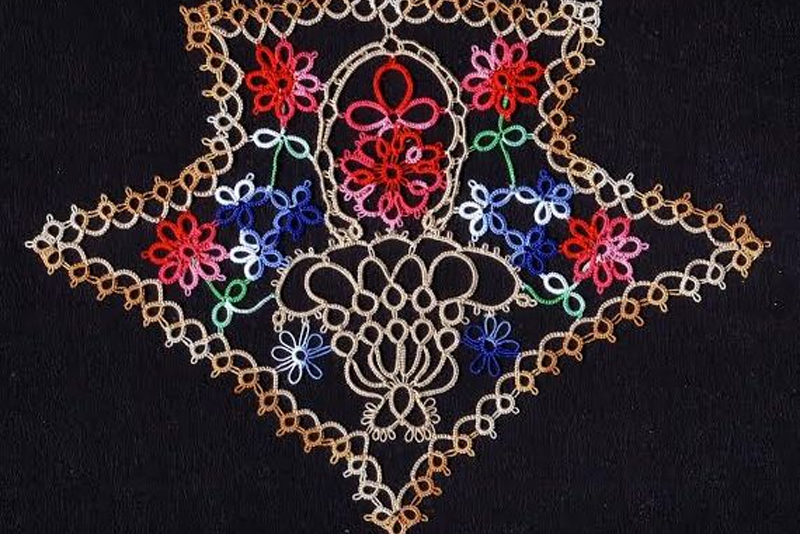
This edging was inspired by Anne Orr's pattern from J. & P. Coats "Crochet, Cross Stitch and Tatting" Book 14 ©1923. It has been revised and redesigned by Dagmar Pezzuto – 2014 ©
The tatting designs of Anne Orr and needlework articles published in many magazines such as Southern Woman's Magazine, Good Housekeeping and Better Homes and Gardens made tatting patterns available to all. Anne Champe Orr (1875-1946) was endlessly fascinated with needle work and designed and sold hundreds of thousands of patterns for cross stitch, quilting, crochet, filet crochet and tatting. She also provided employment for women in the Appalachians making appliquéd quilts and delicate tablecloths for sale. Anne is thought to have developed the split ring and daisy picot techniques. The tatting community is grateful for her many tatting patterns.
The entire copy of this Anne Orr book #14 is available for free download here at BellaOnline.com. See: https://www.bellaonline.com/articles/art30942.asp.

The pattern used is the third one down on the above page.
New sample provided by Dagmar Pezzuto.

Abbreviation R = ring CH = chain SR = split ring CL = cluny HCL = hanging cluny
- = picot BTS = bare thread space Clr = close
ROUND 1
SR= 5DS – 5DS / 5DS BTS ( R = 3DS – 1DS – 1DS – 1DS – 1DS – 3DS Clr.) BTS , 5DS Clr. Repeat 3x.
SR = 5DS – 5DS / 5DS – 5DS Clr. 3x Make the desired length
CORNER SR = 5DS/ 10DS BTS (R = 3DS – 1DS – 1DS – 1DS – 1DS – 3DS Clr.) BTS 5DS Clr.
ROUND 2 CL 1 = 18 passes -
Cl2 = 18 passes +(shuttle lock join to the SR,)
Cl3 = 18 passes –
Cl4 = 18 passes + SR Continue this way until the last SR.
The last cluny is HCL.
ROUND 3 CH = 3DS – 1DS – 1DS – 3DS + (shuttle lock join to the space or bend in the thread between two cluny leaves previous round.) Do the whole back. The decorative picots may be the same size or different sizes, according to each person's taste.

You Should Also Read:
How to use a picot gauge
Anne Orr Book 14
Cluny or Petal Tatting

Related Articles
Editor's Picks Articles
Top Ten Articles
Previous Features
Site Map
Content copyright © 2023 by Georgia Seitz. All rights reserved.
This content was written by Georgia Seitz. If you wish to use this content in any manner, you need written permission. Contact Georgia Seitz for details.