

Prix de Diane - When Parisians Wear Hats
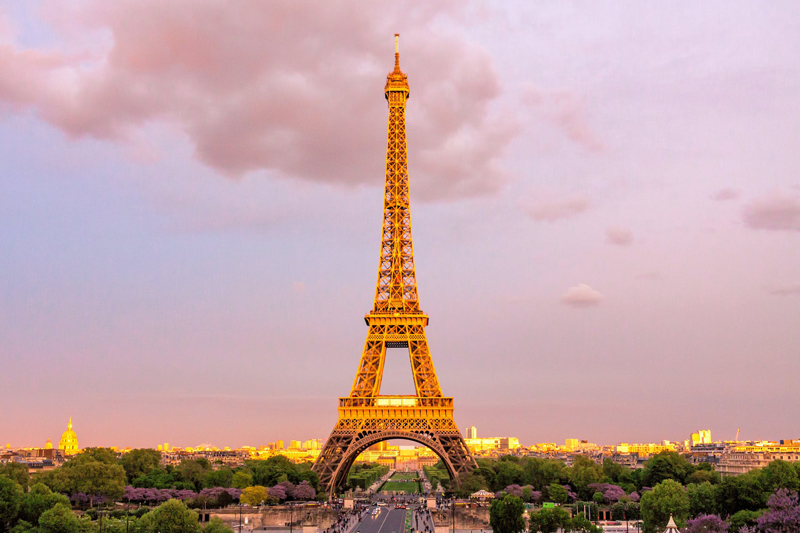
Any stranger to Paris arriving at the Gare du Nord the day of the race would have thought it the most fashionable of cities. The women, dressed head to toe in artful hats, summer lace frocks and the seasons camel-colored leather heels that zip up the back, milled about the station waiting to board the train for the half hour’s ride to Chantilly. I myself thought it must have been something like this once upon a time when people knew how to dress and a hat was the accessory one felt naked without. Even the mode of travel was appropriate to my turn of the century daydream.


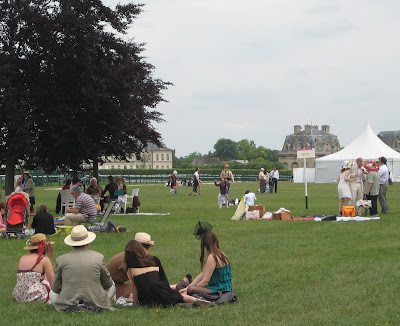
The Prix de Diane is the horse race of the year where people go to see and be seen, a French equivalent of the Kentucky Derby. On the manicured fields downwind from the chateau, well worth visiting, blankets were spread, picnics unpacked from polka-dotted hatboxes and champagne uncorked in anticipation of the race.
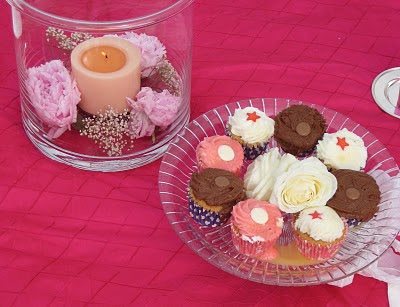
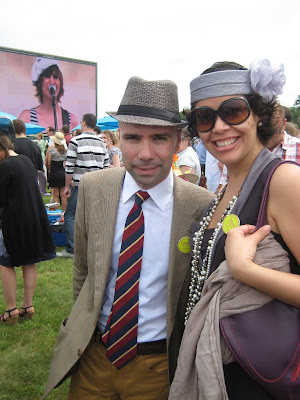
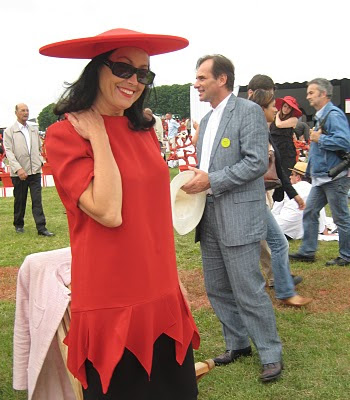
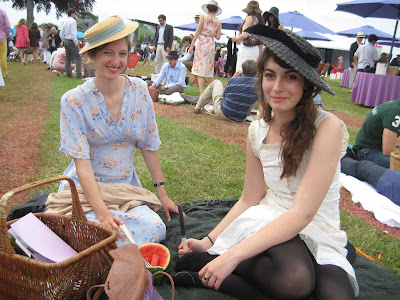
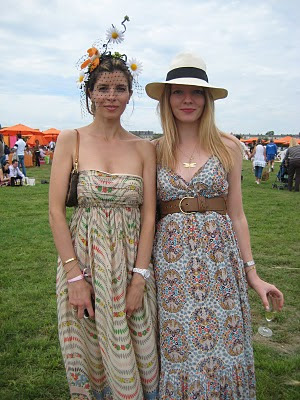
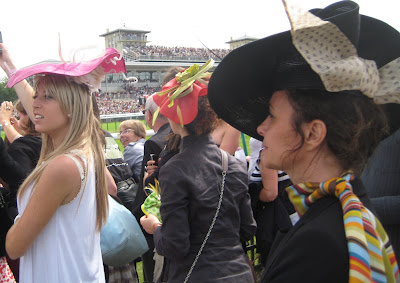
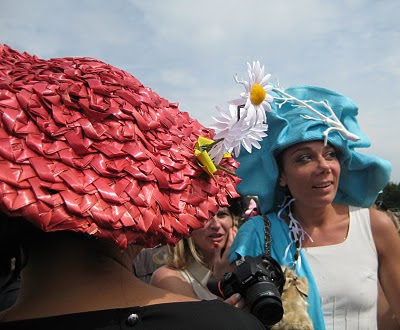
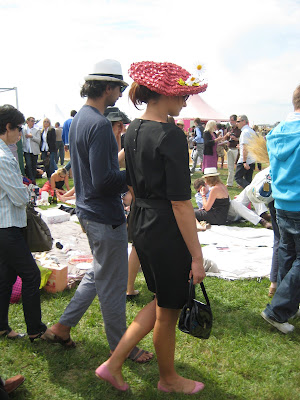
Everyone was friendly, out of their shell in costume. My blue sun hat with the gauzy flower broach I attached last minute looked plain Jane alongside feathers, Suisse lace, the rattan hats you only otherwise see at weddings and heads encircled in bandeaus that recall the 20s.
The champion horses were so amped for the race their jockeys struggled to stay mounted in the parade to the starting gate. With all the bucking they looked like rodeo riders in green silk and dainty nutshell hats. The toll of a bell unleashed an earthquake of hoof patter that approached then subsided, and the race was over as quickly as it had begun. Catnaps were taken, backs up to the blanket of cottony clouds, in the hour that elapsed before the next round.
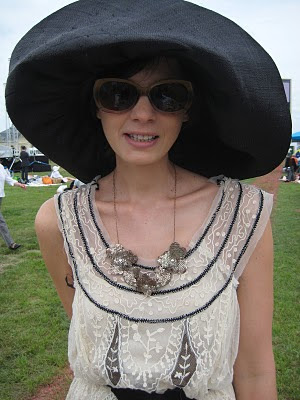
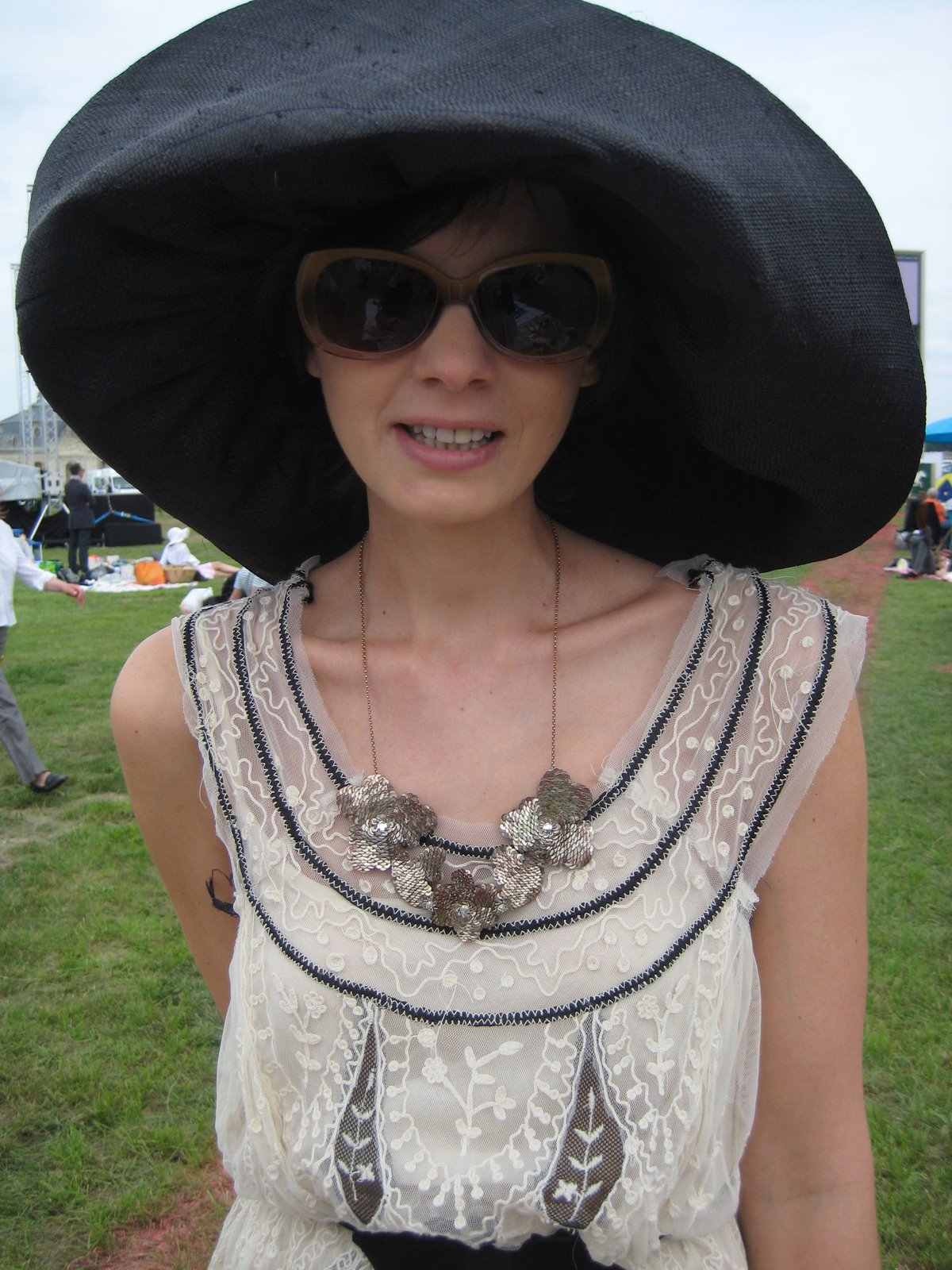
The free event is a lazy daisy day of people watching of the best sort. I won’t miss another. Next year though, I’ll pull out all the stops. Even my bird’s nest hat isn’t fanciful enough. These were my favorite looks…

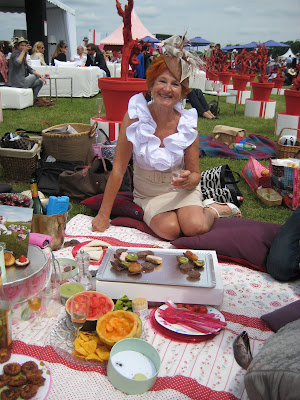

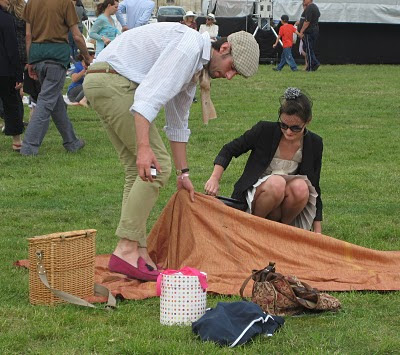


The Prix de Diane is the horse race of the year where people go to see and be seen, a French equivalent of the Kentucky Derby. On the manicured fields downwind from the chateau, well worth visiting, blankets were spread, picnics unpacked from polka-dotted hatboxes and champagne uncorked in anticipation of the race.


Everyone was friendly, out of their shell in costume. My blue sun hat with the gauzy flower broach I attached last minute looked plain Jane alongside feathers, Suisse lace, the rattan hats you only otherwise see at weddings and heads encircled in bandeaus that recall the 20s.
The champion horses were so amped for the race their jockeys struggled to stay mounted in the parade to the starting gate. With all the bucking they looked like rodeo riders in green silk and dainty nutshell hats. The toll of a bell unleashed an earthquake of hoof patter that approached then subsided, and the race was over as quickly as it had begun. Catnaps were taken, backs up to the blanket of cottony clouds, in the hour that elapsed before the next round.
The free event is a lazy daisy day of people watching of the best sort. I won’t miss another. Next year though, I’ll pull out all the stops. Even my bird’s nest hat isn’t fanciful enough. These were my favorite looks…


You Should Also Read:
The Chateau
The race

Related Articles
Editor's Picks Articles
Top Ten Articles
Previous Features
Site Map
Content copyright © 2023 by Melissa Demiguel. All rights reserved.
This content was written by Melissa Demiguel. If you wish to use this content in any manner, you need written permission. Contact Melissa Demiguel for details.
