

Fertilizing Houseplants
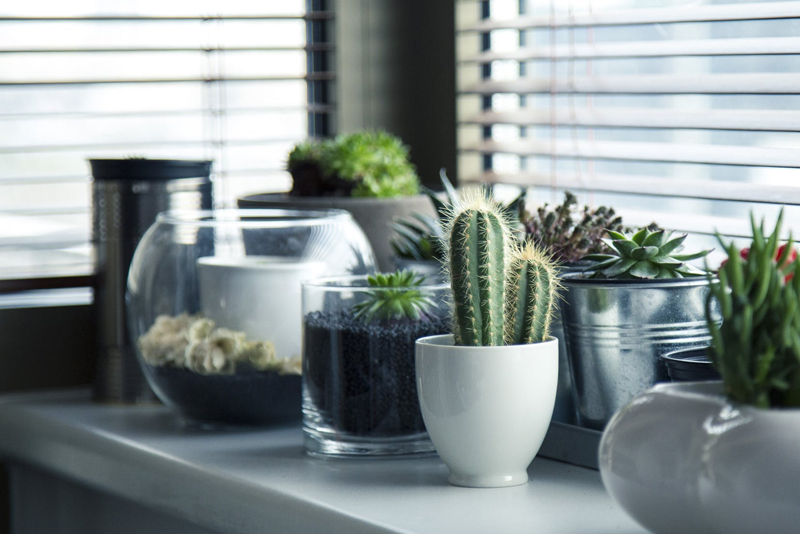
Just like people, plants need good nutrition to thrive. Plants grown in the ground can obtain it from the soil, but houseplants need someone to provide it for them. The elements required by plants are called macronutrients, or nutrients required in relatively large amounts, and micronutrients, or nutrients required in relatively small quantities. Whether an element is required in large or small quantities, they are all used in combination by a plant to complete its life processes.
The three, well-known macronutrients are nitrogen, phosphorous and potassium. They are the nutrients being referred to in the NPK ratio on the fertilizer box, i.e. 10-10-10. If one of these elements is missing from your plants diet, you will see symptoms pretty quickly.
Nitrogen is used by plants in greater quantity than any other element. A plant that is deficient in nitrogen will grow more slowly, have smaller leaves and thinner stems. These stems may also start to become woody in appearance and texture. Leaves will turn yellow (and purple in some species) and begin to fall off the plant. Leaf yellowing will be seen first in older leaves.
Phosphorous deficiency may result in leaves that become darker green in color. Purpling may occur in some species with this deficiency as well. Leaves will be misshapen and have dead brown spots on them; older leaves will begin to die. The plant may also begin to have thinner stems.
Yellowing in patches or around the leaf’s edge is an early indicator of potassium deficiency. Leaves may become brown and dead between the veins and at the tips. They may also wrinkle or curl up. The distance between leaves on the stems may become very short on the new growth and, again, stems may begin to be thinner.
Deficiency of micronutrients can be just as symptomatically drastic as a deficiency in one of the macronutrients. In general, if a plant is exhibiting thin stems, a change in size, shape or color of leaves, a lack of vigor or a failure to flower, a nutrient deficiency is most likely to blame. Avoid this by checking that your fertilizer contains both macro- and micronutrients.
Plant fertilizer is available in liquid, powder, pellet and stick form. The type you use depends on the plant, how much control you want and how likely you are to maintain a schedule. Orchids are easiest to fertilize with a liquid or powder. Pellets make it nearly impossible to over-fertilize and one application will do the job for months.
Take care to follow the instructions on the fertilizer package. Too much fertilizer can be lethal. If you think you have over-fertilized, you should thoroughly flush the pot out with clear water. Do this by watering the plant until water comes out the bottom hole several times over the course of an hour or so. Excess fertilizer salts will be carried away with the water that drains through.
The three, well-known macronutrients are nitrogen, phosphorous and potassium. They are the nutrients being referred to in the NPK ratio on the fertilizer box, i.e. 10-10-10. If one of these elements is missing from your plants diet, you will see symptoms pretty quickly.
Nitrogen is used by plants in greater quantity than any other element. A plant that is deficient in nitrogen will grow more slowly, have smaller leaves and thinner stems. These stems may also start to become woody in appearance and texture. Leaves will turn yellow (and purple in some species) and begin to fall off the plant. Leaf yellowing will be seen first in older leaves.
Phosphorous deficiency may result in leaves that become darker green in color. Purpling may occur in some species with this deficiency as well. Leaves will be misshapen and have dead brown spots on them; older leaves will begin to die. The plant may also begin to have thinner stems.
Yellowing in patches or around the leaf’s edge is an early indicator of potassium deficiency. Leaves may become brown and dead between the veins and at the tips. They may also wrinkle or curl up. The distance between leaves on the stems may become very short on the new growth and, again, stems may begin to be thinner.
Deficiency of micronutrients can be just as symptomatically drastic as a deficiency in one of the macronutrients. In general, if a plant is exhibiting thin stems, a change in size, shape or color of leaves, a lack of vigor or a failure to flower, a nutrient deficiency is most likely to blame. Avoid this by checking that your fertilizer contains both macro- and micronutrients.
Plant fertilizer is available in liquid, powder, pellet and stick form. The type you use depends on the plant, how much control you want and how likely you are to maintain a schedule. Orchids are easiest to fertilize with a liquid or powder. Pellets make it nearly impossible to over-fertilize and one application will do the job for months.
Take care to follow the instructions on the fertilizer package. Too much fertilizer can be lethal. If you think you have over-fertilized, you should thoroughly flush the pot out with clear water. Do this by watering the plant until water comes out the bottom hole several times over the course of an hour or so. Excess fertilizer salts will be carried away with the water that drains through.
This site needs an editor - click to learn more!
You Should Also Read:
Interiorscaping Your Home Like a Professional
Non-Toxic Pest Control
Houseplants Newsletter
Related Articles
Editor's Picks Articles
Top Ten Articles
Previous Features
Site Map
Content copyright © 2023 by Lisa Beth Voldeck. All rights reserved.
This content was written by Lisa Beth Voldeck. If you wish to use this content in any manner, you need written permission. Contact
BellaOnline Administration
for details.
