

Textbooks on a Student Budget

As a college student, you are required to use one or more textbooks for the majority of your courses. Textbooks can be very expensive. Therefore, if your budget is tight, you may want to look for creative ways to access the books you need. Below are some suggestions:
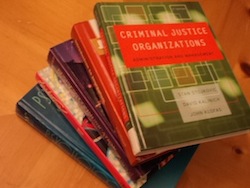
Used Books
Purchase previously owned textbooks. Used textbooks can often be found in both college bookstores and online. If you are planning to purchase used textbooks, it is important to shop early. If you are ordering your textbooks online, it may take several weeks to receive your books. Even if you plan to purchase your used textbooks from your college's bookstore, it is still important to purchase your textbooks early because many other students are also looking for used textbooks; therefore, used textbooks may sell out.
When buying a used textbook, if possible, check the text to make sure that it is in good condition. Make sure that all of the pages are intact and not so heavily highlighted that it will be a distraction for you. If you are purchasing your used textbooks online, read all seller's notes about the condition of the books.
Book Rental
Rent textbooks to save money. Book rental programs allow students to use the textbooks for a specified period of time (often the length of the class). More and more colleges are offering (and sometimes requiring) book rentals. Options vary among the colleges that do have book rental programs. Some colleges rent hard copies of books, while others rent e-books. On-campus book rental programs are usually available through the campus bookstore. In addition, there are online textbook rental programs that are not affiliated with any particular college
Previous Editions
Buy an older edition of the textbook. New editions of many textbooks are generally produced every few years. Sometimes the changes between editions are minor. Since the prices of previous editions is generally very low, you can save a great deal of money if you use an older edition. Before you purchase an older edition, ask your professor if the older edition of the textbook would be appropriate for the course.
Share Books
Share textbooks with a friend. If you have a friend who is taking a course that uses the same textbook, you can share the book and split the cost. Careful planning will be required to ensure you each have enough time to use the book. It is also important to plan ahead of time what will happen to the book at the end of the course.
Library Editions
Borrow textbook from your library. College libraries generally carry copies of some textbooks used in courses. It is important to remember the required books may not always be available and they often can only be borrowed for a short period of time.
Borrowing Books
Ask your friends and professors if they have a copy of the book you may borrow. If you have a friend who kept the book from a previous academic term, you may be able to borrow the book from him or her. Also, sometimes professors have an extra copy of the textbook that they will lend to a student who has a financial need.
The cost of textbooks can be quite high. If your budget is tight, you will want to find ways to get the textbooks you need without straining your budget. Use the above methods to cut costs when obtaining textbooks for your college courses.
Used Books
Purchase previously owned textbooks. Used textbooks can often be found in both college bookstores and online. If you are planning to purchase used textbooks, it is important to shop early. If you are ordering your textbooks online, it may take several weeks to receive your books. Even if you plan to purchase your used textbooks from your college's bookstore, it is still important to purchase your textbooks early because many other students are also looking for used textbooks; therefore, used textbooks may sell out.
When buying a used textbook, if possible, check the text to make sure that it is in good condition. Make sure that all of the pages are intact and not so heavily highlighted that it will be a distraction for you. If you are purchasing your used textbooks online, read all seller's notes about the condition of the books.
Book Rental
Rent textbooks to save money. Book rental programs allow students to use the textbooks for a specified period of time (often the length of the class). More and more colleges are offering (and sometimes requiring) book rentals. Options vary among the colleges that do have book rental programs. Some colleges rent hard copies of books, while others rent e-books. On-campus book rental programs are usually available through the campus bookstore. In addition, there are online textbook rental programs that are not affiliated with any particular college
Previous Editions
Buy an older edition of the textbook. New editions of many textbooks are generally produced every few years. Sometimes the changes between editions are minor. Since the prices of previous editions is generally very low, you can save a great deal of money if you use an older edition. Before you purchase an older edition, ask your professor if the older edition of the textbook would be appropriate for the course.
Share Books
Share textbooks with a friend. If you have a friend who is taking a course that uses the same textbook, you can share the book and split the cost. Careful planning will be required to ensure you each have enough time to use the book. It is also important to plan ahead of time what will happen to the book at the end of the course.
Library Editions
Borrow textbook from your library. College libraries generally carry copies of some textbooks used in courses. It is important to remember the required books may not always be available and they often can only be borrowed for a short period of time.
Borrowing Books
Ask your friends and professors if they have a copy of the book you may borrow. If you have a friend who kept the book from a previous academic term, you may be able to borrow the book from him or her. Also, sometimes professors have an extra copy of the textbook that they will lend to a student who has a financial need.
The cost of textbooks can be quite high. If your budget is tight, you will want to find ways to get the textbooks you need without straining your budget. Use the above methods to cut costs when obtaining textbooks for your college courses.
You Should Also Read:
Grocery Shopping on a Student Budget

Related Articles
Editor's Picks Articles
Top Ten Articles
Previous Features
Site Map
Content copyright © 2023 by Susan D. Bates. All rights reserved.
This content was written by Susan D. Bates. If you wish to use this content in any manner, you need written permission. Contact Eliza Morrison Nimmich for details.
