Farmhouse Ales - Book Review
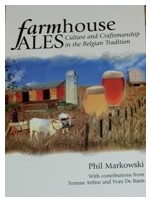 An introduction to farmhouse ales is a liberating experience for those who live by the rules of endless possibilities. In Farmhouse Ales: Culture and Craftsmanship in the Belgian Tradition, Phil Markowski provides a vivid literary experience by clearly defining the elusive quality that holds such allure for the beer enthusiast, whether as a brewer, historian, or beerficionado. Enhanced by a superb historical essay on Saison by Yvan DeBaets and a well-grounded foreword by Tomme Arthur, this volume stands as a comprehensive guide to the brewing traditions that so clearly define France and Belgium.
Traditional Farmhouse Ales comprise the family of beers known as Biere de Garde and Saison, although the line that separates the two styles is often blurred by traditions that have struggled to endure, despite the upheavals of changing borders and paradigms, World Wars, and industrialization that led to the closure of countless small farmhouse breweries.
My personal experience has consisted of esoteric discussions that seek to delineate the differences between Bieres de Garde and Saisons. Our conclusions echo the subtle intangibles that Markowski so clearly defines. In his observation about Saison, he states, “These vague and varied descriptions will frustrate anyone foolish or stubborn enough to try to pin down these wildly complex, deceptively simple rustic ales,” and of Biere de Garde, he says “If there is any accepted physical or sensory standard, French brewers may quietly acknowledge it, but will put their own spin on it to make it their own.”
Markowski pushes onward, however, seeking to define them by presenting their historical significance and the conditions under which they developed. He examines the terroir, including the climatic conditions that led to their development, the geology that affects the water of the region, European grain profiles, Belgian and specialty hops, adjuncts, spices, and the complex nature of yeasts that stray wildly from (or may include) the single-strain traditions of lager brewing. His discussions include technical details on decoction, infusion and step infusion mashing, and the results of storage or “garding” under a variety of conditions.
Not only does he present detailed information for the seasoned brewer, but he also encourages creativity on one’s own terms. His descriptions are so vivid that even a non-brewer can envision working in his own simple farmhouse brewery, with mash tuns and hoses, cool ships and vats, replicating the delicate nuances of these distinctive beers.
Markowski’s proficiencies in chemistry and math define the scientific art that makes the crafting of these beers possible, even for one who does not have the advantage of living in Hainaut, Nord or Pas de Calais. His descriptions present visuals for the mind’s eye and paint the palate with flavors so intense they become real. With your senses fully piqued, he stimulates action by providing sources for ingredients so you, too, can create your own magical interpretation of these beers.
He inspires by providing full details of examples that define each style, noting a full description of each brewery and technical specifications that comprise each beer: Plato readings, ingredients used, temperatures, and storage or garding. He follows each with clear tasting notes that serve to illustrate the broad range of possibilities in these refreshing beers. In the words of Markowski, “…almost anything goes.”
For more information: Farmhouse Ales: Culture and Craftsmanship in the Belgian Tradition
Cheers!

You Should Also Read:
Homebrew Tips for the Novice Brewer
Beer & Brewing Shop
Homebrewing - Books & Resources - Novice to Expert

Related Articles
Editor's Picks Articles
Top Ten Articles
Previous Features
Site Map
Content copyright © 2023 by Carolyn Smagalski. All rights reserved.
This content was written by Carolyn Smagalski. If you wish to use this content in any manner, you need written permission. Contact Carolyn Smagalski for details.