

Bahá'í Administration
There are no clergy in the Bahá'í Faith, so its community affairs are guided and directed by nine-member elected institutions on the local, national, regional and international levels. Theological advice, counseling, and study are handled by an appointed body consisting of those especially gifted with understanding of the Writings of the Fatih.
Local institutions are called Spiritual Assemblies, and consist of nine adult believers elected once a year from the Bahá'ís resident in the area. There can be many Assemblies across the countryside, although in the US, their jurisdictions usually coincide with civil boundaries. There are presently more than 10,000 local Asssemblies in the world.
National Spiritual Assemblies are elected annually in April, by delegates elected previously at conventions held in electoral units that combine a number of local Bahá'í communities. These national bodies are concerned with the affairs of the Bahá'í Faith in the country as a whole, and provide guidance and direction for concerted actions and projects too large for any one local community to handle, such as coordinating religious school curricula and national media coverage. There are about 200 National Assemblies.
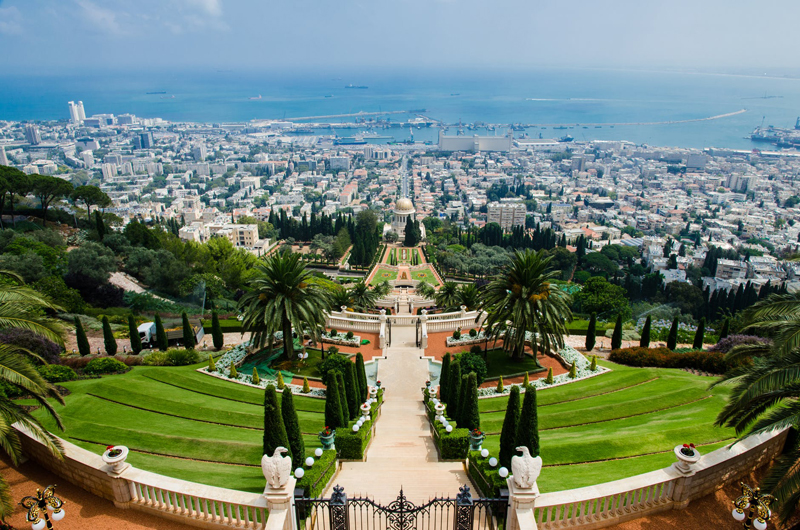
On the international level, because this is a world religion of about five million scattered across more than 100,000 localities, the Universal House of Justice is elected every five years, by National Assembly members acting as delegates. It is based in Haifa, Israel, on Mount Carmel.
All of these institutions are manned by ordinary people, elected by their fellow believers because they demonstrate qualities of "unquestioned loyalty, of selfless devotion, of a well-trained mind, of recognized ability and mature experience…" Bahá'í Administration, p. 88
Any adult Bahá'í resident in the respective community is eligible for election. (See Part 2 of this series on Bahá'í Elections)
The appointive arm of Bahá'í Administration is much closer to what I always grew up thinking clergy were: the loving, supportive resources for spiritual guidance and insights. Beginning with Bahá'u'lláh, especially erudite followers, whose understanding of the Writings and outstanding character made them pillars, were appointed to be Hands of the Cause of God, for life. Provision for their appointment rested only with the Central Figures of the Faith: Bahá'u'lláh, 'Abdu'l-Bahá and Shoghi Effendi, the Guardian. When the Guardian died without naming a successor, the institution of the Guardianship disappeared, and so did the appointment of any new Hands of the Cause.
The Universal House of Justice, knowing that the Bahá'í Coummnity needed the assistance of these resource people, designed an institution called the Continental Board of Counselors. These Counselors serve five-year terms, usually confined to specific countries or continental boundaries. They guide and are assisted by Auxiliary Boards, regional assistants originally helping the Hands of the Cause and now the Counselors, who appoint them yearly to spread the network down to the local Bahá'í communities and individuals. So, there is always someone close to whom I can direct a research question, or bounce some ideas off, or just ask for help figuring out some personal spiritual issue. They don't tell me what to do, but they can lead me to the guidance laid down in the Writings and consult with me while I make my own path.
It is interesting to note that the administration of this religion has been divided between two distinct pillars: the elective bodies, with powers to make decisions as a group but not individually, and the appointed, who operate as individuals, but with no power to tell anyone what to do. There can be no personal power or chance for aggrandizement in either position.
But with all of that, what the Bahá'í Faith is about is changing the world one heart at a time -- beginning with my own. Believers are committed to daily work on their character and develop the virtues necessary to make a better world. This is a new religion, relatively speaking, and has not reached its potential. We are still at work to understand the Plan and the Process.
"... The permanence and stability achieved by any association, group or nation is a result of -- and dependent upon -- the soundness and worth of the principles upon which it bases the running of its affairs and the direction of its activities. The guiding principles of the Baha'is are: honesty, love, charity and trustworthiness; the setting of the common good above private interest; and the practice of godliness, virtue and moderation..." -- Universal House of Justice, from a letter dated 18 December 1982, quoted in the compilation, Crisis and Victory, p. 45-46
Local institutions are called Spiritual Assemblies, and consist of nine adult believers elected once a year from the Bahá'ís resident in the area. There can be many Assemblies across the countryside, although in the US, their jurisdictions usually coincide with civil boundaries. There are presently more than 10,000 local Asssemblies in the world.
National Spiritual Assemblies are elected annually in April, by delegates elected previously at conventions held in electoral units that combine a number of local Bahá'í communities. These national bodies are concerned with the affairs of the Bahá'í Faith in the country as a whole, and provide guidance and direction for concerted actions and projects too large for any one local community to handle, such as coordinating religious school curricula and national media coverage. There are about 200 National Assemblies.
On the international level, because this is a world religion of about five million scattered across more than 100,000 localities, the Universal House of Justice is elected every five years, by National Assembly members acting as delegates. It is based in Haifa, Israel, on Mount Carmel.
All of these institutions are manned by ordinary people, elected by their fellow believers because they demonstrate qualities of "unquestioned loyalty, of selfless devotion, of a well-trained mind, of recognized ability and mature experience…" Bahá'í Administration, p. 88
Any adult Bahá'í resident in the respective community is eligible for election. (See Part 2 of this series on Bahá'í Elections)
The appointive arm of Bahá'í Administration is much closer to what I always grew up thinking clergy were: the loving, supportive resources for spiritual guidance and insights. Beginning with Bahá'u'lláh, especially erudite followers, whose understanding of the Writings and outstanding character made them pillars, were appointed to be Hands of the Cause of God, for life. Provision for their appointment rested only with the Central Figures of the Faith: Bahá'u'lláh, 'Abdu'l-Bahá and Shoghi Effendi, the Guardian. When the Guardian died without naming a successor, the institution of the Guardianship disappeared, and so did the appointment of any new Hands of the Cause.
The Universal House of Justice, knowing that the Bahá'í Coummnity needed the assistance of these resource people, designed an institution called the Continental Board of Counselors. These Counselors serve five-year terms, usually confined to specific countries or continental boundaries. They guide and are assisted by Auxiliary Boards, regional assistants originally helping the Hands of the Cause and now the Counselors, who appoint them yearly to spread the network down to the local Bahá'í communities and individuals. So, there is always someone close to whom I can direct a research question, or bounce some ideas off, or just ask for help figuring out some personal spiritual issue. They don't tell me what to do, but they can lead me to the guidance laid down in the Writings and consult with me while I make my own path.
It is interesting to note that the administration of this religion has been divided between two distinct pillars: the elective bodies, with powers to make decisions as a group but not individually, and the appointed, who operate as individuals, but with no power to tell anyone what to do. There can be no personal power or chance for aggrandizement in either position.
But with all of that, what the Bahá'í Faith is about is changing the world one heart at a time -- beginning with my own. Believers are committed to daily work on their character and develop the virtues necessary to make a better world. This is a new religion, relatively speaking, and has not reached its potential. We are still at work to understand the Plan and the Process.
"... The permanence and stability achieved by any association, group or nation is a result of -- and dependent upon -- the soundness and worth of the principles upon which it bases the running of its affairs and the direction of its activities. The guiding principles of the Baha'is are: honesty, love, charity and trustworthiness; the setting of the common good above private interest; and the practice of godliness, virtue and moderation..." -- Universal House of Justice, from a letter dated 18 December 1982, quoted in the compilation, Crisis and Victory, p. 45-46
You Should Also Read:
There Are No Clergy in the Bahá'í Faith

Related Articles
Editor's Picks Articles
Top Ten Articles
Previous Features
Site Map
Content copyright © 2023 by Cheryll Schuette. All rights reserved.
This content was written by Cheryll Schuette. If you wish to use this content in any manner, you need written permission. Contact Cheryll Schuette for details.
