Good Looking Plant Combinations
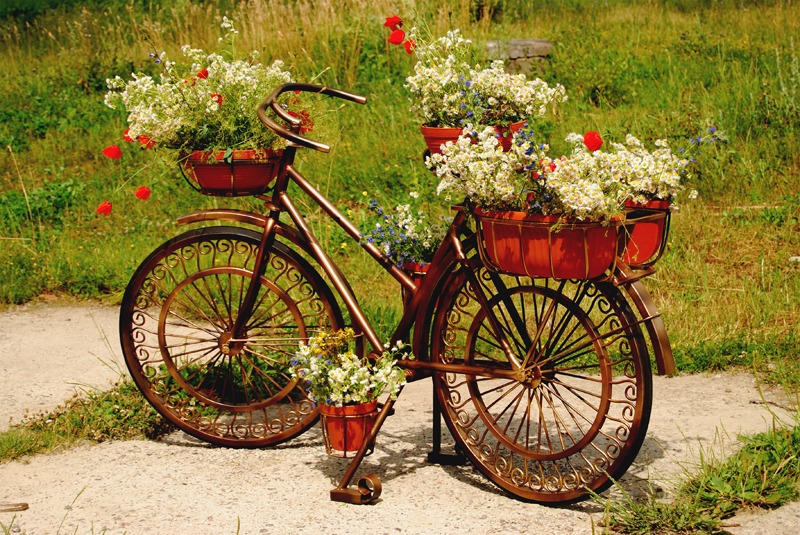
I love to combine several plants in a single container for visual effect. These types of container plants are increasingly popular at garden centers and nurseries but they’re usually much more expensive because they are so beautiful. But you can create these beauties yourself for a fraction of the cost – and you get the bragging rights when people stop to admire your container plants!
The key to success when combining plants in a single container is to make sure each plant has the same disposition, requiring similar light, soil and water requirements. Plants that require full sun shouldn’t be mixed with plants that need shade or vice versa. If you combine Boston ferns with Hibiscus, you’re guaranteed to kill something. Hibiscus requires full sun to bloom and most ferns will wither in the sun.
Similarly, make sure to combine plants with the same water needs. Adding a succulent like Hen and Chicks with Petunias might look great, but eventually one of them will die from too much water or from dehydration. Most nursery plants will come with identification tags that list how much sun and water a plant can tolerate. Group plants together with similar water and sun requirements.
Plants can be combined in any size container, as long as the plant size is proportionate to the container. Succulents take up very little space, and annuals have shallow root systems so many of them can be combined in a small container. Larger plants or perennials, which have deeper roots, will require a larger pot – 14” or more.
Many horticulturists and landscapers recommend planting in threes. A great container garden will include a tall specimen plant, a medium growth filler and a trailing plant. The term specimen plant is a general, catch all term to describe any plant that is especially eye catching, is a great conversation piece or that dominates a landscape or container. Start your container with a good specimen plant, something that’s going to grow a full foot taller than your filler plants. You want it to rise above the other plants in the container.
Next, add a medium growth plant. This plant will be about half the height of your specimen plant. I’ve planted a single filler plant next to my specimen plant, or in some cases, I’ve used several filler plants and planted completely around the specimen plant. Either way, the visual effect is the same – one tall, showy plant and another shorter plant.
As the last step, add a trailing plant to the container. This can be any plant will flow over the container. Again, I’ve put a single trailing plant in the pot, or several trailing plants – it depends on how big the pot is and the growth habit of the plant. If the trailing plant is going to grow quickly, then just plant one. However, if it’s a slow grower, than more than one plant can be added.
The tall plant, the filler plant and the trailing plant will give the container a sense of balance. Keep in mind that some plants may need a few weeks to grow into your vision. For example, the specimen plant may seem to be buried in your filler plant, but that’s okay, it’ll grow.
Using these principles, you can combine any number of plants in a single container for visual appeal. It’s not uncommon to see me at my local garden center, placing individually potted plants next to each other, stepping back and evaluating whether they would make an appealing combination.
The great thing about container gardening is that if you create a combination that you don’t like, you can simply dig the plants out of the container and combine them with something else! Don’t be afraid to experiment – there’s no limit to the beauty we can create.
In future articles I'll be discussing combining plants with different leaf color and textures and flowers, and I'll share some of my favorite combinations of plants.
................................................................................
CASUAL VISITOR … and just browsing? Why not sign up to the Container Garden newsletter? It won’t matter what space or how many pots you have or even how much time you have to spend in your container garden; what will matter is that you get our reminders and good advice and ideas all in one interesting article.
The key to success when combining plants in a single container is to make sure each plant has the same disposition, requiring similar light, soil and water requirements. Plants that require full sun shouldn’t be mixed with plants that need shade or vice versa. If you combine Boston ferns with Hibiscus, you’re guaranteed to kill something. Hibiscus requires full sun to bloom and most ferns will wither in the sun.
Similarly, make sure to combine plants with the same water needs. Adding a succulent like Hen and Chicks with Petunias might look great, but eventually one of them will die from too much water or from dehydration. Most nursery plants will come with identification tags that list how much sun and water a plant can tolerate. Group plants together with similar water and sun requirements.
Plants can be combined in any size container, as long as the plant size is proportionate to the container. Succulents take up very little space, and annuals have shallow root systems so many of them can be combined in a small container. Larger plants or perennials, which have deeper roots, will require a larger pot – 14” or more.
Many horticulturists and landscapers recommend planting in threes. A great container garden will include a tall specimen plant, a medium growth filler and a trailing plant. The term specimen plant is a general, catch all term to describe any plant that is especially eye catching, is a great conversation piece or that dominates a landscape or container. Start your container with a good specimen plant, something that’s going to grow a full foot taller than your filler plants. You want it to rise above the other plants in the container.
Next, add a medium growth plant. This plant will be about half the height of your specimen plant. I’ve planted a single filler plant next to my specimen plant, or in some cases, I’ve used several filler plants and planted completely around the specimen plant. Either way, the visual effect is the same – one tall, showy plant and another shorter plant.
As the last step, add a trailing plant to the container. This can be any plant will flow over the container. Again, I’ve put a single trailing plant in the pot, or several trailing plants – it depends on how big the pot is and the growth habit of the plant. If the trailing plant is going to grow quickly, then just plant one. However, if it’s a slow grower, than more than one plant can be added.
The tall plant, the filler plant and the trailing plant will give the container a sense of balance. Keep in mind that some plants may need a few weeks to grow into your vision. For example, the specimen plant may seem to be buried in your filler plant, but that’s okay, it’ll grow.
Using these principles, you can combine any number of plants in a single container for visual appeal. It’s not uncommon to see me at my local garden center, placing individually potted plants next to each other, stepping back and evaluating whether they would make an appealing combination.
The great thing about container gardening is that if you create a combination that you don’t like, you can simply dig the plants out of the container and combine them with something else! Don’t be afraid to experiment – there’s no limit to the beauty we can create.
In future articles I'll be discussing combining plants with different leaf color and textures and flowers, and I'll share some of my favorite combinations of plants.
................................................................................
CASUAL VISITOR … and just browsing? Why not sign up to the Container Garden newsletter? It won’t matter what space or how many pots you have or even how much time you have to spend in your container garden; what will matter is that you get our reminders and good advice and ideas all in one interesting article.

Related Articles
Editor's Picks Articles
Top Ten Articles
Previous Features
Site Map
Content copyright © 2023 by Kay Boeger. All rights reserved.
This content was written by Kay Boeger. If you wish to use this content in any manner, you need written permission. Contact Lestie Mulholland for details.