Oceans and Seas of Alaska
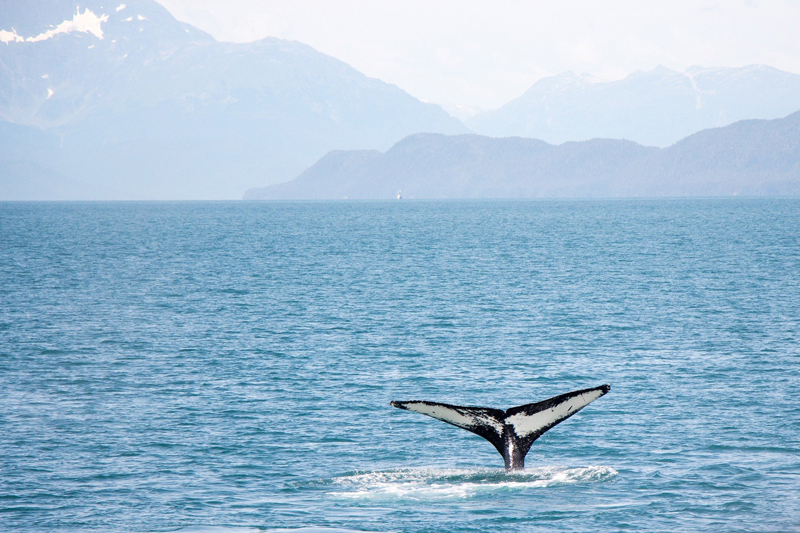
Alaska is the largest state in the United States of America. It is well over twice the actual land mass of the next largest state – Texas – and if you stretch an accurately sized map of Alaska, with all its islands and peninsulas, over a map of the continental USA, Alaska reaches nearly coast to coast. Without a geographic reference such as this to bring the point into focus, it can be difficult to imagine.
The single state of Alaska, only one of 50 states belonging to the United States of America, is larger by far than many entire countries. But what really seems to say it all is how many oceans and seas share the seemingly endless shorelines of this massive land.
According to the Alaska Coastal Management Program; the actual physical coastline of Alaska, including islands, bays, fjords and open ocean shores, stretches for over 44,000 miles. To put this into perspective; if someone were to walk one thousand miles per year, it would take more than forty-four YEARS to hike Alaska’s entire coastline. Then again, there are long stretches of rocky cliffs, glacial crevices and dangerous straits where hiking would be unlikely to impossible, so I doubt the feat will ever be attempted.
Alaska, for all its gigantic size, is surrounded on three sides by water; two different oceans and several distinctive different seas. Its eastern border, shared with Canada’s vast provinces of Yukon and British Columbia, is the only part of Alaska with land bordering on another country.
First; there is of course the Pacific Ocean. The southernmost tip of the Alaskan Peninsula reaches along the coastal waters of the Pacific Ocean well down alongside Northwest Canada’s mainland. Alaska’s State Capitol city of Juneau is located on this long stretch of islands and narrow strip of mainland that many refer to as the “Panhandle” of Alaska.
Also known as the “Inland Passage”; luxurious cruise ships, the Alaskan Marine Highway Ferry system and even sea kayaks are able to travel up and down this scenic stretch of ocean protected for the most part from the rough seas of the Pacific Ocean by the abundance of forested islands, bays and fjords. The ports of call along this route through southeast Alaska are popular tourist destinations.
The Pacific Ocean stretches far to the northwest, well beyond the forests and tidewater glaciers of the Gulf of Alaska. It flows past Cook Inlet and the home of Alaska’s largest city, Anchorage. It continues well past Alaska’s Kenai Peninsula, its volcanic Aleutian Chain of islands and into the cold and inhospitable Bering Sea.
Alaska’s far west shores, located along the Seward Peninsula, include the Alaskan islands of Nunivak and St. Laurence Island as well as remote mainland towns such as Nome. The next land mass in this direction is the Russian mainland.
In fact, the Bering Strait, located near the tiny town of Cape Prince of Wales at the westernmost corner of Alaska and the North American continent is the terminus of the Continental Divide. This is also the official division between the Pacific and Arctic coasts. The Bering Strait, a narrow stretch of water separating Alaska from the mainland of Russia by a mere 53 miles, also marks the limit between the Bering Sea and the Chukchi Sea, which follows the Alaskan coast around and into the Arctic Ocean.
Alaskan towns along the Arctic Ocean are few and far between. The largest of them would be Barrow on the Chukchi Sea and the community of Prudhoe Bay further down the coast on the Beaufort Sea. Barrow, with a population of over 4,000, has existed for more than 1500 years as the home to native Alaskan Inupiat Eskimos, with fishing, hunting and whaling the center of their economy for much of that time. Prudhoe Bay, home to one of the largest oil fields in the entire United States of America, was first established in the 1960s. These two towns, so very different from each other in history and lifestyle, coexist on Alaska’s frigid Arctic coast.
From coast to coast … Alaska is a country of extremes. From sea … to sea … to sea … Alaska is a land of contrast and more beauty than one can imagine.
The single state of Alaska, only one of 50 states belonging to the United States of America, is larger by far than many entire countries. But what really seems to say it all is how many oceans and seas share the seemingly endless shorelines of this massive land.
According to the Alaska Coastal Management Program; the actual physical coastline of Alaska, including islands, bays, fjords and open ocean shores, stretches for over 44,000 miles. To put this into perspective; if someone were to walk one thousand miles per year, it would take more than forty-four YEARS to hike Alaska’s entire coastline. Then again, there are long stretches of rocky cliffs, glacial crevices and dangerous straits where hiking would be unlikely to impossible, so I doubt the feat will ever be attempted.
Alaska, for all its gigantic size, is surrounded on three sides by water; two different oceans and several distinctive different seas. Its eastern border, shared with Canada’s vast provinces of Yukon and British Columbia, is the only part of Alaska with land bordering on another country.
First; there is of course the Pacific Ocean. The southernmost tip of the Alaskan Peninsula reaches along the coastal waters of the Pacific Ocean well down alongside Northwest Canada’s mainland. Alaska’s State Capitol city of Juneau is located on this long stretch of islands and narrow strip of mainland that many refer to as the “Panhandle” of Alaska.
Also known as the “Inland Passage”; luxurious cruise ships, the Alaskan Marine Highway Ferry system and even sea kayaks are able to travel up and down this scenic stretch of ocean protected for the most part from the rough seas of the Pacific Ocean by the abundance of forested islands, bays and fjords. The ports of call along this route through southeast Alaska are popular tourist destinations.
The Pacific Ocean stretches far to the northwest, well beyond the forests and tidewater glaciers of the Gulf of Alaska. It flows past Cook Inlet and the home of Alaska’s largest city, Anchorage. It continues well past Alaska’s Kenai Peninsula, its volcanic Aleutian Chain of islands and into the cold and inhospitable Bering Sea.
Alaska’s far west shores, located along the Seward Peninsula, include the Alaskan islands of Nunivak and St. Laurence Island as well as remote mainland towns such as Nome. The next land mass in this direction is the Russian mainland.
In fact, the Bering Strait, located near the tiny town of Cape Prince of Wales at the westernmost corner of Alaska and the North American continent is the terminus of the Continental Divide. This is also the official division between the Pacific and Arctic coasts. The Bering Strait, a narrow stretch of water separating Alaska from the mainland of Russia by a mere 53 miles, also marks the limit between the Bering Sea and the Chukchi Sea, which follows the Alaskan coast around and into the Arctic Ocean.
Alaskan towns along the Arctic Ocean are few and far between. The largest of them would be Barrow on the Chukchi Sea and the community of Prudhoe Bay further down the coast on the Beaufort Sea. Barrow, with a population of over 4,000, has existed for more than 1500 years as the home to native Alaskan Inupiat Eskimos, with fishing, hunting and whaling the center of their economy for much of that time. Prudhoe Bay, home to one of the largest oil fields in the entire United States of America, was first established in the 1960s. These two towns, so very different from each other in history and lifestyle, coexist on Alaska’s frigid Arctic coast.
From coast to coast … Alaska is a country of extremes. From sea … to sea … to sea … Alaska is a land of contrast and more beauty than one can imagine.

Related Articles
Editor's Picks Articles
Top Ten Articles
Previous Features
Site Map
Content copyright © 2023 by Deb Frost. All rights reserved.
This content was written by Deb Frost. If you wish to use this content in any manner, you need written permission. Contact Deb Frost for details.