Cassini-Huygens - the Prime Mission

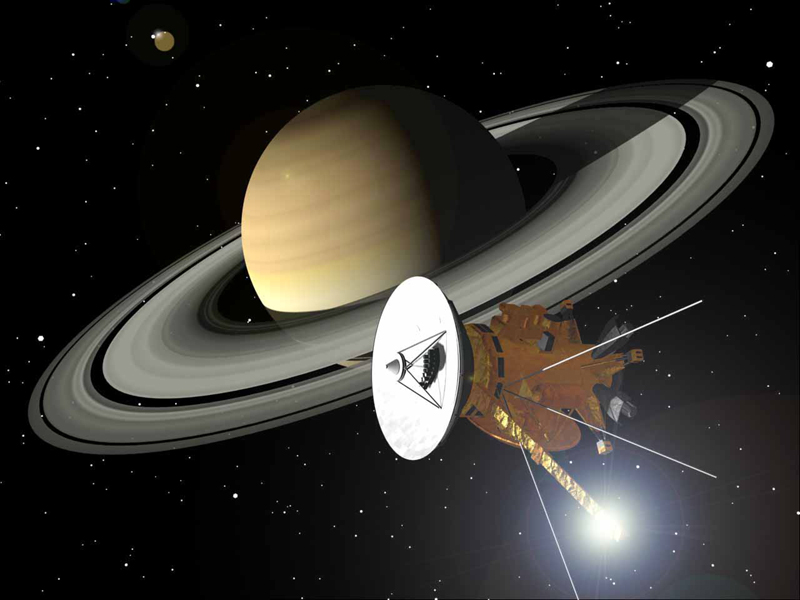
POV-Ray model of Cassini spacecraft by astronomical artist Björn Jónsson
Magnificent rings, a planet-sized moon, and dozens of smaller moons make Saturn irresistibly alluring. Three spacecraft had already made flybys of the planet before Cassini-Huygens was launched in 1997. Nearly two decades of planning preceded the launch, and this mission wouldn't just fly by and snap some photos. It was going to get up close and personal.
The Cassini-Huygens mission was a cooperative project of NASA, the European Space Agency and the Italian Space Agency.
Who were Cassini and Huygens?
Jean-Dominique Cassini was a prominent 17th century Italian-French astronomer, mathematician and engineer. Among his many accomplishments was the discovery of four of Saturn's moons. The NASA spacecraft named after Cassini was due to spend four years studying Saturn and its moons.
The spacecraft Cassini ferried the Huygens lander to the Saturnian system. The lander was European-built and designed to land on Saturn's biggest moon Titan. Christiaan Huygens was a noted scientist, mathematician, horologist and diplomat – and the discoverer of Titan.
From launch to Saturn
Saturn is twelve times as far from the Sun as Earth is. At that distance there wasn't enough sunlight to power Cassini's instruments. As with its other missions to the outer planets, NASA used radioisotope thermoelectric generators. A radioactive isotope gives off heat as it decays, and the generators convert the heat into electric power. Cassini was launched carrying 32.7 kg (72 lbs) of plutonium. This was controversial, but fortunately the launch went well.
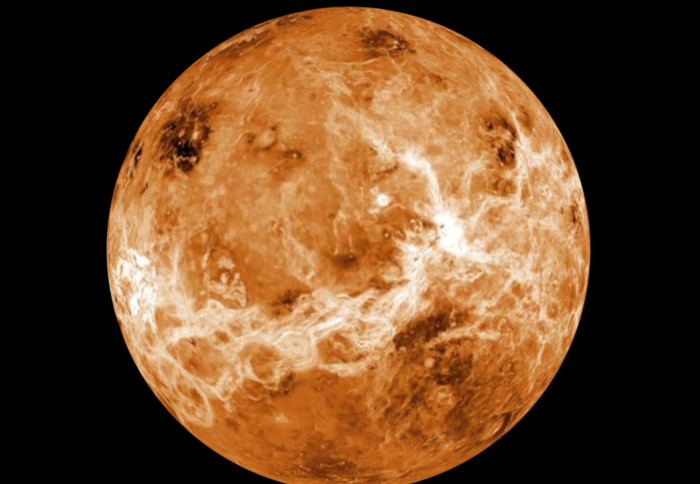
The great distance to Saturn meant that Cassini couldn't carry enough fuel for the journey. In order to get there, the spacecraft got gravity boosts from flybys of Earth and Venus.
There were also some tasks to do along the way: a test of Einstein's theory of general relativity and a flyby of asteroid Masursky. Cassini needed Jupiter's gravity boost to send it on to Saturn, but the spacecraft also spent six months studying Jupiter, taking thousands of images of the planet, its moons and its dark rings. It made measurements too, sometimes in tandem with the Galileo spacecraft that was then orbiting Jupiter.
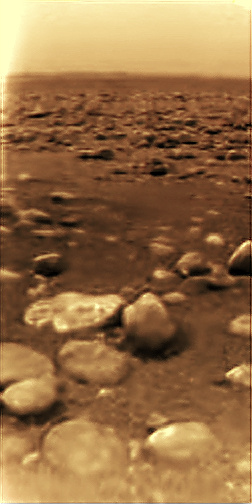
Finally, on July 1, 2004 Cassini entered orbit around Saturn. Six months later it released Huygens. Here is a picture taken by Huygens on Titan's surface. (You can find out more about Titan by clicking on the link that follows this article.)
The Prime Mission
Mission objectives
The objectives for the four-year mission emphasized the structure and behavior of the atmosphere and magnetosphere, and the ring system. Cassini couldn't visit all the moons, but the icy moons were of particular interest, and Titan was singled out for extensive study. Both Cassini and the Huygens lander would target the large moon.
The planners chose a set of tours in order to collect the data they wanted in the most economical way. (You might think of a tour as a mini-mission.) This meant knowing where all their targets would be, and using gravity assists from Titan in order to save Cassini's fuel.
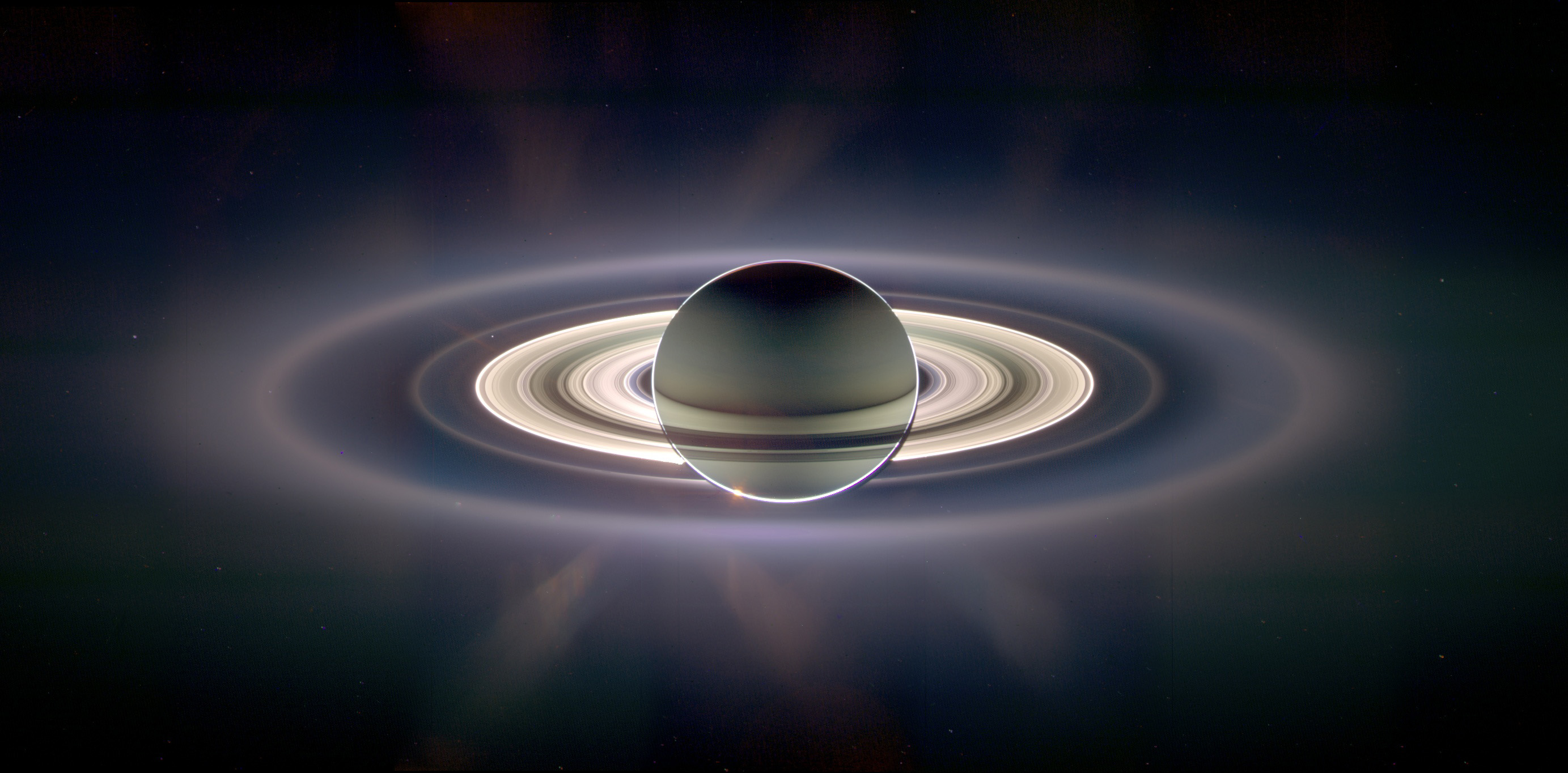
Very soon after its arrival in 2004 Cassini was sending back detailed pictures. They wowed the public. And, of course, they made planetary scientists happy, even though it meant some of their theories needed revising. My favorite picture from the primary mission was released in October 2006. Not only is it stunning, but if you look outside of the bright central rings to the upper left, just inside the next ring out, there's a small dot. It's not a speck of dust on your screen. It looks like it could be a moon. But it’s distant Earth.
What did we learn?
A quick answer to “What did we learn?” is: quite a lot. So I've chosen a few highlights.
1. Moons. Saturn has over sixty moons – four of them were discovered during this mission.
2. Could Enceladus support life? Cassini observed geysers erupting from the south pole of Enceladus. In March 2008, it made a flyby of Enceladus, passing close enough to the surface to fly through plumes from the geysers. Water, carbon dioxide and some hydrocarbons were detected. This made Enceladus very interesting indeed as a place that might have the necessary conditions for life to evolve.
3. Lakes of Titan. Before Cassini, it seemed that the Solar System's only lakes were on Earth. However Cassini data showed lakes of methane and ethane on Titan, one of which was larger than any of North America's Great Lakes.
4. Hurricane. A storm at Saturn's south pole was 8000 km (5000 mi) across with wind speeds at 560 km per hour (350 mph). Although tremendous storms had been observed on Jupiter, this was the first extraterrestrial storm to show a characteristic previously seen only on Earth. The eye of the hurricane was surrounded by an eyewall where the most horrific winds and intense rainfall is found.
Equinox
The mission ended on June 30 2008. But the Prime Mission was a great success, and Saturn's equinox was in August 2009. Therefore NASA extended Cassini's stay for two years. This was named the Equinox Mission.
Magnificent rings, a planet-sized moon, and dozens of smaller moons make Saturn irresistibly alluring. Three spacecraft had already made flybys of the planet before Cassini-Huygens was launched in 1997. Nearly two decades of planning preceded the launch, and this mission wouldn't just fly by and snap some photos. It was going to get up close and personal.
The Cassini-Huygens mission was a cooperative project of NASA, the European Space Agency and the Italian Space Agency.
Who were Cassini and Huygens?
Jean-Dominique Cassini was a prominent 17th century Italian-French astronomer, mathematician and engineer. Among his many accomplishments was the discovery of four of Saturn's moons. The NASA spacecraft named after Cassini was due to spend four years studying Saturn and its moons.
The spacecraft Cassini ferried the Huygens lander to the Saturnian system. The lander was European-built and designed to land on Saturn's biggest moon Titan. Christiaan Huygens was a noted scientist, mathematician, horologist and diplomat – and the discoverer of Titan.
From launch to Saturn
Saturn is twelve times as far from the Sun as Earth is. At that distance there wasn't enough sunlight to power Cassini's instruments. As with its other missions to the outer planets, NASA used radioisotope thermoelectric generators. A radioactive isotope gives off heat as it decays, and the generators convert the heat into electric power. Cassini was launched carrying 32.7 kg (72 lbs) of plutonium. This was controversial, but fortunately the launch went well.
The great distance to Saturn meant that Cassini couldn't carry enough fuel for the journey. In order to get there, the spacecraft got gravity boosts from flybys of Earth and Venus.
There were also some tasks to do along the way: a test of Einstein's theory of general relativity and a flyby of asteroid Masursky. Cassini needed Jupiter's gravity boost to send it on to Saturn, but the spacecraft also spent six months studying Jupiter, taking thousands of images of the planet, its moons and its dark rings. It made measurements too, sometimes in tandem with the Galileo spacecraft that was then orbiting Jupiter.
Finally, on July 1, 2004 Cassini entered orbit around Saturn. Six months later it released Huygens. Here is a picture taken by Huygens on Titan's surface. (You can find out more about Titan by clicking on the link that follows this article.)
The Prime Mission
Mission objectives
The objectives for the four-year mission emphasized the structure and behavior of the atmosphere and magnetosphere, and the ring system. Cassini couldn't visit all the moons, but the icy moons were of particular interest, and Titan was singled out for extensive study. Both Cassini and the Huygens lander would target the large moon.
The planners chose a set of tours in order to collect the data they wanted in the most economical way. (You might think of a tour as a mini-mission.) This meant knowing where all their targets would be, and using gravity assists from Titan in order to save Cassini's fuel.
Very soon after its arrival in 2004 Cassini was sending back detailed pictures. They wowed the public. And, of course, they made planetary scientists happy, even though it meant some of their theories needed revising. My favorite picture from the primary mission was released in October 2006. Not only is it stunning, but if you look outside of the bright central rings to the upper left, just inside the next ring out, there's a small dot. It's not a speck of dust on your screen. It looks like it could be a moon. But it’s distant Earth.
What did we learn?
A quick answer to “What did we learn?” is: quite a lot. So I've chosen a few highlights.
1. Moons. Saturn has over sixty moons – four of them were discovered during this mission.
2. Could Enceladus support life? Cassini observed geysers erupting from the south pole of Enceladus. In March 2008, it made a flyby of Enceladus, passing close enough to the surface to fly through plumes from the geysers. Water, carbon dioxide and some hydrocarbons were detected. This made Enceladus very interesting indeed as a place that might have the necessary conditions for life to evolve.
3. Lakes of Titan. Before Cassini, it seemed that the Solar System's only lakes were on Earth. However Cassini data showed lakes of methane and ethane on Titan, one of which was larger than any of North America's Great Lakes.
4. Hurricane. A storm at Saturn's south pole was 8000 km (5000 mi) across with wind speeds at 560 km per hour (350 mph). Although tremendous storms had been observed on Jupiter, this was the first extraterrestrial storm to show a characteristic previously seen only on Earth. The eye of the hurricane was surrounded by an eyewall where the most horrific winds and intense rainfall is found.
Equinox
The mission ended on June 30 2008. But the Prime Mission was a great success, and Saturn's equinox was in August 2009. Therefore NASA extended Cassini's stay for two years. This was named the Equinox Mission.
You Should Also Read:
Titan - Planet-sized Moon of Saturn
Jean-Dominique Cassini
Voyagers - Preparing for the Grand Tour

Related Articles
Editor's Picks Articles
Top Ten Articles
Previous Features
Site Map
Content copyright © 2023 by Mona Evans. All rights reserved.
This content was written by Mona Evans. If you wish to use this content in any manner, you need written permission. Contact Mona Evans for details.