Transit of Venus - Measuring the Solar System

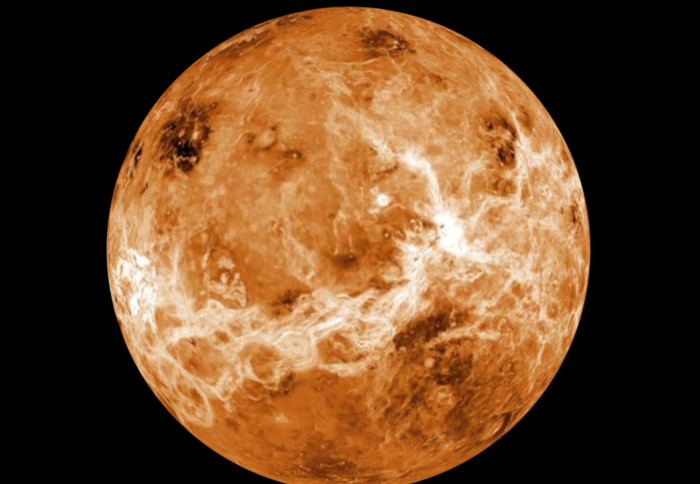
On June 8, 2004, millions of people witnessed an event that no one still alive had ever seen: a transit of Venus. The previous one was in 1882, but as they happen in pairs, another occurred on June 5-6, 2012. The next one isn't until 2117.
But what is a transit and why was it important?
Transits, occultations and inferior conjunctions
When a heavenly body crosses in front of another one, it’s a transit if it doesn’t cover much of the object behind it. If it hides all (or a good deal) of the one behind, it’s an occultation, a type of eclipse.
Mercury and Venus are inferior planets. This isn't snobbery. Inferior planets orbit closer to the Sun than we do and superior planets are farther away. All of the planets orbit at different speeds, so they only line up occasionally. However when Venus (or Mercury) is directly between Earth and the Sun, we call it an inferior conjunction.
Ecliptic and nodes
A transit of Venus can only occur when two conditions are met. Venus must be at inferior conjunction, which happens every 584 days and Venus must be at what we call a node.
The planets orbit the Sun in the same direction and nearly the same plane. As you can see, it's almost as though there were a giant tabletop in space. (The picture is not to scale and of course, the planets don't all line up like that.) Yet it's not quite a tabletop, as each planet's orbit is tilted slightly in relation to the others.
We call the plane of the Earth's orbit the ecliptic. The orbit of Venus is tilted 3.4 degrees to the ecliptic, but there are two points where the planes intersect. These are the nodes.
First observed transits
Although people have observed the heavens for thousands of years, only seven transits of Venus have ever been seen. Why is that?
It's not impossible to see a transit of Venus without a telescope. Wearing eclipse glasses for eye protection, I was able to see Venus in the 2004 transit. However, besides the difficulty (and danger) of looking straight at the Sun, sunspots could easily confuse the viewer. All of the observed transits have happened not only after the invention of the telescope, but after Johannes Kepler produced planetary tables accurate enough to predict these rare events.
Kepler died in 1630, but he had predicted transits of both Mercury and Venus for 1631. French astronomer Pierre Gassendi (1592-1655) was the first person to publish an observation of a transit. He saw the transit of Mercury in November, but not Venus the following month. Kepler's calculations needed further refinement, and in any case, it was still night in France when the transit occurred. So it looked like 1761 would be the next chance.
The first observed transit of Venus
However, in 1639 a young astronomer in the north of England made corrections to Kepler's calculations, and saw that there would be a transit the following month. These days Jeremiah Horrocks (1618-1641) could have tweeted it, and the whole world could have been out watching. But he only managed to contact his friend William Crabtree. Horrocks and Crabtree were the first two people to observe a transit of Venus.
Using transits to measure the Solar System
Kepler's third law of planetary motion shows the mathematical relationship between the distances of the planets from the Sun and their orbital periods, but only in terms of their distances relative to each other. So how big is the Solar System? If someone could measure the astronomical unit (AU), the Earth-Sun distance, the rest would follow. A big “if”.
In 1716 Edmond Halley (1656-1742), known today for the comet named after him, suggested that a transit of Venus could be used to calculate the astronomical unit. Observers in different hemispheres could make use of parallax. Parallax is the name we give to the apparent change in position of a distant object when viewed from two different places. You can see this with your own eyes. Hold a finger out in front of you and look into the distance, first closing one eye and then the other, and see what happens.
Observers in the northern and southern hemisphere would see slightly different views. Using the angle of the apparent shift, some trigonometry, and a bit of help from Kepler, they could deduce the length of the astronomical unit. [The header image depicts this. Credit: Space.fm]
Although Halley died in 1742, a number of teams did travel to the north and to the south in 1761 and in 1769. It turned out to be a lot harder than it sounded, but they did get a fair approximation of the size of the astronomical unit.
But what is a transit and why was it important?
Transits, occultations and inferior conjunctions
When a heavenly body crosses in front of another one, it’s a transit if it doesn’t cover much of the object behind it. If it hides all (or a good deal) of the one behind, it’s an occultation, a type of eclipse.
Mercury and Venus are inferior planets. This isn't snobbery. Inferior planets orbit closer to the Sun than we do and superior planets are farther away. All of the planets orbit at different speeds, so they only line up occasionally. However when Venus (or Mercury) is directly between Earth and the Sun, we call it an inferior conjunction.
Ecliptic and nodes
A transit of Venus can only occur when two conditions are met. Venus must be at inferior conjunction, which happens every 584 days and Venus must be at what we call a node.
The planets orbit the Sun in the same direction and nearly the same plane. As you can see, it's almost as though there were a giant tabletop in space. (The picture is not to scale and of course, the planets don't all line up like that.) Yet it's not quite a tabletop, as each planet's orbit is tilted slightly in relation to the others.
We call the plane of the Earth's orbit the ecliptic. The orbit of Venus is tilted 3.4 degrees to the ecliptic, but there are two points where the planes intersect. These are the nodes.
First observed transits
Although people have observed the heavens for thousands of years, only seven transits of Venus have ever been seen. Why is that?
It's not impossible to see a transit of Venus without a telescope. Wearing eclipse glasses for eye protection, I was able to see Venus in the 2004 transit. However, besides the difficulty (and danger) of looking straight at the Sun, sunspots could easily confuse the viewer. All of the observed transits have happened not only after the invention of the telescope, but after Johannes Kepler produced planetary tables accurate enough to predict these rare events.
Kepler died in 1630, but he had predicted transits of both Mercury and Venus for 1631. French astronomer Pierre Gassendi (1592-1655) was the first person to publish an observation of a transit. He saw the transit of Mercury in November, but not Venus the following month. Kepler's calculations needed further refinement, and in any case, it was still night in France when the transit occurred. So it looked like 1761 would be the next chance.
The first observed transit of Venus
However, in 1639 a young astronomer in the north of England made corrections to Kepler's calculations, and saw that there would be a transit the following month. These days Jeremiah Horrocks (1618-1641) could have tweeted it, and the whole world could have been out watching. But he only managed to contact his friend William Crabtree. Horrocks and Crabtree were the first two people to observe a transit of Venus.
Using transits to measure the Solar System
Kepler's third law of planetary motion shows the mathematical relationship between the distances of the planets from the Sun and their orbital periods, but only in terms of their distances relative to each other. So how big is the Solar System? If someone could measure the astronomical unit (AU), the Earth-Sun distance, the rest would follow. A big “if”.
In 1716 Edmond Halley (1656-1742), known today for the comet named after him, suggested that a transit of Venus could be used to calculate the astronomical unit. Observers in different hemispheres could make use of parallax. Parallax is the name we give to the apparent change in position of a distant object when viewed from two different places. You can see this with your own eyes. Hold a finger out in front of you and look into the distance, first closing one eye and then the other, and see what happens.
Observers in the northern and southern hemisphere would see slightly different views. Using the angle of the apparent shift, some trigonometry, and a bit of help from Kepler, they could deduce the length of the astronomical unit. [The header image depicts this. Credit: Space.fm]
Although Halley died in 1742, a number of teams did travel to the north and to the south in 1761 and in 1769. It turned out to be a lot harder than it sounded, but they did get a fair approximation of the size of the astronomical unit.
You Should Also Read:
Edmond Halley
Johannes Kepler - His Life
The Transit of Venus - book review

Related Articles
Editor's Picks Articles
Top Ten Articles
Previous Features
Site Map
Content copyright © 2023 by Mona Evans. All rights reserved.
This content was written by Mona Evans. If you wish to use this content in any manner, you need written permission. Contact Mona Evans for details.