Heavenly Aviaries - Bird Constellations
Birds are well represented in the night sky.
Cygnus the swan
Cygnus is a beautiful northern constellation, a swan with outstretched wings. It also contains the asterism called the Northern Cross. (An asterism is a pattern of stars that isn't a constellation.) Cygnus's brightest star Deneb is also one vertex of the Summer Triangle asterism.
I've seen swans flying low along the river Thames, which many birds use as a highway. In a dark sky, Cygnus almost seems to fly along the Milky Way. Its bright stars make it visible even in urban areas.
The constellation was already ancient when Ptolemy described it in the second century Almagest. The most famous story associated with it is the seduction of Leda the queen of Sparta by the god Zeus (Jupiter to the Romans) in the guise of a swan.
Eagles
The constellation Aquila represents the eagle who carried Zeus's thunderbolts and occasionally aided the god in his seductions. Like Cygnus, Aquila is an ancient constellation described by Ptolemy. Aquila's brightest star Altair [flying bird] is a second vertex of the Summer Triangle, and the third vertex is also a bird, the star Vega in the constellation Lyra (the harp). The Arabs knew Vega as a swooping eagle, and its Latin name meant vulture.
Just below the eagle's tail in the neighboring constellation Scutum (the shield) is the Wild Duck Cluster (Messier object M11). To an early observer it resembled the V of a flight of wild ducks, though this feature tends not to show up in photographs. It's an open star cluster like the Pleiades, but about thirteen times farther away. First magnitude stars are very bright ones and this cluster contains hundreds of them – it would be a dazzling sight if it were closer to us.
Southern constellations by Petrus Plancius
The south polar region was unknown to northern astronomers. Instead of constellations of antiquity, the constellations are inventions from the late 16th century onwards. Dutch astronomer Petrus Plancius used observations by Pieter Dirkszoon Keyser and Frederick de Houtman to invent a dozen new ones. Unlike traditional constellations, the Plancius constellations have few named stars and no associated myths.
Plancius seemed inspired by natural history in his choices, five of which represented birds: Apus, Pavo, Tucana, Grus and Phoenix.
Apus is the bird of paradise, a name coming from a Greek word meaning "footless". It wasn't until the 19th century that a European saw a live bird of paradise. Traders had the preserved the skins and plumes of the birds, but the feet and wings had been removed. This give rise to a common belief that the birds had no feet, and spent their lives floating in the air held up by their plumes.
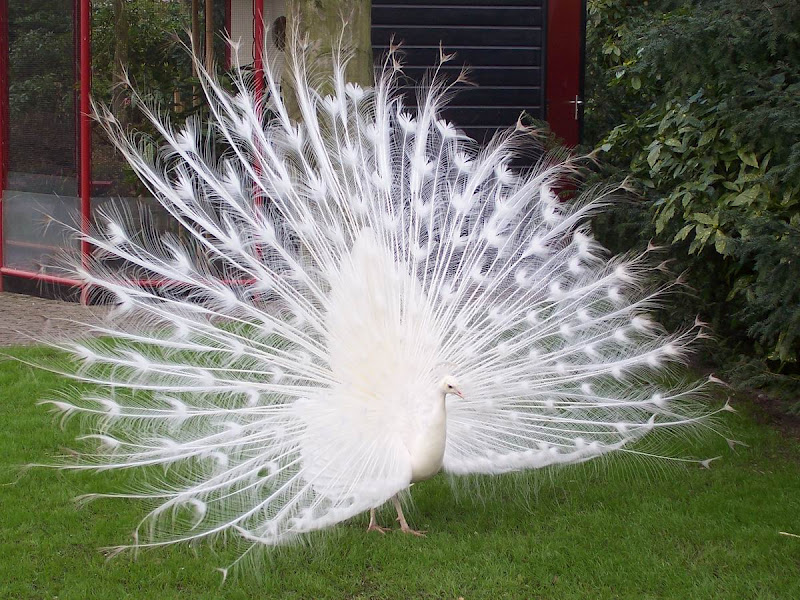
Although Pavo was unknown to the Greeks, the peacock echoes Greek mythology. Peacocks drew the chariot of the goddess Hera (wife of Zeus). Pavo's neighbor in Bayer's star atlas is Grus the crane.
Tucana (the toucan) is notable because it contains the Small Magellanic Cloud, a companion galaxy to the Milky Way. And the final bird in the group is a mythological one, the Phoenix. It lived for 500 years before being consumed by fire, and was then resurrected from the ashes as a young bird.
Corvus
Corvus (the crow) is a constellation described by Ptolemy. Although it has eleven stars theoretically visible with the unaided eye, Ptolemy mentioned only seven. It contains the planetary nebula NGC 4361, which is beautifully spherical with the dying star in the center. As the star shrinks and cools, it sloughs off its outer atmosphere to add to the nebula. [Image: Adam Block/Mount Lemmon SkyCenter/University of Arizona]
Cygnus the swan
Cygnus is a beautiful northern constellation, a swan with outstretched wings. It also contains the asterism called the Northern Cross. (An asterism is a pattern of stars that isn't a constellation.) Cygnus's brightest star Deneb is also one vertex of the Summer Triangle asterism.
I've seen swans flying low along the river Thames, which many birds use as a highway. In a dark sky, Cygnus almost seems to fly along the Milky Way. Its bright stars make it visible even in urban areas.
The constellation was already ancient when Ptolemy described it in the second century Almagest. The most famous story associated with it is the seduction of Leda the queen of Sparta by the god Zeus (Jupiter to the Romans) in the guise of a swan.
Eagles
The constellation Aquila represents the eagle who carried Zeus's thunderbolts and occasionally aided the god in his seductions. Like Cygnus, Aquila is an ancient constellation described by Ptolemy. Aquila's brightest star Altair [flying bird] is a second vertex of the Summer Triangle, and the third vertex is also a bird, the star Vega in the constellation Lyra (the harp). The Arabs knew Vega as a swooping eagle, and its Latin name meant vulture.
Just below the eagle's tail in the neighboring constellation Scutum (the shield) is the Wild Duck Cluster (Messier object M11). To an early observer it resembled the V of a flight of wild ducks, though this feature tends not to show up in photographs. It's an open star cluster like the Pleiades, but about thirteen times farther away. First magnitude stars are very bright ones and this cluster contains hundreds of them – it would be a dazzling sight if it were closer to us.
Southern constellations by Petrus Plancius
The south polar region was unknown to northern astronomers. Instead of constellations of antiquity, the constellations are inventions from the late 16th century onwards. Dutch astronomer Petrus Plancius used observations by Pieter Dirkszoon Keyser and Frederick de Houtman to invent a dozen new ones. Unlike traditional constellations, the Plancius constellations have few named stars and no associated myths.
Plancius seemed inspired by natural history in his choices, five of which represented birds: Apus, Pavo, Tucana, Grus and Phoenix.
Apus is the bird of paradise, a name coming from a Greek word meaning "footless". It wasn't until the 19th century that a European saw a live bird of paradise. Traders had the preserved the skins and plumes of the birds, but the feet and wings had been removed. This give rise to a common belief that the birds had no feet, and spent their lives floating in the air held up by their plumes.
Although Pavo was unknown to the Greeks, the peacock echoes Greek mythology. Peacocks drew the chariot of the goddess Hera (wife of Zeus). Pavo's neighbor in Bayer's star atlas is Grus the crane.
Tucana (the toucan) is notable because it contains the Small Magellanic Cloud, a companion galaxy to the Milky Way. And the final bird in the group is a mythological one, the Phoenix. It lived for 500 years before being consumed by fire, and was then resurrected from the ashes as a young bird.
Corvus
Corvus (the crow) is a constellation described by Ptolemy. Although it has eleven stars theoretically visible with the unaided eye, Ptolemy mentioned only seven. It contains the planetary nebula NGC 4361, which is beautifully spherical with the dying star in the center. As the star shrinks and cools, it sloughs off its outer atmosphere to add to the nebula. [Image: Adam Block/Mount Lemmon SkyCenter/University of Arizona]
You Should Also Read:
Summer Triangle
Exotic Creatures of the Southern Sky
What Is a Nebula

Related Articles
Editor's Picks Articles
Top Ten Articles
Previous Features
Site Map
Content copyright © 2023 by Mona Evans. All rights reserved.
This content was written by Mona Evans. If you wish to use this content in any manner, you need written permission. Contact Mona Evans for details.