Nebulae - Facts for Kids

Supernova remnant, the Veil Nebula NGC 6992 [Photo: Antonio Ferretti & Albert Martínez Castillo]
Nebulae are great clouds of gas and dust in the spaces between stars. Some of them are made from dying stars, and some are the nurseries for new stars. Here are ten facts about these amazing objects.
Note: If you click on a picture link, to come back to the article, click the back arrow ← near the top of the screen.
1. Nebula is Latin for cloud – the plural is nebulae or nebulas.
Nebulae look like little cloudy patches in the sky.
2. William and Caroline Herschel made the first catalog of nebulae.
William Herschel (1738-1822) observed 2500 nebulae in the northern hemisphere with the help of his sister Caroline (1750-1848). William's son John Herschel (1792-1871) added another 2500 from his observations in the southern hemisphere.
3. Some of the cloudy patches the Herschels saw are actually clusters of stars or distant galaxies.
True nebulae are giant clouds of gas and dust in the spaces between stars. With modern telescopes, astronomers can see the difference between nebulae and other fuzzy objects.
4. Nebulae are hard to study because they don't shine like stars.
On their own, gas and dust don't give out light. But nearby stars can make them shine.
5. The gas in a nebula glows if a bright star energizes it, and dust can reflect starlight.
If a nearby bright star shines on the gas in a nebula, it makes it makes the hydrogen glow red. The nebula is then called an emission nebula. Starlight affects dust in a different way. The dust absorbs red light, but reflects blue light. A nebula lit like this is called a reflection nebula, and it is blue.
6. Some nebulae get no starlight, but can be seen against a bright background.
A nebula with no nearby stars is a dark nebula. They can look like holes in the sky if they are silhouetted against a brighter background of stars or gas.
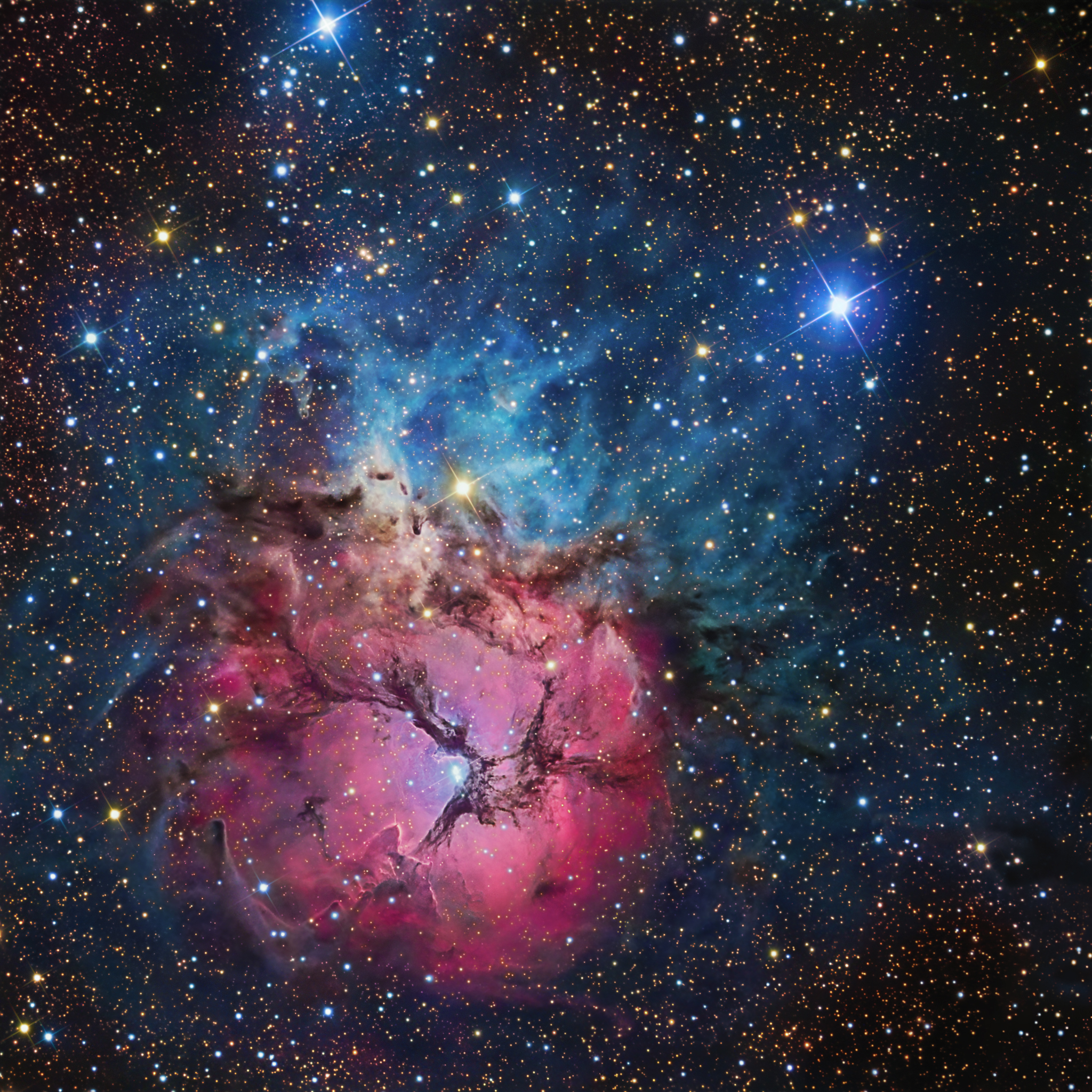
7. The Trifid Nebula contains emission, reflection and dark nebulae.
The dark nebulae in front of the pink emission nebula is what makes it look like a flower. The nebula is about 40 light years across, over twenty times the size of the Solar System. [Photo: R. Jay GaBany]
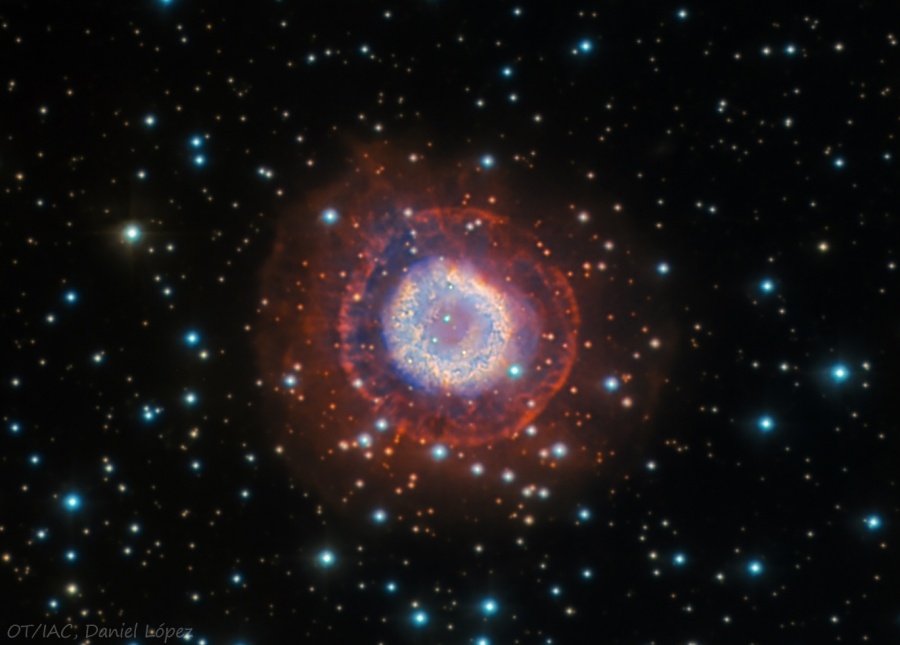
8. When stars like the Sun run out of hydrogen fuel, the outer layers puff off to make a planetary nebula.
In 18th-century telescopes, the first of these special nebulae looked like planets. NGC 2438 is an example of such a round nebula, but we now know that planetary nebulae come in all kinds of shapes. [Photo: Daniel Lopez]
9. Nebulae can be created by the death of giant stars.
When a massive star uses up all its fuel, it explodes as a supernova. The center of the star collapses into a neutron star or a black hole. But the explosion throws off material that makes a nebula called a supernova remnant. The Veil Nebula, shown at the top of this article, was made in this way.
10. Some nebulae are star nurseries.
If the conditions are right, a nebula will collapse until it's dense enough for stars to ignite. The Eagle Nebula is a famous example of a stellar nursery. New stars are forming in those giant dust clouds. [Photo: Hubble Space Telescope]
Nebulae are great clouds of gas and dust in the spaces between stars. Some of them are made from dying stars, and some are the nurseries for new stars. Here are ten facts about these amazing objects.
Note: If you click on a picture link, to come back to the article, click the back arrow ← near the top of the screen.
1. Nebula is Latin for cloud – the plural is nebulae or nebulas.
Nebulae look like little cloudy patches in the sky.
2. William and Caroline Herschel made the first catalog of nebulae.
William Herschel (1738-1822) observed 2500 nebulae in the northern hemisphere with the help of his sister Caroline (1750-1848). William's son John Herschel (1792-1871) added another 2500 from his observations in the southern hemisphere.
3. Some of the cloudy patches the Herschels saw are actually clusters of stars or distant galaxies.
True nebulae are giant clouds of gas and dust in the spaces between stars. With modern telescopes, astronomers can see the difference between nebulae and other fuzzy objects.
4. Nebulae are hard to study because they don't shine like stars.
On their own, gas and dust don't give out light. But nearby stars can make them shine.
5. The gas in a nebula glows if a bright star energizes it, and dust can reflect starlight.
If a nearby bright star shines on the gas in a nebula, it makes it makes the hydrogen glow red. The nebula is then called an emission nebula. Starlight affects dust in a different way. The dust absorbs red light, but reflects blue light. A nebula lit like this is called a reflection nebula, and it is blue.
6. Some nebulae get no starlight, but can be seen against a bright background.
A nebula with no nearby stars is a dark nebula. They can look like holes in the sky if they are silhouetted against a brighter background of stars or gas.
7. The Trifid Nebula contains emission, reflection and dark nebulae.
The dark nebulae in front of the pink emission nebula is what makes it look like a flower. The nebula is about 40 light years across, over twenty times the size of the Solar System. [Photo: R. Jay GaBany]
8. When stars like the Sun run out of hydrogen fuel, the outer layers puff off to make a planetary nebula.
In 18th-century telescopes, the first of these special nebulae looked like planets. NGC 2438 is an example of such a round nebula, but we now know that planetary nebulae come in all kinds of shapes. [Photo: Daniel Lopez]
9. Nebulae can be created by the death of giant stars.
When a massive star uses up all its fuel, it explodes as a supernova. The center of the star collapses into a neutron star or a black hole. But the explosion throws off material that makes a nebula called a supernova remnant. The Veil Nebula, shown at the top of this article, was made in this way.
10. Some nebulae are star nurseries.
If the conditions are right, a nebula will collapse until it's dense enough for stars to ignite. The Eagle Nebula is a famous example of a stellar nursery. New stars are forming in those giant dust clouds. [Photo: Hubble Space Telescope]
You Should Also Read:
Herschel Partnership - for Kids
What Herschel Found in a Dark Nebula
Milky Way - Facts for Kids

Related Articles
Editor's Picks Articles
Top Ten Articles
Previous Features
Site Map
Content copyright © 2023 by Mona Evans. All rights reserved.
This content was written by Mona Evans. If you wish to use this content in any manner, you need written permission. Contact Mona Evans for details.