Rhea - Moon of Saturn
:max_bytes(150000):strip_icc():format(webp)/rhea--moon-of-the-planet-560630125-7ea8b0d8a7cb435691c7e2a5aa6885eb.jpg)
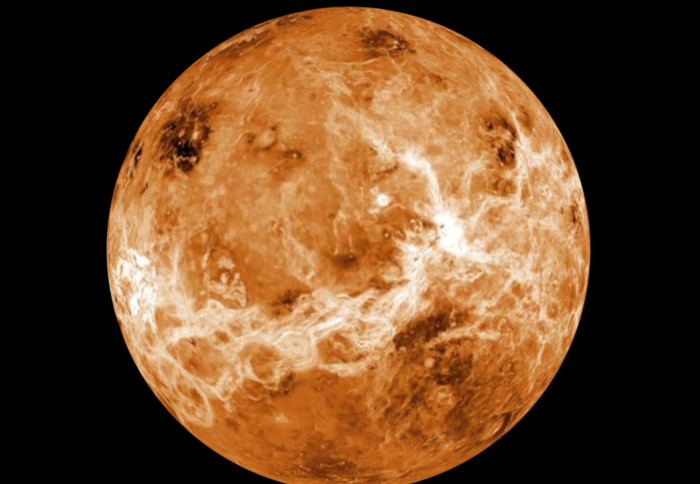
Rhea, assembled from a composition of multiple photos taken by the Voyager 1 spacecraft, 1980. [Smith Collection/Gado /Thoughtco.com /Getty Images]
Titan was the first of Saturn's moons to be discovered. Although that was way back in 1655, we knew almost nothing about the moons until the Voyager space probes visited in the early 1980s. Even with large ground-based telescopes, they're just dots.
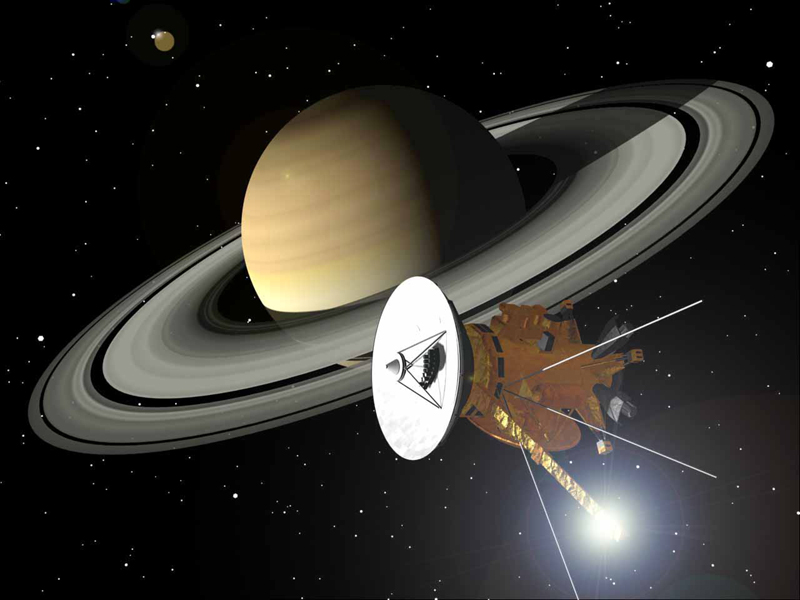
Saturn's 82 known moons are much more familiar to us now because of the Cassini probe. Named for Giovanni Cassini who discovered four of Saturn's moons, it studied the Saturnian system from 2004-2017.
Rings?
One of Saturn's moons – Rhea – got astronomers excited in November 2008 when some measurements seemed to indicate that it had three faint rings. No one had ever found such a small object with rings. Unfortunately, a careful search between 2008 and 2009 failed to find any evidence of rings. Astronomers still don't agree about how to explain the data which suggested their existence.
Moons discovered by Cassini
Although Rhea is the second largest of Saturn's moons, it's still not very big. It has a diameter less than a third that of Titan, the largest of the moons. At 959 miles (1530 km) the diameter is about the distance from New York City to Miami.
When Giovanni Cassini (1625-1712) discovered Rhea, Tethys, Dione and Iapetus, he didn't name them. Other astronomers just numbered them by their distance from Saturn, using Roman numerals. Rhea is still also known as Saturn V, because it's the fifth major moon out from Saturn.
The moons named . . . at last
In the 19th century John Herschel gave the moons names for his own use, since he was finding the numbering system tedious. Herschel was a prominent scientist and his father William Herschel had discovered the planet Uranus and two of Saturn's moons.
John Herschel's scheme was based on classical mythology and centered around the Titans. Saturn (Cronus in Greek mythology) became king of the Titans when he overthrew his father Uranus. Rhea was the wife (and sister) of Saturn. The other moons known at that time were called after Saturn's other siblings. His names were later adopted by other astronomers.
Orbit, composition, terrain
Rhea orbits Saturn in a nearly perfect circle in four and a half days, turning once on its axis during that time. Like our Moon, it always keeps the same face towards its planet, but it orbits much more quickly than our Moon does. Even though Rhea is farther away from Saturn than the Moon is from Earth, Rhea must move faster in order to keep from being pulled in by Saturn's greater mass.
Astronomers have known for some time that Rhea is made up of about three-quarters ice and one-quarter rock. They also assumed that it had a rocky core, but Cassini measurements show that the ice and rock must be all mixed together. Sometimes Rhea is described as a “dirty snowball”.
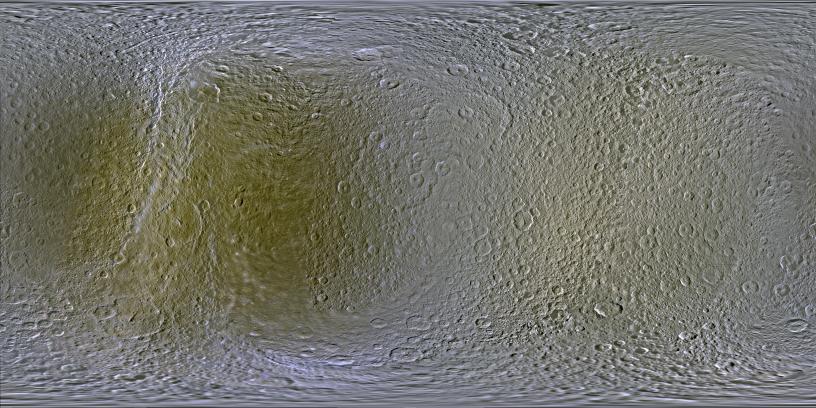
The surface of Rhea is not only heavily cratered, but can be divided into two geologically distinct areas. One area is dominated by very large craters with diameters ranging from 40 km (25 miles) to 225 km (140 miles). In the other area, all of the craters are smaller than that. This is evidence that in the past, part of the surface melted and reformed. Click to see a NASA photo map of Rhea. The picture is made up of a number of images and shows the variation in the terrain.
Although there are some signs of tectonic activity (earth movements) on Rhea in the distant past, Dione and Tethys show more recent activity. They are closer to Saturn and their interiors are warmed by tidal heating. (This is frictional heating caused by the uneven gravitational pull of Saturn as they orbit.)
Oxygen and carbon dioxide in the exosphere
Rhea was in the news again in November 2010 when NASA announced that they had discovered an oxygen-rich atmosphere on the moon. But don't imagine that means we could live there if we dressed warmly. Even in direct sunlight the temperature is -174° C (-281° F). Overall the atmosphere is composed of about five parts oxygen to two parts carbon dioxide, but it is far too insubstantial to breathe.
Rhea's atmosphere is more accurately called an exosphere. The outermost layer of our own atmosphere is an exosphere – it's where the atmosphere merges into space. Both our exosphere and Rhea's contain about ten million molecules per cubic centimeter. This sounds like a lot, but at sea level on Earth there some ten trillion times as many molecules per cubic centimeter.
Scientists aren't really sure where the carbon dioxide in Rhea's exosphere comes from. However they agree that the oxygen is released when high-energy particles hit the surface and break up water molecules. On Earth our atmosphere protects us from most of the high-energy particles coming from the Sun, but Rhea doesn't have this protection. The particles that bombard Rhea are solar particles trapped in Saturn's magnetic field.
Titan was the first of Saturn's moons to be discovered. Although that was way back in 1655, we knew almost nothing about the moons until the Voyager space probes visited in the early 1980s. Even with large ground-based telescopes, they're just dots.
Saturn's 82 known moons are much more familiar to us now because of the Cassini probe. Named for Giovanni Cassini who discovered four of Saturn's moons, it studied the Saturnian system from 2004-2017.
Rings?
One of Saturn's moons – Rhea – got astronomers excited in November 2008 when some measurements seemed to indicate that it had three faint rings. No one had ever found such a small object with rings. Unfortunately, a careful search between 2008 and 2009 failed to find any evidence of rings. Astronomers still don't agree about how to explain the data which suggested their existence.
Moons discovered by Cassini
Although Rhea is the second largest of Saturn's moons, it's still not very big. It has a diameter less than a third that of Titan, the largest of the moons. At 959 miles (1530 km) the diameter is about the distance from New York City to Miami.
When Giovanni Cassini (1625-1712) discovered Rhea, Tethys, Dione and Iapetus, he didn't name them. Other astronomers just numbered them by their distance from Saturn, using Roman numerals. Rhea is still also known as Saturn V, because it's the fifth major moon out from Saturn.
The moons named . . . at last
In the 19th century John Herschel gave the moons names for his own use, since he was finding the numbering system tedious. Herschel was a prominent scientist and his father William Herschel had discovered the planet Uranus and two of Saturn's moons.
John Herschel's scheme was based on classical mythology and centered around the Titans. Saturn (Cronus in Greek mythology) became king of the Titans when he overthrew his father Uranus. Rhea was the wife (and sister) of Saturn. The other moons known at that time were called after Saturn's other siblings. His names were later adopted by other astronomers.
Orbit, composition, terrain
Rhea orbits Saturn in a nearly perfect circle in four and a half days, turning once on its axis during that time. Like our Moon, it always keeps the same face towards its planet, but it orbits much more quickly than our Moon does. Even though Rhea is farther away from Saturn than the Moon is from Earth, Rhea must move faster in order to keep from being pulled in by Saturn's greater mass.
Astronomers have known for some time that Rhea is made up of about three-quarters ice and one-quarter rock. They also assumed that it had a rocky core, but Cassini measurements show that the ice and rock must be all mixed together. Sometimes Rhea is described as a “dirty snowball”.
The surface of Rhea is not only heavily cratered, but can be divided into two geologically distinct areas. One area is dominated by very large craters with diameters ranging from 40 km (25 miles) to 225 km (140 miles). In the other area, all of the craters are smaller than that. This is evidence that in the past, part of the surface melted and reformed. Click to see a NASA photo map of Rhea. The picture is made up of a number of images and shows the variation in the terrain.
Although there are some signs of tectonic activity (earth movements) on Rhea in the distant past, Dione and Tethys show more recent activity. They are closer to Saturn and their interiors are warmed by tidal heating. (This is frictional heating caused by the uneven gravitational pull of Saturn as they orbit.)
Oxygen and carbon dioxide in the exosphere
Rhea was in the news again in November 2010 when NASA announced that they had discovered an oxygen-rich atmosphere on the moon. But don't imagine that means we could live there if we dressed warmly. Even in direct sunlight the temperature is -174° C (-281° F). Overall the atmosphere is composed of about five parts oxygen to two parts carbon dioxide, but it is far too insubstantial to breathe.
Rhea's atmosphere is more accurately called an exosphere. The outermost layer of our own atmosphere is an exosphere – it's where the atmosphere merges into space. Both our exosphere and Rhea's contain about ten million molecules per cubic centimeter. This sounds like a lot, but at sea level on Earth there some ten trillion times as many molecules per cubic centimeter.
Scientists aren't really sure where the carbon dioxide in Rhea's exosphere comes from. However they agree that the oxygen is released when high-energy particles hit the surface and break up water molecules. On Earth our atmosphere protects us from most of the high-energy particles coming from the Sun, but Rhea doesn't have this protection. The particles that bombard Rhea are solar particles trapped in Saturn's magnetic field.
You Should Also Read:
Cassini-Huygens — the Prime Mission
Fascinating Facts about Saturn's Moons
Titan — Planet-sized Moon of Saturn

Related Articles
Editor's Picks Articles
Top Ten Articles
Previous Features
Site Map
Content copyright © 2023 by Mona Evans. All rights reserved.
This content was written by Mona Evans. If you wish to use this content in any manner, you need written permission. Contact Mona Evans for details.