The Transit of Venus - Book Review

The painting by Eyre Crowe (1824–1910) depicted Horrocks making the first ever observation of a transit of Venus in 1639.
In the early 17th century, tucked away in the north of the country, English astronomy almost came of age. What was this early flowering? Why did it end suddenly and take a generation to be recognized? The intriguing story is told by Peter Aughton in The Transit of Venus - the Brief, Brilliant Life of Jeremiah Horrocks Father of British Astronomy.
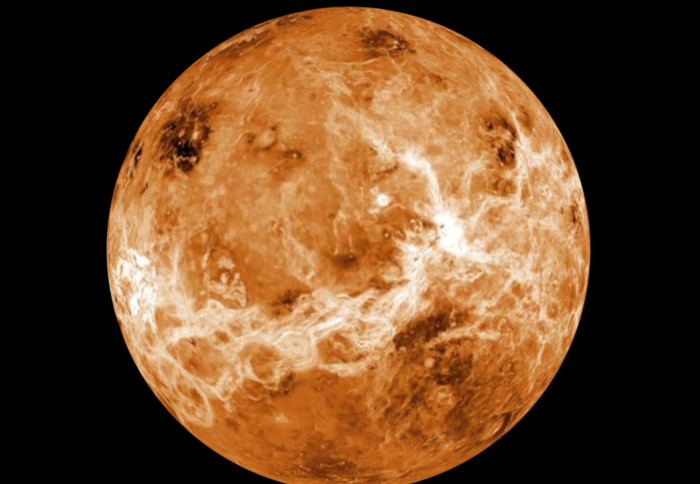
Jeremiah Horrocks, born in Toxteth Park near Liverpool, predicted a transit of Venus in 1639. In a transit we see Venus cross the face of the Sun. Although the transits occur in pairs, the pairs themselves are over a century apart. Horrocks based the prediction on the corrections he made to Kepler's planetary tables, following his own and William Crabtree's observations. Until 1761 they were the only two people ever to see a transit of Venus.
From his measurements during the transit, Horrocks calculated the distance from the Earth to the Sun, known as the astronomical unit. His figure was less than two-thirds of the modern one, but at 95 million km (59 million miles) this was vastly bigger than any previous suggestion.
Besides being an accomplished observer, Horrocks was a theorist, which is a rare combination. He was the first to realize that Jupiter and Saturn influenced each other's movements and he speculated about the forces involved. We now know that it's gravity at work, but Newton wouldn't work that out for several more decades.
Horrocks also concluded that the Moon's orbit was elliptical and that although its shape was mainly determined by the Earth, the Sun also influenced it. His orbital predictions for the Moon remained the best available for another century. The lunar orbit was a problem that even Isaac Newton said gave him a headache, and he acknowledged the contributions of Horrocks in this area.
Most delightfully, Horrocks described his astronomical delights and annoyances in verse. One was a criticism of the Earth-centered cosmos of Ptolemy. It was also a tribute to the Copernican system where the Sun didn't get around the earth with its “fiery steeds” as in ancient mythology. The apparent motion of the Sun and stars was due to the Earth's turning on its axis so that
The Earth performs their task, and by each day's
Revolving saves to all the distant stars
The useless labor of unceasing motion.
Another member of the circle was William Gascoigne who in 1640 invented a micrometer which would make astronomical observations much more accurate. Some years later it was improved by Richard Towneley, nephew to Christopher Towneley, yet another astronomer of the group.
So what happened?
In 1641, aged 22, Jeremiah Horrocks died. He was in his teens when he was correcting Kepler's tables and twenty when he observed the transit. We don't know what the cause of death was nor the full extent of his researches nor most of the details of his life. We do know he died the year before Civil War devastated Britain, and that many of his papers and the records were destroyed, although Christopher Towneley rescued what he could.
Christopher Towneley's brother Charles (Richard's father) fought and died for the King at the Battle of Marston Moor in 1644. William Gascoigne, on the same side, lived long enough to be killed the following year. William Crabtree, on the opposite side, survived the battle, but died – it isn't known how – the following month.
Aughton has searched out any records that might illuminate this story and its background. He has set Horrocks in his historical context by describing the reaction of the next generation – those who formed the Royal Society and recognized that Horrocks was one of them in spirit. He has also provided background to some of the developments which created the mainstream astronomy of Horrocks's day. (There were Copernicans in England, but most people still thought the Sun orbited the Earth.) And we learn of the efforts to collect the remaining Horrocks papers for publication.
Unfortunately, in the early history section I noticed a surprising number of elementary mistakes. The real clanger had to be the statement that Galileo's Dialogue Concerning the Two Chief World Systems was "presented as a dialogue between Aristotle, Ptolemy and Copernicus.” Whoops! The characters in Galileo's book were called Salviati, Salgredo and Simplicio. Simplicio was so obviously based on two of his contemporaries that Galileo definitely didn't make any friends in the way he presented their ideas!
I enjoyed reading the story and agree that a biography of Horrocks is overdue, as the only other published one was in the 19th century. The research into Horrocks life and background seemed to be thorough, but the other errors gave me some concern about the rest of it. I'd still recommend it, as it's readable and the English history was interesting. Not surprisingly, it's also fairly short.
Peter Aughton, The Transit of Venus – The Brief Brilliant Life of Jeremiah Horrocks Father of British Astronomy, Weidenfeld & Nicolson, 2004 ISBN 0-75381-875-2
NOTE: The copy of the book which I reviewed I purchased with my own money.
In the early 17th century, tucked away in the north of the country, English astronomy almost came of age. What was this early flowering? Why did it end suddenly and take a generation to be recognized? The intriguing story is told by Peter Aughton in The Transit of Venus - the Brief, Brilliant Life of Jeremiah Horrocks Father of British Astronomy.
Jeremiah Horrocks, born in Toxteth Park near Liverpool, predicted a transit of Venus in 1639. In a transit we see Venus cross the face of the Sun. Although the transits occur in pairs, the pairs themselves are over a century apart. Horrocks based the prediction on the corrections he made to Kepler's planetary tables, following his own and William Crabtree's observations. Until 1761 they were the only two people ever to see a transit of Venus.
From his measurements during the transit, Horrocks calculated the distance from the Earth to the Sun, known as the astronomical unit. His figure was less than two-thirds of the modern one, but at 95 million km (59 million miles) this was vastly bigger than any previous suggestion.
Besides being an accomplished observer, Horrocks was a theorist, which is a rare combination. He was the first to realize that Jupiter and Saturn influenced each other's movements and he speculated about the forces involved. We now know that it's gravity at work, but Newton wouldn't work that out for several more decades.
Horrocks also concluded that the Moon's orbit was elliptical and that although its shape was mainly determined by the Earth, the Sun also influenced it. His orbital predictions for the Moon remained the best available for another century. The lunar orbit was a problem that even Isaac Newton said gave him a headache, and he acknowledged the contributions of Horrocks in this area.
Most delightfully, Horrocks described his astronomical delights and annoyances in verse. One was a criticism of the Earth-centered cosmos of Ptolemy. It was also a tribute to the Copernican system where the Sun didn't get around the earth with its “fiery steeds” as in ancient mythology. The apparent motion of the Sun and stars was due to the Earth's turning on its axis so that
The Earth performs their task, and by each day's
Revolving saves to all the distant stars
The useless labor of unceasing motion.
Another member of the circle was William Gascoigne who in 1640 invented a micrometer which would make astronomical observations much more accurate. Some years later it was improved by Richard Towneley, nephew to Christopher Towneley, yet another astronomer of the group.
So what happened?
In 1641, aged 22, Jeremiah Horrocks died. He was in his teens when he was correcting Kepler's tables and twenty when he observed the transit. We don't know what the cause of death was nor the full extent of his researches nor most of the details of his life. We do know he died the year before Civil War devastated Britain, and that many of his papers and the records were destroyed, although Christopher Towneley rescued what he could.
Christopher Towneley's brother Charles (Richard's father) fought and died for the King at the Battle of Marston Moor in 1644. William Gascoigne, on the same side, lived long enough to be killed the following year. William Crabtree, on the opposite side, survived the battle, but died – it isn't known how – the following month.
Aughton has searched out any records that might illuminate this story and its background. He has set Horrocks in his historical context by describing the reaction of the next generation – those who formed the Royal Society and recognized that Horrocks was one of them in spirit. He has also provided background to some of the developments which created the mainstream astronomy of Horrocks's day. (There were Copernicans in England, but most people still thought the Sun orbited the Earth.) And we learn of the efforts to collect the remaining Horrocks papers for publication.
Unfortunately, in the early history section I noticed a surprising number of elementary mistakes. The real clanger had to be the statement that Galileo's Dialogue Concerning the Two Chief World Systems was "presented as a dialogue between Aristotle, Ptolemy and Copernicus.” Whoops! The characters in Galileo's book were called Salviati, Salgredo and Simplicio. Simplicio was so obviously based on two of his contemporaries that Galileo definitely didn't make any friends in the way he presented their ideas!
I enjoyed reading the story and agree that a biography of Horrocks is overdue, as the only other published one was in the 19th century. The research into Horrocks life and background seemed to be thorough, but the other errors gave me some concern about the rest of it. I'd still recommend it, as it's readable and the English history was interesting. Not surprisingly, it's also fairly short.
Peter Aughton, The Transit of Venus – The Brief Brilliant Life of Jeremiah Horrocks Father of British Astronomy, Weidenfeld & Nicolson, 2004 ISBN 0-75381-875-2
NOTE: The copy of the book which I reviewed I purchased with my own money.
You Should Also Read:
Transit of Venus – Measuring the Solar System
Johannes Kepler – His Life
Isaac Newton – His Life

Related Articles
Editor's Picks Articles
Top Ten Articles
Previous Features
Site Map
Content copyright © 2023 by Mona Evans. All rights reserved.
This content was written by Mona Evans. If you wish to use this content in any manner, you need written permission. Contact Mona Evans for details.