Watering Watchpoints for Plants
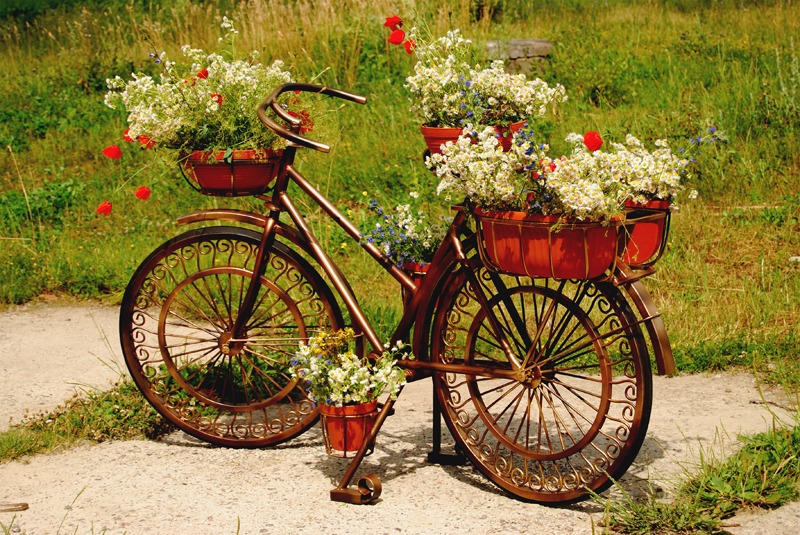
Easy come easy go they say in life and this is true for plants too. Many gardeners don’t realise how bad too much or too little watering can be for your containers. Of course one of the caveats of container gardening is that the plants need more water than those in the open garden but if you give your plants too much water regularly, besides those that may die, they can become lazy. Funnily enough, after first planting and watering, letting them struggle a bit for water helps them to develop good root systems which will give them all the chance in the world to survive those days that you may forget. Getting your plant to mature into a good healthy and upstanding citizen of your container city is a good start for them indeed!
Do you remember that bone song … you know the “toe bone’s connected to the… foot bone and the foot bone’s connected to the… ankle bone and the ankle bone’s connected to the… shin bone and so on up to the head bone? Well, when it comes to watering your plants, there is a similar connectedness as all parts of your planting actions have impact. By thinking about this just a little, it will make your understanding of this everyday action easier by far.
First the CONTAINERS you choose have an affect on the amount of water a plant may need. Plastic pots retain water for longer while clay pots are porous and may allow drying out more quickly depending on where they are placed on your balcony. Watch out too for enough drainage holes or blocked drainage holes.
Next know that watering and SOIL go hand in hand. As you know soils are very different again depending on your area and plant preferences and needs – more sandy at the coast, clay like? Fine or compacted? Gravelly and extra quick draining? Composted potting soil bought from the nursery? Friable and loamy soils are just right for many plants but nature is so adaptable and diverse, and so are the soils and other growing mediums. Each, together with the types of plants being grown will dictate how much water to give. The different water retention rates of soil is really very important to consider, and you know what soils you have in your containers so you can work out a watering schedules easily.
Another factor is EVAPORATION and TIMING – when is it the best time of day to water and why? Oh dear! Again there is no fast rule or straight answer for again it will depend on your garden set up, the size of the containers, what you are growing and of course the sunshine and temps. During winter when evaporation will be low because of the colder temperatures your plants will need less water by far than in the height of summer; and then in summer your plants may need increased watering. There will be seasonal days where you don’t water and others where you may have to water up to twice a day.
ADDITIVES to your soil is another consideration as water-retaining crystals or gardeners foam or peat moss, coir or other mixed in mulches will also affect how much your pot receives and keeps or lets drain away.
Think about PLANT GROUPINGS too. You need to group plants together with similar watering needs so that a standard procedure can be set up that will be easy for you to stick to. Some plants like wet feet, others hate this, some retain water for longer like succulents, others drink now and want more sooner than later.
So when is the best time to water?
Early morning OR early evening are the best time as a rule of thumb (of course there are exceptions). I go for early morning always as I can monitor my watering easily this way and do not have to think about the daily weather beyond noting it, and then adapting the watering accordingly. I also check on my individual containers for moisture levels. Surface only watering is no good and I always water before midday; as with the heat of the day in the warm seasons, the water evaporates more often than not and this is just wasteful anyway. Then, more importantly, evening watering can get cold and ‘ice up’ over cold nights thus hurting roots and new buds and tender shoots. Also, splashes of water on the leaves can damage them and invite fungus and mildew and other similar pests. Anyway, one of the gardening golden rules in watering is water them thoroughly, not just a hurried surface splash and only water when your plants need it.
I have not used a water meter that is readily available in the shops, but I know many gardeners who do use these and swear by them. Perhaps you would purchase one for yourself, they are not too expensive.
How can you recognise an OVERwatered plant? Can you rescue it?
Signs of overwatering include wilting plants; yellow leaves dropping from the bottom of the plant; soil that has a mossy green film (evidence of algae and shade); stems can be soft, wrinkled or mushy; the roots are stunted or rotting and of course your plant has stopped growing. Oh, and by the way, if you see your earthworms are at the surface … they are probably drowning and coming up for air. One of the easiest and tell tale signs – stop watering and allow the container to dry out. Oh what friends my worms are!
Rescue and help plans for your overwatered plants will include stopping watering and allowing the pot to dry out or you can remove the plant, check the roots, root prune by cutting away the damaged bits and replanting in a different pot in new soil. Trim the plant by giving it haircut too and do not add water until the next day … and then with caution. Plants are hardier than we think and will more often than not respond well to this treatment. DO NOT FEED. Your plant cannot think about food, not now, it is readjusting to trimmed roots and all. Feed on another day. If your plant dies, let it be. You tried and will have learnt a lot. Let it go, start again with the same plant – you chose it once so choose it again, it is not the plant’s fault it got overwatered!
And how can I recognise an UNDERwatered plant? Can I rescue it?
Signs of underwatering include wilting, the whole plant will sag and the bottom leaves midway and down will turn dry, light green then yellow and just hang there (funnily enough not always drop off). Water not only provides the moisture that your plant needs, it carries down the nutrients and trace elements your plants need so no water is almost worse than too much. Almost. Also, the stems and roots will be the last to go as the plant, in an effort to save itself, will keep what little moisture it can for these parts.
Rescue and help for underwatered plants is to put the pot in a bucket of water and let it stand for around an hour. As soon as you do this, lots of bubbles will surface, just wait for these to stop and you will know that the water has reached the roots and that they have started to drink. After about an hour, remove the pot and let it drain drain drain all the water away. Do not let the pot stand in water. Repeat this the next day (though there may not be any bubbles), let it be then remove, allow it to drain then resume normal watering. Feed a week or so later with a liquid fertiliser.
What if you cannot put your large container in a bucket … and of course you can’t! Well then water it jug by jug until the water drips out of the bottom. Jug by jug, do not displace the soil by using a strong jet from a hosepipe in your hurry to water. The plant will tell you when it has had enough when the last jug just goes straight through into the draining tray. Allow it to sit for around an hour then remove any water left in the tray, again, do not allow wet feet. Repeat as above the next day at around the same time. Use a natural mulch like bark chips or peanut shells and introduce more earthworms. Feed in a week with a liquid emulsion.
Wasting precious water is another subject for another day but it’s great to be mindful of this and a lot of the info above lends itself to good garden practice when it comes to water matters anyway. For instance, are your taps and water points leaking (just a matter of changing a washer?) Is your irrigation system (if you have/use one) in good working order? Have you thought about the proper placement of your water feature and water flow and evaporation and leaking basins? Nag. Nag. Nag. Oh dear!
What do you want your container garden to do?
Do you remember that bone song … you know the “toe bone’s connected to the… foot bone and the foot bone’s connected to the… ankle bone and the ankle bone’s connected to the… shin bone and so on up to the head bone? Well, when it comes to watering your plants, there is a similar connectedness as all parts of your planting actions have impact. By thinking about this just a little, it will make your understanding of this everyday action easier by far.
First the CONTAINERS you choose have an affect on the amount of water a plant may need. Plastic pots retain water for longer while clay pots are porous and may allow drying out more quickly depending on where they are placed on your balcony. Watch out too for enough drainage holes or blocked drainage holes.
Next know that watering and SOIL go hand in hand. As you know soils are very different again depending on your area and plant preferences and needs – more sandy at the coast, clay like? Fine or compacted? Gravelly and extra quick draining? Composted potting soil bought from the nursery? Friable and loamy soils are just right for many plants but nature is so adaptable and diverse, and so are the soils and other growing mediums. Each, together with the types of plants being grown will dictate how much water to give. The different water retention rates of soil is really very important to consider, and you know what soils you have in your containers so you can work out a watering schedules easily.
Another factor is EVAPORATION and TIMING – when is it the best time of day to water and why? Oh dear! Again there is no fast rule or straight answer for again it will depend on your garden set up, the size of the containers, what you are growing and of course the sunshine and temps. During winter when evaporation will be low because of the colder temperatures your plants will need less water by far than in the height of summer; and then in summer your plants may need increased watering. There will be seasonal days where you don’t water and others where you may have to water up to twice a day.
ADDITIVES to your soil is another consideration as water-retaining crystals or gardeners foam or peat moss, coir or other mixed in mulches will also affect how much your pot receives and keeps or lets drain away.
Think about PLANT GROUPINGS too. You need to group plants together with similar watering needs so that a standard procedure can be set up that will be easy for you to stick to. Some plants like wet feet, others hate this, some retain water for longer like succulents, others drink now and want more sooner than later.
So when is the best time to water?
Early morning OR early evening are the best time as a rule of thumb (of course there are exceptions). I go for early morning always as I can monitor my watering easily this way and do not have to think about the daily weather beyond noting it, and then adapting the watering accordingly. I also check on my individual containers for moisture levels. Surface only watering is no good and I always water before midday; as with the heat of the day in the warm seasons, the water evaporates more often than not and this is just wasteful anyway. Then, more importantly, evening watering can get cold and ‘ice up’ over cold nights thus hurting roots and new buds and tender shoots. Also, splashes of water on the leaves can damage them and invite fungus and mildew and other similar pests. Anyway, one of the gardening golden rules in watering is water them thoroughly, not just a hurried surface splash and only water when your plants need it.
I have not used a water meter that is readily available in the shops, but I know many gardeners who do use these and swear by them. Perhaps you would purchase one for yourself, they are not too expensive.
How can you recognise an OVERwatered plant? Can you rescue it?
Signs of overwatering include wilting plants; yellow leaves dropping from the bottom of the plant; soil that has a mossy green film (evidence of algae and shade); stems can be soft, wrinkled or mushy; the roots are stunted or rotting and of course your plant has stopped growing. Oh, and by the way, if you see your earthworms are at the surface … they are probably drowning and coming up for air. One of the easiest and tell tale signs – stop watering and allow the container to dry out. Oh what friends my worms are!
Rescue and help plans for your overwatered plants will include stopping watering and allowing the pot to dry out or you can remove the plant, check the roots, root prune by cutting away the damaged bits and replanting in a different pot in new soil. Trim the plant by giving it haircut too and do not add water until the next day … and then with caution. Plants are hardier than we think and will more often than not respond well to this treatment. DO NOT FEED. Your plant cannot think about food, not now, it is readjusting to trimmed roots and all. Feed on another day. If your plant dies, let it be. You tried and will have learnt a lot. Let it go, start again with the same plant – you chose it once so choose it again, it is not the plant’s fault it got overwatered!
And how can I recognise an UNDERwatered plant? Can I rescue it?
Signs of underwatering include wilting, the whole plant will sag and the bottom leaves midway and down will turn dry, light green then yellow and just hang there (funnily enough not always drop off). Water not only provides the moisture that your plant needs, it carries down the nutrients and trace elements your plants need so no water is almost worse than too much. Almost. Also, the stems and roots will be the last to go as the plant, in an effort to save itself, will keep what little moisture it can for these parts.
Rescue and help for underwatered plants is to put the pot in a bucket of water and let it stand for around an hour. As soon as you do this, lots of bubbles will surface, just wait for these to stop and you will know that the water has reached the roots and that they have started to drink. After about an hour, remove the pot and let it drain drain drain all the water away. Do not let the pot stand in water. Repeat this the next day (though there may not be any bubbles), let it be then remove, allow it to drain then resume normal watering. Feed a week or so later with a liquid fertiliser.
What if you cannot put your large container in a bucket … and of course you can’t! Well then water it jug by jug until the water drips out of the bottom. Jug by jug, do not displace the soil by using a strong jet from a hosepipe in your hurry to water. The plant will tell you when it has had enough when the last jug just goes straight through into the draining tray. Allow it to sit for around an hour then remove any water left in the tray, again, do not allow wet feet. Repeat as above the next day at around the same time. Use a natural mulch like bark chips or peanut shells and introduce more earthworms. Feed in a week with a liquid emulsion.
Wasting precious water is another subject for another day but it’s great to be mindful of this and a lot of the info above lends itself to good garden practice when it comes to water matters anyway. For instance, are your taps and water points leaking (just a matter of changing a washer?) Is your irrigation system (if you have/use one) in good working order? Have you thought about the proper placement of your water feature and water flow and evaporation and leaking basins? Nag. Nag. Nag. Oh dear!
What do you want your container garden to do?
You Should Also Read:
Waterwise Olla Pots
Watering Ideas for Holidays
Keep a Garden Journal

Related Articles
Editor's Picks Articles
Top Ten Articles
Previous Features
Site Map
Content copyright © 2023 by Lestie Mulholland. All rights reserved.
This content was written by Lestie Mulholland. If you wish to use this content in any manner, you need written permission. Contact Lestie Mulholland for details.