Searching for Exoplanets
People have long wondered about planets around other stars, those we now call exoplanets or extrasolar planets. Yet it took until the end of the 20th century to find the first ones.
It's not surprising that it took so long. The stars are so far away that even the light from our hundred nearest neighbors takes up to twenty years to get here. In addition, we have to remember that we see Solar System planets by reflected sunlight. If we were 24 trillion miles away — the distance to the next star — even Jupiter would be submerged in the Sun's light.
This means astronomers don't find extrasolar planets simply by pointing their telescopes at nearby stars. In fact, it was only in 2005 that we had the first image of an extrasolar planet. The technology for imaging has improved to the point that a few dozen extrasolar planets have been discovered by direct imaging. However that isn't many out of the over five thousand that are currently known or suspected.
So how do they find the planets if they can't see them? It's usually by detecting a planet's influence on its star.
Doppler spectroscopy
The method which had enabled the discovery of most of the extrasolar planets in the first fifteen years of discoveries is Doppler spectroscopy. It's also called the radial velocity method or, popularly, the wobble method.
Sound waves
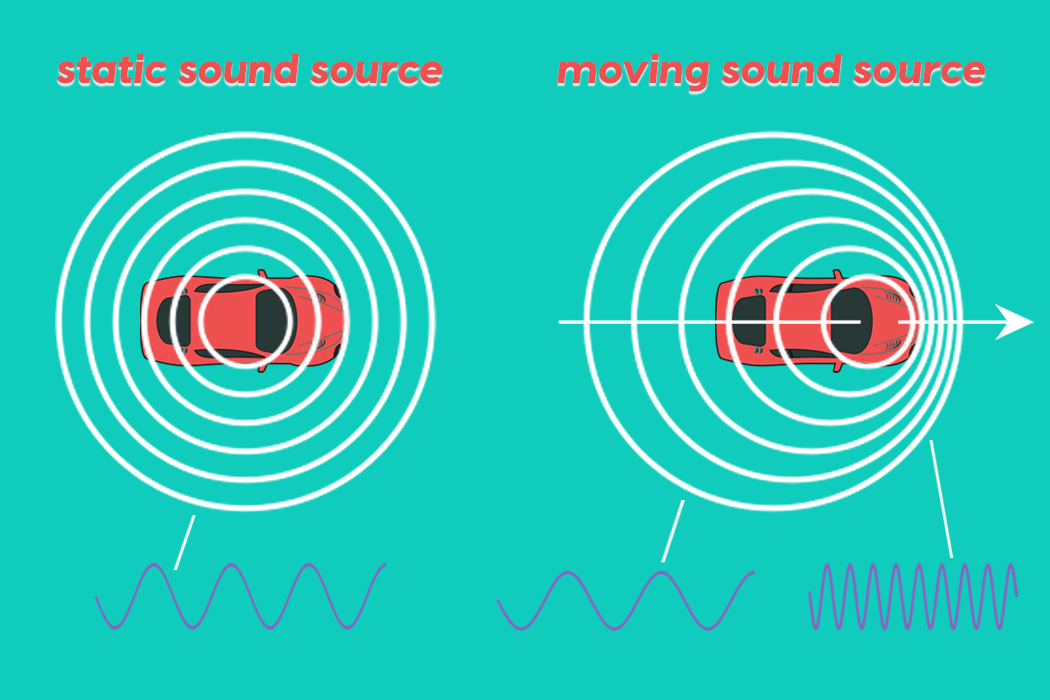
Think of how the note of an emergency vehicle's siren changes as it approaches, and then passes you. As the vehicle approaches, it bunches the sound waves together. This increases the frequency of the waves, making the note higher. After it passes and is moving away, the opposite occurs and the pitch drops. This is the Doppler effect.
Light waves
The Doppler effect applies to light waves too. In the top picture, we see a line from the spectrum of a galaxy. In the middle picture, the galaxy is moving away from us. The light waves are stretched, and since longer waves are redder, the line has moved towards the red end of the spectrum — it has been redshifted. In the bottom picture, the galaxy is coming towards us. The light waves are squashed, so the line has moved towards the shorter-wavelength (blue) end of the spectrum — it has been blueshifted.
Orbiting planets
Strictly speaking, planets don't orbit stars. Through a mutual gravitational attraction the star and planet orbit their common center of gravity. This center is inside the star, so the interaction makes the star wobble slightly. If the orbiting planet causes the star to move alternately towards and away from us, a sensitive telescope may detect alternating blue and red shifts in the light spectrum. The frequency of the shifts shows the planet's orbital period and the size of the shifts tells us about the mass.
Success at last
In 1995 Swiss astronomers Michel Mayor and Didier Queloz discovered the first exoplanet orbiting a sun-like star. It was quite a surprise, for it had at least half the mass of Jupiter, but was in a closer orbit than Mercury's is to the Sun. This was the first of the "hot Jupiters".
Hot Jupiters aren't the most common planets in the Galaxy, but they were the easiest to find. Massive and close to the star, their gravitational influence is maximized. And it doesn't take long for repeated observations to establish the orbital time. By contrast, Jupiter itself takes twelve years to orbit the Sun.
In the early years of finding exoplanets, almost all of the discoveries were through the radial velocity method. However in 2010 half the discoveries had come by different means — the transit method.
The transit method
A transit occurs when a planet crosses the disc of its star. This causes a tiny dip in the star's brightness. The size of the dip provides evidence of the planet's diameter, and the orbital period is determined from the timing of the dips. As there are many causes for variation in starlight, transits are often confirmed by various follow-up methods. Since 2011 most of the exoplanet discoveries have been via the transit method.
Kepler and K2
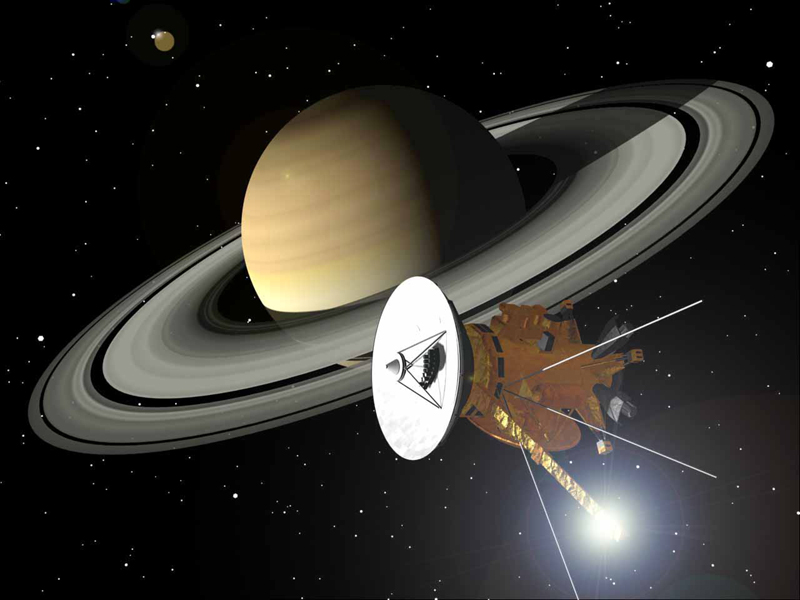
The greatest contribution to exoplanet discoveries so far has been NASA's Kepler mission. It was launched in March 2009 and monitored a small, populous star field. Not being subject to distortion by Earth's atmosphere, its sensitive photometer was able to detect the transits of smaller planets. One of the mission goals was to find Earth-sized planets. It hasn't found an Earth twin, but there are nearly three dozen confirmed discoveries that are less than twice Earth-size and in the habitable zones of their stars.
Kepler's main mission ended in 2013 when a second stabilizer failed, leaving it unable to carry out precision targeting. However there is still a large amount of data to analyze and new discoveries to be made. In addition, in 2014 an ingenious solution was found that has allowed Kepler to carry out a new mission, called K2.
As of July 2018, the two missions had found 2650 confirmed exoplanets and 2500 candidate exoplanets.
New missions and ground-based programs are extending the search.
It's not surprising that it took so long. The stars are so far away that even the light from our hundred nearest neighbors takes up to twenty years to get here. In addition, we have to remember that we see Solar System planets by reflected sunlight. If we were 24 trillion miles away — the distance to the next star — even Jupiter would be submerged in the Sun's light.
This means astronomers don't find extrasolar planets simply by pointing their telescopes at nearby stars. In fact, it was only in 2005 that we had the first image of an extrasolar planet. The technology for imaging has improved to the point that a few dozen extrasolar planets have been discovered by direct imaging. However that isn't many out of the over five thousand that are currently known or suspected.
So how do they find the planets if they can't see them? It's usually by detecting a planet's influence on its star.
Doppler spectroscopy
The method which had enabled the discovery of most of the extrasolar planets in the first fifteen years of discoveries is Doppler spectroscopy. It's also called the radial velocity method or, popularly, the wobble method.
Sound waves
Think of how the note of an emergency vehicle's siren changes as it approaches, and then passes you. As the vehicle approaches, it bunches the sound waves together. This increases the frequency of the waves, making the note higher. After it passes and is moving away, the opposite occurs and the pitch drops. This is the Doppler effect.
Light waves
The Doppler effect applies to light waves too. In the top picture, we see a line from the spectrum of a galaxy. In the middle picture, the galaxy is moving away from us. The light waves are stretched, and since longer waves are redder, the line has moved towards the red end of the spectrum — it has been redshifted. In the bottom picture, the galaxy is coming towards us. The light waves are squashed, so the line has moved towards the shorter-wavelength (blue) end of the spectrum — it has been blueshifted.
Orbiting planets
Strictly speaking, planets don't orbit stars. Through a mutual gravitational attraction the star and planet orbit their common center of gravity. This center is inside the star, so the interaction makes the star wobble slightly. If the orbiting planet causes the star to move alternately towards and away from us, a sensitive telescope may detect alternating blue and red shifts in the light spectrum. The frequency of the shifts shows the planet's orbital period and the size of the shifts tells us about the mass.
Success at last
In 1995 Swiss astronomers Michel Mayor and Didier Queloz discovered the first exoplanet orbiting a sun-like star. It was quite a surprise, for it had at least half the mass of Jupiter, but was in a closer orbit than Mercury's is to the Sun. This was the first of the "hot Jupiters".
Hot Jupiters aren't the most common planets in the Galaxy, but they were the easiest to find. Massive and close to the star, their gravitational influence is maximized. And it doesn't take long for repeated observations to establish the orbital time. By contrast, Jupiter itself takes twelve years to orbit the Sun.
In the early years of finding exoplanets, almost all of the discoveries were through the radial velocity method. However in 2010 half the discoveries had come by different means — the transit method.
The transit method
A transit occurs when a planet crosses the disc of its star. This causes a tiny dip in the star's brightness. The size of the dip provides evidence of the planet's diameter, and the orbital period is determined from the timing of the dips. As there are many causes for variation in starlight, transits are often confirmed by various follow-up methods. Since 2011 most of the exoplanet discoveries have been via the transit method.
Kepler and K2
The greatest contribution to exoplanet discoveries so far has been NASA's Kepler mission. It was launched in March 2009 and monitored a small, populous star field. Not being subject to distortion by Earth's atmosphere, its sensitive photometer was able to detect the transits of smaller planets. One of the mission goals was to find Earth-sized planets. It hasn't found an Earth twin, but there are nearly three dozen confirmed discoveries that are less than twice Earth-size and in the habitable zones of their stars.
Kepler's main mission ended in 2013 when a second stabilizer failed, leaving it unable to carry out precision targeting. However there is still a large amount of data to analyze and new discoveries to be made. In addition, in 2014 an ingenious solution was found that has allowed Kepler to carry out a new mission, called K2.
As of July 2018, the two missions had found 2650 confirmed exoplanets and 2500 candidate exoplanets.
New missions and ground-based programs are extending the search.
You Should Also Read:
Citizen Science in the Electronic Age
Exotic Exoplanets Tour
Johannes Kepler - His Life

Related Articles
Editor's Picks Articles
Top Ten Articles
Previous Features
Site Map
Content copyright © 2023 by Mona Evans. All rights reserved.
This content was written by Mona Evans. If you wish to use this content in any manner, you need written permission. Contact Mona Evans for details.