

South Africa Country Facts

Official Name: Republic of South Africa
Alternate Names: South Africa
Former Names: Union of South Africa
Capital City: Pretoria
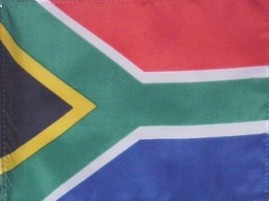 Flag: The Sotuh African flag has an upper band of red and lower band of blue with a black triangle at the hoist. Separating these three colors is a green sideways Y with a band of gold between the black triangle an green Y and a band of gold between the red and the Y and also between the blue and Y.
Date of Independence: May 31, 1910
National Anthem: Nkosi Sikelel' iAfrika
Population: 49,052,489
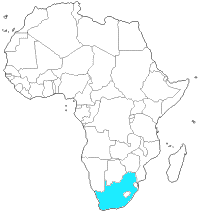 Size/Area: 1,219,912 sq km - slightly less than twice the size of Texas
Land Locked: No
Coastline: 2,798 km
Bordering Countries: Botswana, Lesotho, Mozambique, Namibia, Swaziland, Zimbabwe
Administrative Divisions: 9 provinces - Eastern Cape, Free State, Gauteng, KwaZulu-Natal, Limpopo, Mpumalanga, Northern Cape, North-West, Western Cape
Major Cities: Pretoria, Cape Town, Bloemfontein, Johannesburg
Languages: English, Afrikaans, Ndebele, Pedi (Sotho Nord), Sotho (Sotho Sud), Swati (Swazi), Tsonga, Tswana, Venda, Xhosa, Zulu
Religions: Zion Christian (11.1%), Pentecostal/Charismatic (8.2%), Catholic (7.1%), Methodist (6.8%), Dutch Reformed (6.7%), Anglican (3.8%), Muslim (1.5%), other Christian (36%), other (2.3%), unspecified (1.4%), none (15.1%)
Major Holidays: New Year's Day, Human Rights Day (Mar 21), Good Friday, Family Day (Monday after Easter Sunday), Freedom Day (Apr 27), Workers Day (May 1), Youth Day (June 16), 9 August National Women's Day (Aug 9), Heritage Day (Sept 24), Day of Reconciliation (Dec 16), 25 December Christmas Day, Day of Goodwill (Dec 26)
Currency: Rand
Currency Code: ZAR
Highest Point: Njesuthi 3,408 m
Lowest Point: Atlantic Ocean 0 m
Bordering Bodies of Water: Atlantic Ocean
Climate: Most Sotuh Africa has warm, sunny days and cool nights. Rainfall generally occurs from November through March.
Major Industries: mining (platinum, gold, chromium), automobile assembly, metalworking, machinery, textiles, iron and steel, chemicals, fertilizer, foodstuffs, commercial ship repair
Major Agricultural Products: corn, wheat, sugarcane, fruits, vegetables, beef, poultry, mutton, wool, dairy products
Natural Resources: gold, chromium, antimony, coal, iron ore, manganese, nickel, phosphates, tin, uranium, gem diamonds, platinum, copper, vanadium, salt, natural gas
Time Zone: UTC +2
 Tribes of Africa eBook
This eBook is the most complete listing of African tribes available on the internet. The first section of this book is the tribes sorted alphabetically by country. The second section is the tribes sorted alphabetically by tribe name.
Alternate Names: South Africa
Former Names: Union of South Africa
Capital City: Pretoria
Flag: The Sotuh African flag has an upper band of red and lower band of blue with a black triangle at the hoist. Separating these three colors is a green sideways Y with a band of gold between the black triangle an green Y and a band of gold between the red and the Y and also between the blue and Y.Date of Independence: May 31, 1910
National Anthem: Nkosi Sikelel' iAfrika
Population: 49,052,489
Size/Area: 1,219,912 sq km - slightly less than twice the size of TexasLand Locked: No
Coastline: 2,798 km
Bordering Countries: Botswana, Lesotho, Mozambique, Namibia, Swaziland, Zimbabwe
Administrative Divisions: 9 provinces - Eastern Cape, Free State, Gauteng, KwaZulu-Natal, Limpopo, Mpumalanga, Northern Cape, North-West, Western Cape
Major Cities: Pretoria, Cape Town, Bloemfontein, Johannesburg
Languages: English, Afrikaans, Ndebele, Pedi (Sotho Nord), Sotho (Sotho Sud), Swati (Swazi), Tsonga, Tswana, Venda, Xhosa, Zulu
Religions: Zion Christian (11.1%), Pentecostal/Charismatic (8.2%), Catholic (7.1%), Methodist (6.8%), Dutch Reformed (6.7%), Anglican (3.8%), Muslim (1.5%), other Christian (36%), other (2.3%), unspecified (1.4%), none (15.1%)
Major Holidays: New Year's Day, Human Rights Day (Mar 21), Good Friday, Family Day (Monday after Easter Sunday), Freedom Day (Apr 27), Workers Day (May 1), Youth Day (June 16), 9 August National Women's Day (Aug 9), Heritage Day (Sept 24), Day of Reconciliation (Dec 16), 25 December Christmas Day, Day of Goodwill (Dec 26)
Currency: Rand
Currency Code: ZAR
Highest Point: Njesuthi 3,408 m
Lowest Point: Atlantic Ocean 0 m
Bordering Bodies of Water: Atlantic Ocean
Climate: Most Sotuh Africa has warm, sunny days and cool nights. Rainfall generally occurs from November through March.
Major Industries: mining (platinum, gold, chromium), automobile assembly, metalworking, machinery, textiles, iron and steel, chemicals, fertilizer, foodstuffs, commercial ship repair
Major Agricultural Products: corn, wheat, sugarcane, fruits, vegetables, beef, poultry, mutton, wool, dairy products
Natural Resources: gold, chromium, antimony, coal, iron ore, manganese, nickel, phosphates, tin, uranium, gem diamonds, platinum, copper, vanadium, salt, natural gas
Time Zone: UTC +2
Tribes of Africa eBookThis eBook is the most complete listing of African tribes available on the internet. The first section of this book is the tribes sorted alphabetically by country. The second section is the tribes sorted alphabetically by tribe name.
This site needs an editor - click to learn more!
You Should Also Read:
Addax Facts
Tribes of Africa from Reunion through Zimbabwe 
Related Articles
Editor's Picks Articles
Top Ten Articles
Previous Features
Site Map
Content copyright © 2023 by Jeanne Egbosiuba Ukwendu. All rights reserved.
This content was written by Jeanne Egbosiuba Ukwendu. If you wish to use this content in any manner, you need written permission. Contact
BellaOnline Administration
for details.
