10 Fascinating Facts about Space Exploration
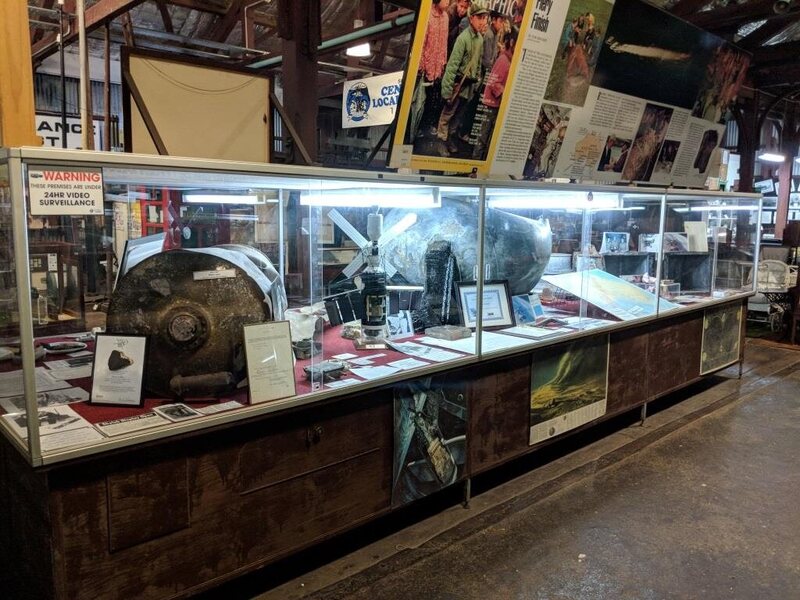
Skylab debris in the Esperance Museum, western Australia
1. The name of the first space traveler to orbit Earth . . .
was not Yuri Gagarin. The Russian cosmonaut was the first human in orbit, but he followed a number of canine cosmonauts. The first one was called Laika. There is a monument to Laika in Moscow.
2. Cosmonaut Valeri Polyakov holds the record for longest single stay in space. Can you guess about how long it was? Eight months? Eleven months? Fourteen months?
Polyakov was aboard the space station Mir for 437.7 days (just over fourteen months). He was a specialist in space medicine and used himself as a test subject to provide data about the long term effects of microgravity. This kind of data of data is essential in planning for a Mars mission.
3. For all of human existence, only one side of the Moon was visible. The first sight of the far side was in 1959 . . .
when the Soviet Union's Luna 3, the first probe to orbit the Moon, took a picture of the far side. However, the first humans to see the far side with their own eyes were Frank Borman, James A. Lovell, Jr. and William A. Anders, the crew of Apollo 8. They spent Christmas 1968 in lunar orbit.
4. The guidance systems of Apollo spacecraft needed adjusting from time to time, so the astronauts were trained in celestial navigation. Their list of navigation stars included Dnoces, Navi and Regor. What was unusual about these three stars?
As a joke, Gus Grissom substituted the three names for three actual star names. They weren't well known stars and no one noticed, so his substitutes stayed on the list. But what did they mean? Grissom was training with Edward White II and Roger Chaffee to be the first Apollo crew. Read the star names backwards and you get Second (for White), Ivan (Grissom's middle name) and Roger. Tragically, the three astronauts died when fire broke out in the command module during a launchpad test in January 1967.
5. Snoopy (from Charles Schultz's cartoon Peanuts) has a job in the US space program.
Snoopy went to the Moon, “Snoopy” being the call sign for the Apollo 10 command module. But with the agreement of Charles Schultz, Snoopy has had the job of NASA's safety mascot for half a century. There are also Silver Snoopy lapel pins that are flown in space and presented by astronauts to NASA workers who have made a significant contribution to manned spaceflight.
6. A number of space probes have been lost, but only one valuable artwork.
Beagle 2 was a British astrobiology lander that hitched a ride on the European Space Agency's Mars Express mission in 2003. It landed, but never communicated, and wasn't found until January 2015. In order to make sense of the images sent to earth, a lander is fitted with a sort of test pattern called a calibration target. The scientists know what this looks like, so they can use it to adjust color etc. of incoming images. Beagle 2's target was a Damien Hirst spot painting. The artistic value of a spot painting is contentious, but apparently they have sold for high prices. [Image credit: Mike Levers]
7. On July 13, 1979 17-year-old Australian Stan Thornton was rushing to San Francisco with a special delivery.
NASA's orbiting laboratory Skylab had made an uncontrolled descent and broken up over western Australia. A piece of it landed on one of the Thornton family's sheds in Esperance. Stan found out that the San Francisco Examiner newspaper was offering $10,000 – which would be worth three times that now – for the first piece of Skylab to be returned within 72 hours. He packed a few things and hopped on a plane. Satellites still drop out of the sky, but these days they wouldn't let you on the plane.
8. There were three men who went farther from Earth than any other person in history.
All of those who orbited the Moon traveled a similar distance. However James Lovell, John Swigert and Fred Haise, the crew of Apollo 13, didn't enter lunar orbit. They followed the path that would bring them home, and it took them farther beyond the Moon than the others had gone.
9. There is a spacecraft that is over 22 billion km (14 billion miles) from the Sun.
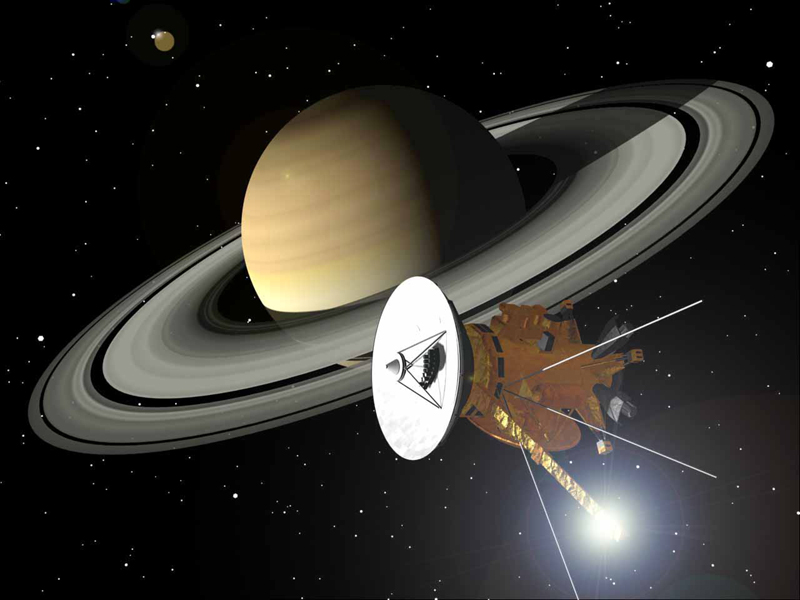
Voyager 1 left the solar wind and crossed into interstellar space in August 2012. The solar wind is the stream of tiny particles that shoot out from the Sun. The spacecraft left Earth in 1977 to study Jupiter and Saturn, but its mission was extended to have it send back data from the outer Solar System and beyond. It's now so far away that it takes about 21 hours for a radio signal to get there from Earth.
10. No one knows where the final resting place of some of the ashes of Clyde Tombaugh (1906-1997) will be.
The New Horizons spacecraft is carrying a small portion of the ashes of the American astronomer who discovered Pluto in 1930. In 2015 the spacecraft made a historic flyby of Pluto and its moons. It then went on to Arrokoth, a second Kuiper Belt object. NASA will probably try to find a third target for New Horizons before it heads out of the Solar System. Some people still see the change in Pluto's status as a demotion, but I see Pluto as the first of an exciting new class of objects.
1. The name of the first space traveler to orbit Earth . . .
was not Yuri Gagarin. The Russian cosmonaut was the first human in orbit, but he followed a number of canine cosmonauts. The first one was called Laika. There is a monument to Laika in Moscow.
2. Cosmonaut Valeri Polyakov holds the record for longest single stay in space. Can you guess about how long it was? Eight months? Eleven months? Fourteen months?
Polyakov was aboard the space station Mir for 437.7 days (just over fourteen months). He was a specialist in space medicine and used himself as a test subject to provide data about the long term effects of microgravity. This kind of data of data is essential in planning for a Mars mission.
3. For all of human existence, only one side of the Moon was visible. The first sight of the far side was in 1959 . . .
when the Soviet Union's Luna 3, the first probe to orbit the Moon, took a picture of the far side. However, the first humans to see the far side with their own eyes were Frank Borman, James A. Lovell, Jr. and William A. Anders, the crew of Apollo 8. They spent Christmas 1968 in lunar orbit.
4. The guidance systems of Apollo spacecraft needed adjusting from time to time, so the astronauts were trained in celestial navigation. Their list of navigation stars included Dnoces, Navi and Regor. What was unusual about these three stars?
As a joke, Gus Grissom substituted the three names for three actual star names. They weren't well known stars and no one noticed, so his substitutes stayed on the list. But what did they mean? Grissom was training with Edward White II and Roger Chaffee to be the first Apollo crew. Read the star names backwards and you get Second (for White), Ivan (Grissom's middle name) and Roger. Tragically, the three astronauts died when fire broke out in the command module during a launchpad test in January 1967.
5. Snoopy (from Charles Schultz's cartoon Peanuts) has a job in the US space program.
Snoopy went to the Moon, “Snoopy” being the call sign for the Apollo 10 command module. But with the agreement of Charles Schultz, Snoopy has had the job of NASA's safety mascot for half a century. There are also Silver Snoopy lapel pins that are flown in space and presented by astronauts to NASA workers who have made a significant contribution to manned spaceflight.
6. A number of space probes have been lost, but only one valuable artwork.
Beagle 2 was a British astrobiology lander that hitched a ride on the European Space Agency's Mars Express mission in 2003. It landed, but never communicated, and wasn't found until January 2015. In order to make sense of the images sent to earth, a lander is fitted with a sort of test pattern called a calibration target. The scientists know what this looks like, so they can use it to adjust color etc. of incoming images. Beagle 2's target was a Damien Hirst spot painting. The artistic value of a spot painting is contentious, but apparently they have sold for high prices. [Image credit: Mike Levers]
7. On July 13, 1979 17-year-old Australian Stan Thornton was rushing to San Francisco with a special delivery.
NASA's orbiting laboratory Skylab had made an uncontrolled descent and broken up over western Australia. A piece of it landed on one of the Thornton family's sheds in Esperance. Stan found out that the San Francisco Examiner newspaper was offering $10,000 – which would be worth three times that now – for the first piece of Skylab to be returned within 72 hours. He packed a few things and hopped on a plane. Satellites still drop out of the sky, but these days they wouldn't let you on the plane.
8. There were three men who went farther from Earth than any other person in history.
All of those who orbited the Moon traveled a similar distance. However James Lovell, John Swigert and Fred Haise, the crew of Apollo 13, didn't enter lunar orbit. They followed the path that would bring them home, and it took them farther beyond the Moon than the others had gone.
9. There is a spacecraft that is over 22 billion km (14 billion miles) from the Sun.
Voyager 1 left the solar wind and crossed into interstellar space in August 2012. The solar wind is the stream of tiny particles that shoot out from the Sun. The spacecraft left Earth in 1977 to study Jupiter and Saturn, but its mission was extended to have it send back data from the outer Solar System and beyond. It's now so far away that it takes about 21 hours for a radio signal to get there from Earth.
10. No one knows where the final resting place of some of the ashes of Clyde Tombaugh (1906-1997) will be.
The New Horizons spacecraft is carrying a small portion of the ashes of the American astronomer who discovered Pluto in 1930. In 2015 the spacecraft made a historic flyby of Pluto and its moons. It then went on to Arrokoth, a second Kuiper Belt object. NASA will probably try to find a third target for New Horizons before it heads out of the Solar System. Some people still see the change in Pluto's status as a demotion, but I see Pluto as the first of an exciting new class of objects.
You Should Also Read:
In the Shadow of the Moon - film review
Who Let the Dogs out?
Pluto - Gateway to the Kuiper Belt

Related Articles
Editor's Picks Articles
Top Ten Articles
Previous Features
Site Map
Content copyright © 2023 by Mona Evans. All rights reserved.
This content was written by Mona Evans. If you wish to use this content in any manner, you need written permission. Contact Mona Evans for details.