Comets - Solar System Wanderers
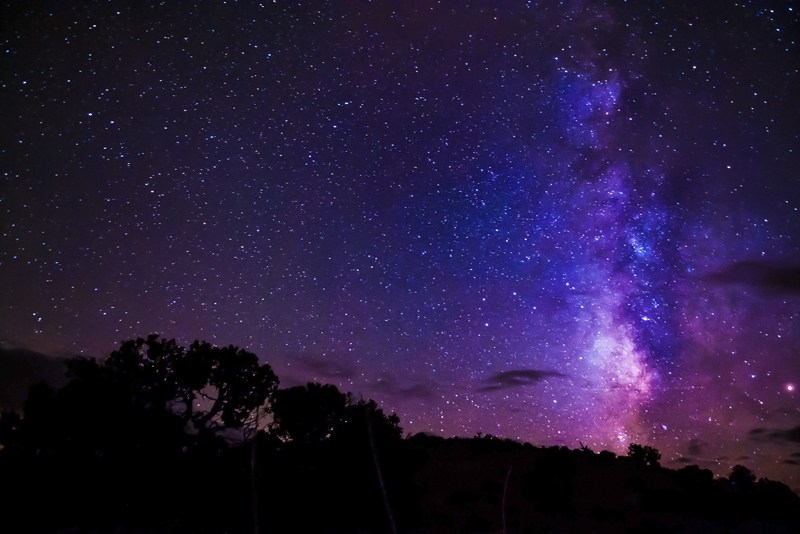
Comets have long been considered ill omens.
"When beggars die there are no comets seen;
The heavens themselves blaze forth the death of princes."
Julius Caesar (II, ii, 30-31)
When people were closely aware of the night sky, and astrologers read omens in the heavens, something new would be worrying. Additionally, in pre-telescopic days, only the brightest comets would be seen. If you saw Comet Hale-Bopp in 1997, you will realize what a impressive and memorable sight a bright comet is.
Comets have been described as dirty snowballs or as icy dirtballs. They range in size from about half a mile to thirty miles across (from one to sixty km) and come from beyond Pluto in the Kuiper Belt, or even further away in the Oort Cloud.
We refer to some comets as periodic, which means we know how often they arrive in the inner Solar System. Edmond Halley identified the first periodic comet. He did it using his calculations, Isaac Newton’s work, and historical records. Halley correctly predicted its return, though he didn't live to see it. It was still named after him. Some comets take hundreds or thousands of years to complete their orbits.
A comet in the outer Solar System is just a nucleus. It has too little mass to collapse into a sphere, so it's somewhat potato-shaped. Its density is low - a material with the density of most comets would float on water. They're made of ice with dust grains mixed in. Although the ice is mostly water ice, it can include such substances as carbon monoxide, carbon dioxide, methane and ammonia.
The nucleus is very dark. When the European Space Agency (ESA) Giotto mission studied Halley's Comet, scientists were expecting a highly reflective surface, so were surprised to find it darker than coal. The dark material may well be large complex organic materials left behind when the more easily evaporated substances are lost. Whatever it is, the dark surface lets more heat be absorbed.
There's a dramatic change when the comet gets close enough to the Sun to start warming up. Jets of gas and dust shoot out from the nucleus, and the ices sublime. When a solid sublimes, it goes from solid to gas without melting - this feature gives frozen carbon dioxide the common name "dry ice." The comet's gravitational force is too weak to hold onto this material, so the very thin atmosphere, called a coma, can spread to sixty thousand miles or so (100,000 km).
When the comet is about the same distance from the Sun as Mars, it may develop a tail. However many comets don't have a tail at all, while others have two. A tail always points away from the Sun, so the tail goes in front of the comet after perihelion. (Perihelion is an orbit's nearest point to the Sun.)
The comet gets brighter near the sun, as some of the coma gases glow from being energized by ultraviolet radiation. Also the debris left by the comet may form the long curved tail we associate with comets. It's yellow and bright because dust is a good reflector of sunlight. Solar radiation pressure pushes it away from the Sun.
Some of the gas is ionized, which means it becomes electrically-charged. This forms a bluish or greenish tail that points straight away from the sun, pushed by a stream of matter known as the solar wind. Both tails disappear as the comet moves away from the Sun.
Astronomers are particularly interested in comets because they are like time capsules, containing material from the time when the Solar System was forming. There was considerable surprise when NASA's Stardust mission brought back samples of comet dust and discovered that much of the rocky material had formed close to the Sun, not on the periphery of the Solar System.
Water and prebiotic molecules (the building blocks of life) may have come to Earth in early bombardment by comets. For example, the amino acid glycine was found in the Stardust sample.
The European Space Agency's Rosetta craft spent two years orbiting Comet 67P/Churyumov-Gerasimenko and has added to our understanding of comets.
References:
(1) Comets, Nick Stroebel's Astronomy Notes [accessed 06.24.10]
(2) "Stardust: A Mission with Many Scientific Surprises," JPL Press Release 10.29.09, by Don Brownlea, Stardust Principal Investigator
My Pinterest board "Comets" has some related images.
The heavens themselves blaze forth the death of princes."
Julius Caesar (II, ii, 30-31)
When people were closely aware of the night sky, and astrologers read omens in the heavens, something new would be worrying. Additionally, in pre-telescopic days, only the brightest comets would be seen. If you saw Comet Hale-Bopp in 1997, you will realize what a impressive and memorable sight a bright comet is.
Comets have been described as dirty snowballs or as icy dirtballs. They range in size from about half a mile to thirty miles across (from one to sixty km) and come from beyond Pluto in the Kuiper Belt, or even further away in the Oort Cloud.
We refer to some comets as periodic, which means we know how often they arrive in the inner Solar System. Edmond Halley identified the first periodic comet. He did it using his calculations, Isaac Newton’s work, and historical records. Halley correctly predicted its return, though he didn't live to see it. It was still named after him. Some comets take hundreds or thousands of years to complete their orbits.
A comet in the outer Solar System is just a nucleus. It has too little mass to collapse into a sphere, so it's somewhat potato-shaped. Its density is low - a material with the density of most comets would float on water. They're made of ice with dust grains mixed in. Although the ice is mostly water ice, it can include such substances as carbon monoxide, carbon dioxide, methane and ammonia.
The nucleus is very dark. When the European Space Agency (ESA) Giotto mission studied Halley's Comet, scientists were expecting a highly reflective surface, so were surprised to find it darker than coal. The dark material may well be large complex organic materials left behind when the more easily evaporated substances are lost. Whatever it is, the dark surface lets more heat be absorbed.
There's a dramatic change when the comet gets close enough to the Sun to start warming up. Jets of gas and dust shoot out from the nucleus, and the ices sublime. When a solid sublimes, it goes from solid to gas without melting - this feature gives frozen carbon dioxide the common name "dry ice." The comet's gravitational force is too weak to hold onto this material, so the very thin atmosphere, called a coma, can spread to sixty thousand miles or so (100,000 km).
When the comet is about the same distance from the Sun as Mars, it may develop a tail. However many comets don't have a tail at all, while others have two. A tail always points away from the Sun, so the tail goes in front of the comet after perihelion. (Perihelion is an orbit's nearest point to the Sun.)
The comet gets brighter near the sun, as some of the coma gases glow from being energized by ultraviolet radiation. Also the debris left by the comet may form the long curved tail we associate with comets. It's yellow and bright because dust is a good reflector of sunlight. Solar radiation pressure pushes it away from the Sun.
Some of the gas is ionized, which means it becomes electrically-charged. This forms a bluish or greenish tail that points straight away from the sun, pushed by a stream of matter known as the solar wind. Both tails disappear as the comet moves away from the Sun.
Astronomers are particularly interested in comets because they are like time capsules, containing material from the time when the Solar System was forming. There was considerable surprise when NASA's Stardust mission brought back samples of comet dust and discovered that much of the rocky material had formed close to the Sun, not on the periphery of the Solar System.
Water and prebiotic molecules (the building blocks of life) may have come to Earth in early bombardment by comets. For example, the amino acid glycine was found in the Stardust sample.
The European Space Agency's Rosetta craft spent two years orbiting Comet 67P/Churyumov-Gerasimenko and has added to our understanding of comets.
References:
(1) Comets, Nick Stroebel's Astronomy Notes [accessed 06.24.10]
(2) "Stardust: A Mission with Many Scientific Surprises," JPL Press Release 10.29.09, by Don Brownlea, Stardust Principal Investigator
My Pinterest board "Comets" has some related images.
You Should Also Read:
Halley's Comet
Rosetta the Comet Chaser
Edmond Halley

Related Articles
Editor's Picks Articles
Top Ten Articles
Previous Features
Site Map
Content copyright © 2023 by Mona Evans. All rights reserved.
This content was written by Mona Evans. If you wish to use this content in any manner, you need written permission. Contact Mona Evans for details.