Ceres - Facts for Kids
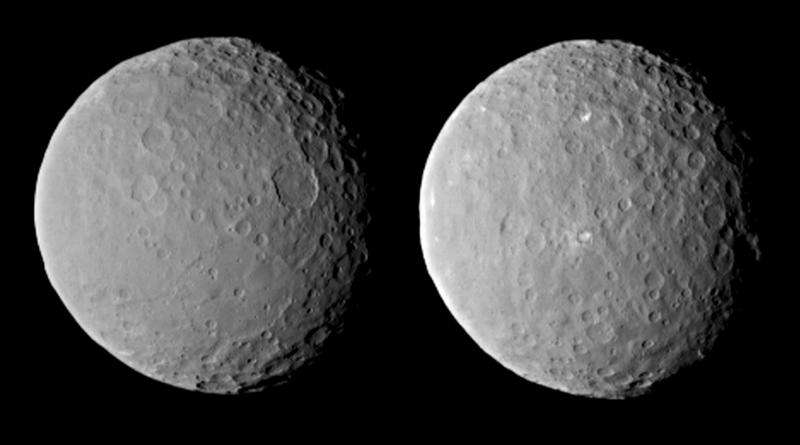
Images of dwarf planet Ceres from NASA’s Dawn spacecraft, taken in February 2015. [Credit: NASA/JPL-Caltech/UCLA/MPS/DLR/IDA]
Ceres was the first asteroid discovered, and in 2006, it was the only asteroid to be listed as a dwarf planet.
The story of Ceres began over 200 years ago.
Johann Bode (1747-1826) found a mathematical formula that showed the distances of planets from the Sun. It was called Bode's Law and it worked for all the known planets. When William Herschel discovered Uranus, it also worked for the new planet.
However, there was one mystery. According to Bode's Law, there should be a planet between Mars and Jupiter, but no one had seen it. A group of astronomers in Germany formed a society to search for the missing planet.
New Year's Day 1801. At the observatory in Palermo, Sicily, Giuseppe Piazzi seemed to have found the missing planet. He named it Ceres Ferdinandea. Ceres was the patron goddess of Sicily, and Ferdinand was the king of Sicily.
In Germany, people called the planet Hera, after the wife of Zeus in Greek mythology. Piazzi was annoyed. He wrote, "If the Germans think they have the right to name somebody else's discoveries they can call [it] anything they like." But he would use his chosen name. The name Ceres did catch on, but not the tribute to the king.
From planet to asteroid
Ceres was a planet. In 1802, when Heinrich Olbers discovered a second body, Pallas, in the gap between Mars and Jupiter, it was also called a planet. William Herschel disagreed. He thought that bodies in such similar orbits were some kind of new object. He called them asteroids (little stars), because they looked like stars through his telescope. But when Juno and Vesta were discovered, they were also called planets.
However, fifty years later things were changing. Those first four bodies were listed both as planets and as asteroids. And by the end of the 19th century, they were all asteroids.
From asteroid to dwarf planet
In 2006 the International Astronomical Union (IAU) defined what a planet is. Famously, Pluto then became a dwarf planet. Ceres also qualified as a dwarf planet, though it's also still an asteroid. As the first asteroid discovered, its name is "1 Ceres".
The days on Ceres are short, but the years are long.
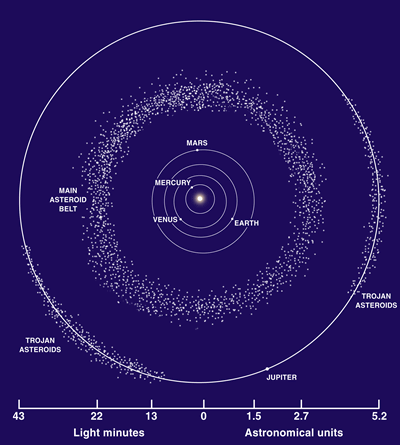
This diagram shows the Asteroid Belt. A day on Ceres is about nine hours long, but a year lasts over four and a half Earth years. [Image: astronomy.swin.edu.au]
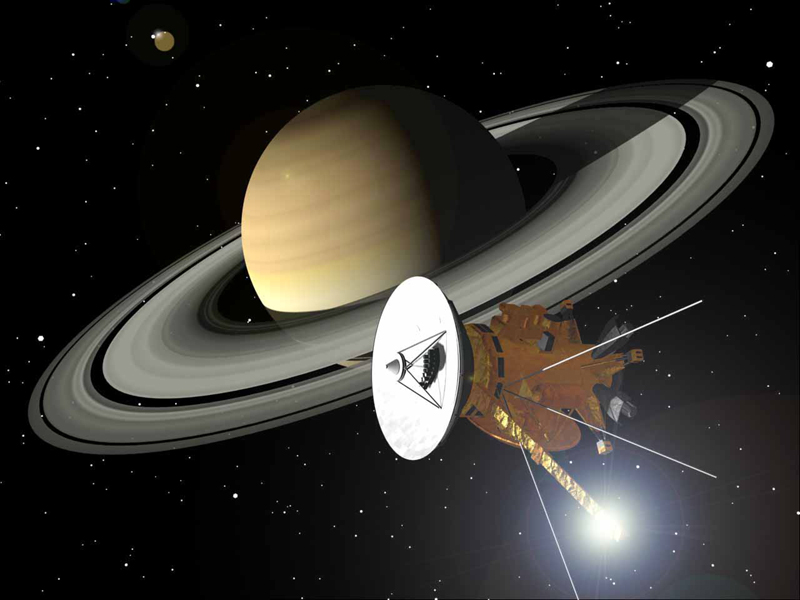
NASA's Dawn spacecraft studied Ceres for over three and a half years.
We learned a lot about Ceres. Dawn is still in orbit, but in October 2018, it ran out of fuel. The mission ended because Dawn couldn't gather data or communicate with Earth anymore.
Ceres has some layers, similar to a planet.
It has a rocky center, a deep layer of water ice, and a thin crust. Although Ceres began to layer, Jupiter's gravity kept it from becoming a full-sized planet. It's about a quarter the size of our Moon. [Image: earthsky.org]
Ahuna Mons
Ceres has a volcano named Ahuna Mons that's over 4 km (13,000 ft) high and 20 km (12 mi) wide at the base. It's not the kind of volcano we're used to, hot and erupting molten rock. Like Jupiter's moon Europa and Saturn's Enceladus, Ceres has cryovolcanoes. These erupt liquids, such as water, into an extremely cold environment where they solidify.
Ceres – water and maybe life?
Under the surface, there is a great ocean that isn't completely frozen. Some of liquid comes to the surface to make cryovolcanoes. And brine – very salty water – leaves white patches all around the dwarf planet. Like Europa and Enceladus, Ceres has many of the features needed for simple microbes to exist.
Ceres was the first asteroid discovered, and in 2006, it was the only asteroid to be listed as a dwarf planet.
The story of Ceres began over 200 years ago.
Johann Bode (1747-1826) found a mathematical formula that showed the distances of planets from the Sun. It was called Bode's Law and it worked for all the known planets. When William Herschel discovered Uranus, it also worked for the new planet.
However, there was one mystery. According to Bode's Law, there should be a planet between Mars and Jupiter, but no one had seen it. A group of astronomers in Germany formed a society to search for the missing planet.
New Year's Day 1801. At the observatory in Palermo, Sicily, Giuseppe Piazzi seemed to have found the missing planet. He named it Ceres Ferdinandea. Ceres was the patron goddess of Sicily, and Ferdinand was the king of Sicily.
In Germany, people called the planet Hera, after the wife of Zeus in Greek mythology. Piazzi was annoyed. He wrote, "If the Germans think they have the right to name somebody else's discoveries they can call [it] anything they like." But he would use his chosen name. The name Ceres did catch on, but not the tribute to the king.
From planet to asteroid
Ceres was a planet. In 1802, when Heinrich Olbers discovered a second body, Pallas, in the gap between Mars and Jupiter, it was also called a planet. William Herschel disagreed. He thought that bodies in such similar orbits were some kind of new object. He called them asteroids (little stars), because they looked like stars through his telescope. But when Juno and Vesta were discovered, they were also called planets.
However, fifty years later things were changing. Those first four bodies were listed both as planets and as asteroids. And by the end of the 19th century, they were all asteroids.
From asteroid to dwarf planet
In 2006 the International Astronomical Union (IAU) defined what a planet is. Famously, Pluto then became a dwarf planet. Ceres also qualified as a dwarf planet, though it's also still an asteroid. As the first asteroid discovered, its name is "1 Ceres".
The days on Ceres are short, but the years are long.
This diagram shows the Asteroid Belt. A day on Ceres is about nine hours long, but a year lasts over four and a half Earth years. [Image: astronomy.swin.edu.au]
NASA's Dawn spacecraft studied Ceres for over three and a half years.
We learned a lot about Ceres. Dawn is still in orbit, but in October 2018, it ran out of fuel. The mission ended because Dawn couldn't gather data or communicate with Earth anymore.
Ceres has some layers, similar to a planet.
It has a rocky center, a deep layer of water ice, and a thin crust. Although Ceres began to layer, Jupiter's gravity kept it from becoming a full-sized planet. It's about a quarter the size of our Moon. [Image: earthsky.org]
Ahuna Mons
Ceres has a volcano named Ahuna Mons that's over 4 km (13,000 ft) high and 20 km (12 mi) wide at the base. It's not the kind of volcano we're used to, hot and erupting molten rock. Like Jupiter's moon Europa and Saturn's Enceladus, Ceres has cryovolcanoes. These erupt liquids, such as water, into an extremely cold environment where they solidify.
Ceres – water and maybe life?
Under the surface, there is a great ocean that isn't completely frozen. Some of liquid comes to the surface to make cryovolcanoes. And brine – very salty water – leaves white patches all around the dwarf planet. Like Europa and Enceladus, Ceres has many of the features needed for simple microbes to exist.
You Should Also Read:
Asteroid Facts for Kids
Vesta - Facts for Kids
Naming Asteroids

Related Articles
Editor's Picks Articles
Top Ten Articles
Previous Features
Site Map
Content copyright © 2023 by Mona Evans. All rights reserved.
This content was written by Mona Evans. If you wish to use this content in any manner, you need written permission. Contact Mona Evans for details.