Stellar Misunderstandings
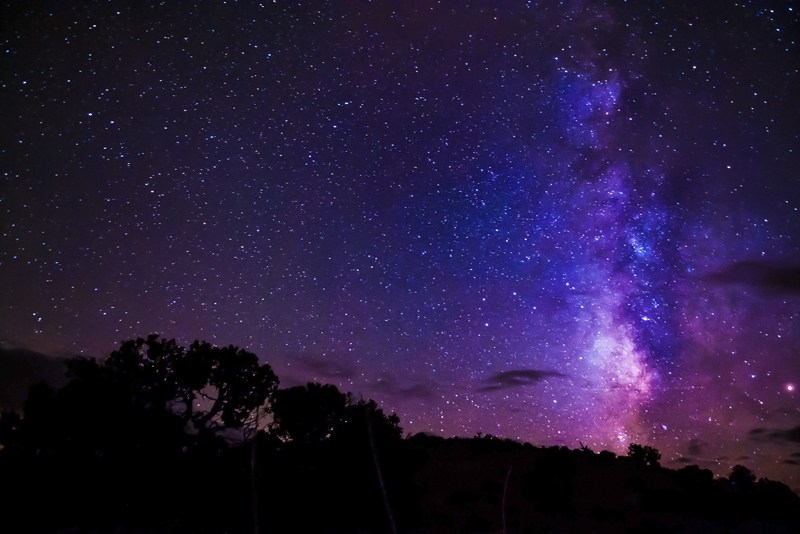
We all have some half-formed ideas about things we haven't studied, so it's not surprising that there are a number of popular misconceptions about stars. Here's a brief guide to some common confusions.
Aren't all stars white?
A glance at the night sky gives the overwhelming impression that stars are white, but they come in many colors. The color depends on how hot the star is - cooler stars are red and the hottest stars are blue, with orange and yellow in between.
So why isn't the night sky a riot of color? Because starlight is dim and our eyes don't see colors well in dim light. Yet there are stars whose colors most people can see, for example, those in Orion. The hunter's foot is the blue star Rigel and his right shoulder (from his point of view) is the red star Betelgeuse.
And remember that during the day there's quite a bright yellow star on view!
Everyone knows that distances in space are big - but how big?
Let's start with the distance from the Earth to the Sun: 150 million km (93 million miles). This distance is known as an astronomical unit (AU). Compared to this distance, how many times farther away from us is the next nearest star? Have a guess. Is it about (A) a thousand times; (B) ten thousand times; (C) a hundred thousand times; (D) a quarter of a million times; (E) 25 million times farther?
Most people are surprised to find out that the answer is (D). Our neighbor Proxima Centauri is a red dwarf star 4.2 light years from us. (A light year is about 5.9 trillion miles!)
Beyond Pluto and the Kuiper Belt there is a shell of icy bodies at about 50,000 AU that surrounds the Solar System. It's called the Oort Cloud and although it's 50,000 times farther from the Sun than Earth is, it's still a long way from Proxima Centauri. [For more about distances in space there's a link below this article to "Distances in Space".]
Aren't the stars in a constellation close together?
Constellations are patterns of stars seen from Earth. We see the stars as if they were points of light projected onto a sphere surrounding the Earth, but they are at different distances. [For more about constellations see the link below to "What Are Constellations?"]
It's uncommon to find the stars in a constellation close together. For example, the distances to the stars in Orion vary from 17.5 light years away to over 30,000 light years. Bellatrix (Orion's left shoulder) is 240 light years away. Betelgeuse is twice as far away as Bellatrix, and Alnilam, the center "belt" star in Orion, is more than two and a half times the distance of Betelgeuse.
Isn't the pole star Polaris the brightest star in the sky?
Polaris is an important navigation star in the northern sky. Although it's not very bright, the north pole of Earth's axis points almost straight at Polaris. You can find it, not by its brightness, but by using the "pointer stars" of the Big Dipper (Plough).
Since Earth's axis has a little wobble, it doesn't always point at Polaris. In about 12,000 years Vega will be the north pole star. We call this precession. [You can find out more about precession in the article Ecliptic and Equinoxes.]
Don't big stars last longer than small ones?
It sounds reasonable - with more fuel to burn, a fire keeps going for longer. But only if you keep it burning at a steady rate by feeding it more fuel. That doesn't happen in stars. A massive star just burns more fiercely, so the star is hot and bright, but it doesn't last very long. For example, a star with twenty times the mass of the Sun will burn for about ten million years. That sounds like a long time, but the Sun's lifetime is a thousand times longer - about ten billion years.
Aren't the "morning star" and the "evening star" real stars?
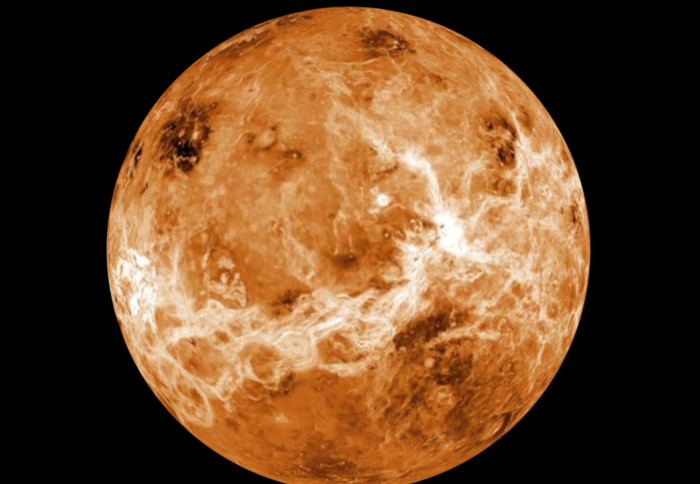
They're real, but they aren't stars. If you see a bright "star" before sunrise, it's probably the planet Venus. It has been known as the morning star for thousands of years. If you see it after sunset, it's probably also Venus, as ancient astronomers thought that it was two different objects. However Venus is closer to the Sun than Earth is, meaning that depending on where it is in its orbit, we can see it in the morning or evening.
The planet Mercury has also been known as both the morning star and the evening star, but it isn't as prominent as Venus.
Won't the Earth get sucked in when the Sun becomes a black hole?
Nope. The Sun won't ever be a black hole. Only stars much more massive than the Sun will collapse into black holes when their nuclear fuel runs out. Even Betelgeuse, which is five hundred times bigger than the Sun, doesn't have enough mass to end up as a black hole. In addition, black holes aren't really like children drinking milk shakes. They don't suck, but their gravitational fields are so strong that anything getting too close will not have enough energy to escape.
For more images of stars see my Pinterest board Stars and Clusters.

Aren't all stars white?
A glance at the night sky gives the overwhelming impression that stars are white, but they come in many colors. The color depends on how hot the star is - cooler stars are red and the hottest stars are blue, with orange and yellow in between.
So why isn't the night sky a riot of color? Because starlight is dim and our eyes don't see colors well in dim light. Yet there are stars whose colors most people can see, for example, those in Orion. The hunter's foot is the blue star Rigel and his right shoulder (from his point of view) is the red star Betelgeuse.
And remember that during the day there's quite a bright yellow star on view!
Everyone knows that distances in space are big - but how big?
Let's start with the distance from the Earth to the Sun: 150 million km (93 million miles). This distance is known as an astronomical unit (AU). Compared to this distance, how many times farther away from us is the next nearest star? Have a guess. Is it about (A) a thousand times; (B) ten thousand times; (C) a hundred thousand times; (D) a quarter of a million times; (E) 25 million times farther?
Most people are surprised to find out that the answer is (D). Our neighbor Proxima Centauri is a red dwarf star 4.2 light years from us. (A light year is about 5.9 trillion miles!)
Beyond Pluto and the Kuiper Belt there is a shell of icy bodies at about 50,000 AU that surrounds the Solar System. It's called the Oort Cloud and although it's 50,000 times farther from the Sun than Earth is, it's still a long way from Proxima Centauri. [For more about distances in space there's a link below this article to "Distances in Space".]
Aren't the stars in a constellation close together?
Constellations are patterns of stars seen from Earth. We see the stars as if they were points of light projected onto a sphere surrounding the Earth, but they are at different distances. [For more about constellations see the link below to "What Are Constellations?"]
It's uncommon to find the stars in a constellation close together. For example, the distances to the stars in Orion vary from 17.5 light years away to over 30,000 light years. Bellatrix (Orion's left shoulder) is 240 light years away. Betelgeuse is twice as far away as Bellatrix, and Alnilam, the center "belt" star in Orion, is more than two and a half times the distance of Betelgeuse.
Isn't the pole star Polaris the brightest star in the sky?
Polaris is an important navigation star in the northern sky. Although it's not very bright, the north pole of Earth's axis points almost straight at Polaris. You can find it, not by its brightness, but by using the "pointer stars" of the Big Dipper (Plough).
Since Earth's axis has a little wobble, it doesn't always point at Polaris. In about 12,000 years Vega will be the north pole star. We call this precession. [You can find out more about precession in the article Ecliptic and Equinoxes.]
Don't big stars last longer than small ones?
It sounds reasonable - with more fuel to burn, a fire keeps going for longer. But only if you keep it burning at a steady rate by feeding it more fuel. That doesn't happen in stars. A massive star just burns more fiercely, so the star is hot and bright, but it doesn't last very long. For example, a star with twenty times the mass of the Sun will burn for about ten million years. That sounds like a long time, but the Sun's lifetime is a thousand times longer - about ten billion years.
Aren't the "morning star" and the "evening star" real stars?
They're real, but they aren't stars. If you see a bright "star" before sunrise, it's probably the planet Venus. It has been known as the morning star for thousands of years. If you see it after sunset, it's probably also Venus, as ancient astronomers thought that it was two different objects. However Venus is closer to the Sun than Earth is, meaning that depending on where it is in its orbit, we can see it in the morning or evening.
The planet Mercury has also been known as both the morning star and the evening star, but it isn't as prominent as Venus.
Won't the Earth get sucked in when the Sun becomes a black hole?
Nope. The Sun won't ever be a black hole. Only stars much more massive than the Sun will collapse into black holes when their nuclear fuel runs out. Even Betelgeuse, which is five hundred times bigger than the Sun, doesn't have enough mass to end up as a black hole. In addition, black holes aren't really like children drinking milk shakes. They don't suck, but their gravitational fields are so strong that anything getting too close will not have enough energy to escape.
For more images of stars see my Pinterest board Stars and Clusters.
You Should Also Read:
Orion the Hunter
What are Constellations
Distances in Space

Related Articles
Editor's Picks Articles
Top Ten Articles
Previous Features
Site Map
Content copyright © 2023 by Mona Evans. All rights reserved.
This content was written by Mona Evans. If you wish to use this content in any manner, you need written permission. Contact Mona Evans for details.