

Herbs VS. Prescription Medication
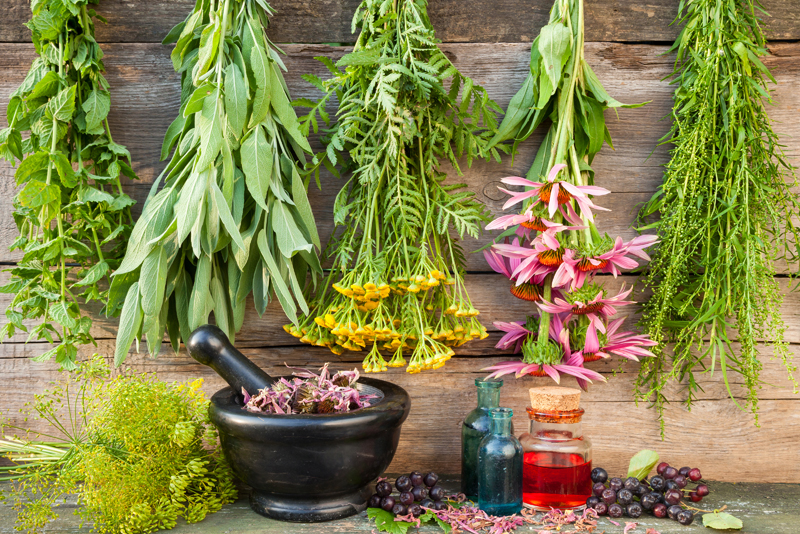
The culinary characteristics of herbs and spices over the course of times gone by have often been outstripped by their medicinal value and many of our common medicines today get their foundations in plant sources – everything from morphine (the opium poppy) to aspirin (willow bark).
The most primordial of herbalists are the Chinese practitioners. They perform the concept of balance - yin (cooling) and yang (warming) and herbs are managed according to deficiencies and excesses in the patient. Western herbalists more often than not concentrate on the effects of herbs on the range of body systems, trying to achieve a natural stability which allows the body, in the long term, to heal itself. The herb is coordinated to the patient’s ailment such as valerian for insomnia and St John’s Wort for nervous tension and depression.
Over 80% of the world’s populations make use of herbal treatments. Health food stores have become similar to the local drugstore with a myriad of products promoting health and wellness. Natural herbal remedies do not alter hormone balance, change chemical levels in the brain or trick your body. Why? Because the herbs contain definite properties that are meant to normalize functions of the body to promote healing and wellbeing. They are not synthetic or manmade; they are purely from the earth and are here to help with problems that we face on a daily basis.
Prescription drugs are any supplement that contains chemicals or unnatural substances which alters our brain chemistry, hormones, or mentality. There are some prescriptions that work because the drugs involved fool our brain into thinking the opposite of what we are experiencing. The point of this is to trick our brain into not sending communication to our nerves-this allows us to think that everything is fine when it may not be.
*Death from prescription drug side effects is now the fourth leading cause of death in the United States according to the medical industry itself (the AMA Journal) and that doesn't include deaths that are reported to be caused by the original disease that really were the result of drug side-effects, or of miss-prescribed medications that are not reported by doctors leery of malpractice suits and malpractice insurance premium increases (one survey found that only 1 in 24 doctors would voluntarily report themselves in the event of a patient dying of miss-prescribed medications).
Your arsenal of home remedies is about to get a lot spicier with these unsurpassed herbs. Though herbs have been used for hundreds of years to heal, scientists are at last starting to validate these plants' abilities to alleviate arthritis pain, reduce high blood sugar and cholesterol, and help with many other conditions such as the ability to kill cancer cells and help problem drinkers curb their alcohol intake.
Top herbs to keep in your arsenal (medicine cabinet and spice rack) should be:
1. Turmeric (add a heaping helping of curry to your recipes, it could relieve your pain) it can help ease arthritis and might even Prevent colon cancer and Alzheimer's disease.
2. Cinnamon not only lowers blood sugar by 10% but might lower cholesterol by 13%.
3. Garlic helps reduce the risk of heart attacks through lowering blood fats and cholesterol and also has antiviral/antibiotic properties which can fight infections, colds and flu.
4. Ginger is very helpful in controlling nausea, morning sickness and motion sickness. It may also decrease your blood pressure, arthritis pain, and cancer risk.
5. St John’s Wort is extremely helpful in those with depression and stress.
6. Ginkgo Biloba is used to treat memory loss and Alzheimer’s and is also successful for treating circulation problems and ringing in the ears (Tinnitus).
7. Echinacea, my wintertime favourite, is well-known for boosting your immune system and fighting infection.
8. Rosemary can aid in helping your body avoid carcinogens from frying, broiling, or grilling meats at high temperatures. These HCA levels are significantly reduced when rosemary extract is mixed into beef before cooking. This great herb might also stop tumors as this extract helps prevent carcinogens that enter the body from binding with DNA, the first step in tumor formation.
9. Holy Basil not only combats stress, it might even inhibit breast cancer.
10. Chamomile for a relaxing cup of tea and to unwind after a hectic day ends my list of wonderful herbs to keep on hand.
Please always do your research and consult with your physician, naturopath, or health care provider before taking any home remedies or supplements or following any treatment suggested on this page. Only your health care provider, personal physician, or naturopath can provide you with advice on what is safe and effective for your unique needs or to diagnose your particular medical issue.
*Disabled World - Disability News and Information: https://www.disabled-world.com/artman/publish/herbal-prescription.shtml#ixzz2OTssTIqb
The most primordial of herbalists are the Chinese practitioners. They perform the concept of balance - yin (cooling) and yang (warming) and herbs are managed according to deficiencies and excesses in the patient. Western herbalists more often than not concentrate on the effects of herbs on the range of body systems, trying to achieve a natural stability which allows the body, in the long term, to heal itself. The herb is coordinated to the patient’s ailment such as valerian for insomnia and St John’s Wort for nervous tension and depression.
Over 80% of the world’s populations make use of herbal treatments. Health food stores have become similar to the local drugstore with a myriad of products promoting health and wellness. Natural herbal remedies do not alter hormone balance, change chemical levels in the brain or trick your body. Why? Because the herbs contain definite properties that are meant to normalize functions of the body to promote healing and wellbeing. They are not synthetic or manmade; they are purely from the earth and are here to help with problems that we face on a daily basis.
Prescription drugs are any supplement that contains chemicals or unnatural substances which alters our brain chemistry, hormones, or mentality. There are some prescriptions that work because the drugs involved fool our brain into thinking the opposite of what we are experiencing. The point of this is to trick our brain into not sending communication to our nerves-this allows us to think that everything is fine when it may not be.
*Death from prescription drug side effects is now the fourth leading cause of death in the United States according to the medical industry itself (the AMA Journal) and that doesn't include deaths that are reported to be caused by the original disease that really were the result of drug side-effects, or of miss-prescribed medications that are not reported by doctors leery of malpractice suits and malpractice insurance premium increases (one survey found that only 1 in 24 doctors would voluntarily report themselves in the event of a patient dying of miss-prescribed medications).
Your arsenal of home remedies is about to get a lot spicier with these unsurpassed herbs. Though herbs have been used for hundreds of years to heal, scientists are at last starting to validate these plants' abilities to alleviate arthritis pain, reduce high blood sugar and cholesterol, and help with many other conditions such as the ability to kill cancer cells and help problem drinkers curb their alcohol intake.
Top herbs to keep in your arsenal (medicine cabinet and spice rack) should be:
1. Turmeric (add a heaping helping of curry to your recipes, it could relieve your pain) it can help ease arthritis and might even Prevent colon cancer and Alzheimer's disease.
2. Cinnamon not only lowers blood sugar by 10% but might lower cholesterol by 13%.
3. Garlic helps reduce the risk of heart attacks through lowering blood fats and cholesterol and also has antiviral/antibiotic properties which can fight infections, colds and flu.
4. Ginger is very helpful in controlling nausea, morning sickness and motion sickness. It may also decrease your blood pressure, arthritis pain, and cancer risk.
5. St John’s Wort is extremely helpful in those with depression and stress.
6. Ginkgo Biloba is used to treat memory loss and Alzheimer’s and is also successful for treating circulation problems and ringing in the ears (Tinnitus).
7. Echinacea, my wintertime favourite, is well-known for boosting your immune system and fighting infection.
8. Rosemary can aid in helping your body avoid carcinogens from frying, broiling, or grilling meats at high temperatures. These HCA levels are significantly reduced when rosemary extract is mixed into beef before cooking. This great herb might also stop tumors as this extract helps prevent carcinogens that enter the body from binding with DNA, the first step in tumor formation.
9. Holy Basil not only combats stress, it might even inhibit breast cancer.
10. Chamomile for a relaxing cup of tea and to unwind after a hectic day ends my list of wonderful herbs to keep on hand.
Please always do your research and consult with your physician, naturopath, or health care provider before taking any home remedies or supplements or following any treatment suggested on this page. Only your health care provider, personal physician, or naturopath can provide you with advice on what is safe and effective for your unique needs or to diagnose your particular medical issue.
*Disabled World - Disability News and Information: https://www.disabled-world.com/artman/publish/herbal-prescription.shtml#ixzz2OTssTIqb

Related Articles
Editor's Picks Articles
Top Ten Articles
Previous Features
Site Map
Content copyright © 2023 by Bettina Thomas-Smith. All rights reserved.
This content was written by Bettina Thomas-Smith. If you wish to use this content in any manner, you need written permission. Contact Bettina Thomas-Smith for details.
