

Herbs for Dyeing
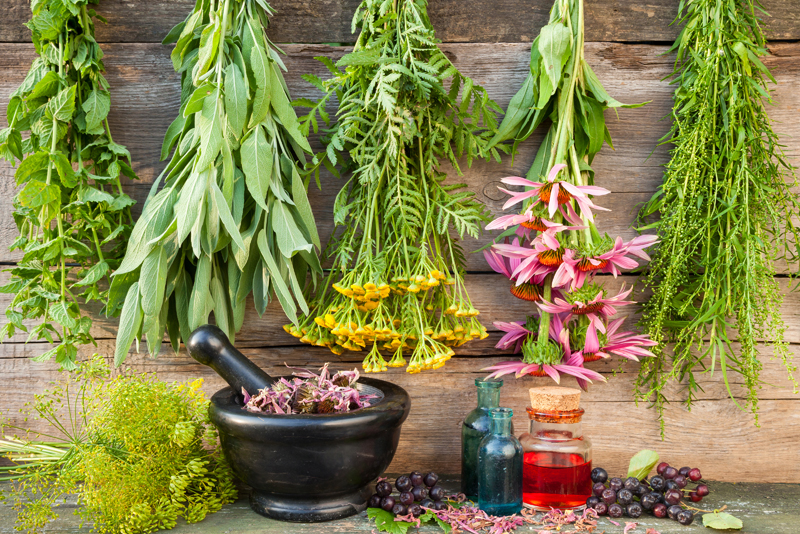
Herbs for Dyeing
The process of dyeing fabrics is as varied as the artists themselves. Using herbs for your colors creates a natural masterpiece that will age and soften with time to continue offering its beauty in its own unique way. You need to know a few simple terms and techniques to learn to dye and the rest is up to your imagination and creative side.
Mordant-This is the material that bonds the dye to the fabric or wool. Mordant also is what sets the color. There are many choices for mordants and often one herb or root will give different shades depending on the mordant. You do not need to use a mordant but the color won’t be set.
Dyestuff- is the actual herb or root that the color comes from. Usually this is a strong infusion that is heated ..
Extracting – This refers to the removal of the coloring from the dyestuff.
Dye bath- this is the colored bath that you cook your object to be dyed in.
Dandelion root turns wool magenta when alum is used as the mordant. Using tin and vinegar mordant results in purple wool and yellow is the color when no mordant is added. The flowers also yield a yellow dye.
Marigold (Tagetes) dyes a yellow-gold color; alum mordant gives lighter shades and iron gives darker ones.
Calendula infusion yield pale yellow dye. This is a great idea for your old blooms left over from last year. They may still be bright but you are making room for your new crop, aren't you?
Oxeye daisy blooms give shades of yellow using an alum mordant.
Nettle gives a greenish yellow dye using the aerial parts in an infusion and an alum mordant.
Plantain gives a yellow/green dye when using an infusion and an alum mordant.
Dock root gives a bright yellow color
St. John’s Wort gives a red dye using a tin/vinegar mordant
Goldenrod used to be quite popular for dyeing. It makes a yellowish tan using alum; gold with chrome and green with iron mordants. Using the flowering tops, be sure to use fresh not dried.
I recommend joining some spinning and weaving groups in order to talk with more experienced dyers before taking on this interesting and addiction hobby.
The process of dyeing fabrics is as varied as the artists themselves. Using herbs for your colors creates a natural masterpiece that will age and soften with time to continue offering its beauty in its own unique way. You need to know a few simple terms and techniques to learn to dye and the rest is up to your imagination and creative side.
Mordant-This is the material that bonds the dye to the fabric or wool. Mordant also is what sets the color. There are many choices for mordants and often one herb or root will give different shades depending on the mordant. You do not need to use a mordant but the color won’t be set.
Dyestuff- is the actual herb or root that the color comes from. Usually this is a strong infusion that is heated ..
Extracting – This refers to the removal of the coloring from the dyestuff.
Dye bath- this is the colored bath that you cook your object to be dyed in.
Dandelion root turns wool magenta when alum is used as the mordant. Using tin and vinegar mordant results in purple wool and yellow is the color when no mordant is added. The flowers also yield a yellow dye.
Marigold (Tagetes) dyes a yellow-gold color; alum mordant gives lighter shades and iron gives darker ones.
Calendula infusion yield pale yellow dye. This is a great idea for your old blooms left over from last year. They may still be bright but you are making room for your new crop, aren't you?
Oxeye daisy blooms give shades of yellow using an alum mordant.
Nettle gives a greenish yellow dye using the aerial parts in an infusion and an alum mordant.
Plantain gives a yellow/green dye when using an infusion and an alum mordant.
Dock root gives a bright yellow color
St. John’s Wort gives a red dye using a tin/vinegar mordant
Goldenrod used to be quite popular for dyeing. It makes a yellowish tan using alum; gold with chrome and green with iron mordants. Using the flowering tops, be sure to use fresh not dried.
I recommend joining some spinning and weaving groups in order to talk with more experienced dyers before taking on this interesting and addiction hobby.

Related Articles
Editor's Picks Articles
Top Ten Articles
Previous Features
Site Map
Content copyright © 2023 by Amelia Tucker. All rights reserved.
This content was written by Amelia Tucker. If you wish to use this content in any manner, you need written permission. Contact Bettina Thomas-Smith for details.
